7 Best Butterfly Valve Manufacturers for Global Buyers
A Butterfly Valve may look simple on a piping diagram: a circular disc, a stem, and a compact body. In service, however, small choices matter. Seat material, pressure rating, leakage performance, and actuator compatibility can affect maintenance costs and system reliability. The right manufacturer must offer more than a convincing catalog.
Demand for dependable water infrastructure adds urgency. UNESCO’s 2024 United Nations World Water Development Report says global water use has grown by about 1% annually over the past four decades. It also projects demand could rise by 20–30% by 2050. These figures do not measure valve sales, but they highlight the scale of infrastructure facing operators. Industrial buyers also need valves suited to their specific media, temperatures, operating cycles, and installation conditions.
This guide profiles seven Butterfly Valve manufacturers for global buyers. It compares practical considerations, including product range, materials, certifications, customization, technical support, and delivery capability. Details matter. A low purchase price may not reflect the cost of downtime, replacement, or difficult servicing. And specifications alone cannot prove how a valve performs in a real plant. Buyers should verify documentation, test requirements, and local support directly with each supplier. The comparison is a starting point, not a substitute for engineering review. Some differences are easy to rank; others depend on the application.
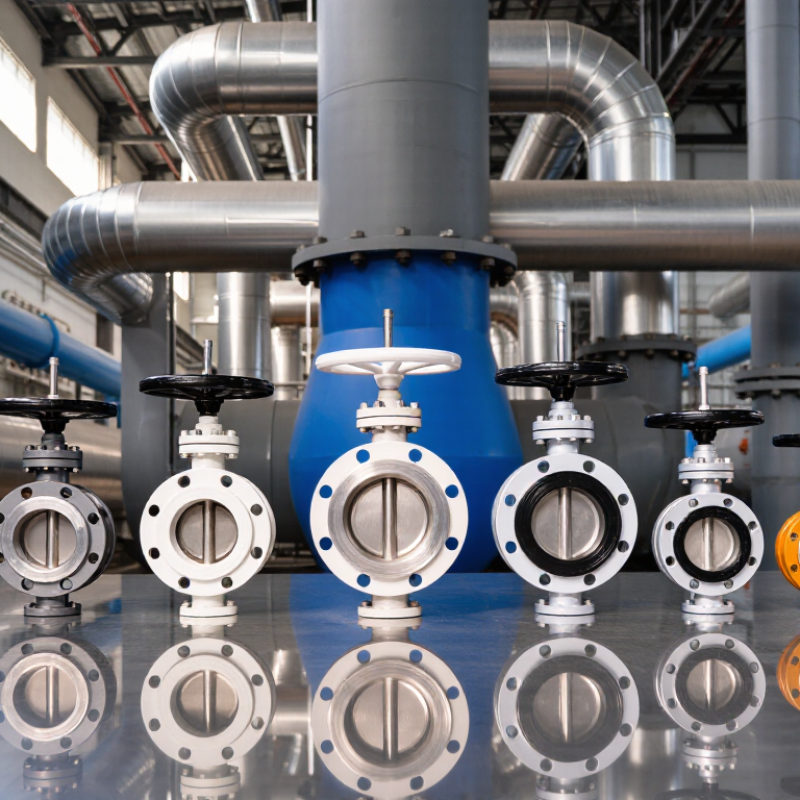
Understanding Butterfly Valves and Their Industrial Applications
A butterfly valve controls flow with a disc that rotates a quarter turn inside the pipe. Its compact body and quick operation suit large pipelines where space and weight matter. Operators use these valves in water treatment, building HVAC, power generation, and process industries. The disc remains in the flow path, though, so its shape can affect pressure loss and flow behavior.
A 2006 U.S. Department of Energy industrial sourcebook reports that pumping systems use nearly 20% of the world’s electricity, and can account for 25–50% of energy use in some industrial plants. Those figures describe pumping systems, not butterfly valves specifically. Still, they show why valve sizing and pressure drop deserve careful attention. Small details count.
For selection, engineers check pipe size, pressure rating, fluid temperature, and seat compatibility. A valve handling clean water may need different materials from one exposed to abrasive slurry or frequent cycling. Partial opening can also increase wear or create unstable flow, depending on system conditions. It is easy to focus on the valve alone; in practice, the pump, piping, and control method shape performance too.
Butterfly Valve Operating Travel
Butterfly valves use a quarter-turn motion: the disk rotates about 90 degrees between closed and fully open. The 45-degree point indicates intermediate travel, not a fixed flow rate; actual flow depends on valve design and operating conditions.
Criteria for Evaluating Global Butterfly Valve Manufacturers
Global buyers should compare butterfly valve manufacturers through evidence, not catalogue claims. Check body, disc, stem, and seat materials against the fluid, temperature, and pressure in your service conditions. Ask for material certificates, pressure-test records, and traceability linking each valve to its production batch. For shut-off performance, ISO 5208:2015 defines leakage-rate acceptance levels; Rate A permits no visually detectable leakage during the test. That matters. Confirm the specified rate matches your application, rather than assuming every “tight shut-off” claim means the same thing.
Test procedures and design compliance deserve equal scrutiny. API Standard 598 covers inspection and pressure testing, while API Standard 609 addresses butterfly-valve design and dimensions. Request recent test results, the test medium and pressure, and calibration records for the instruments used. A document alone is not proof. Compare delivery promises with documented capacity, spare-parts availability, and support across your operating regions. Ask how the supplier handles a rejected batch; the answer can reveal more than a polished brochure. One limitation: paperwork cannot show how a seat will wear in your exact fluid, so a field trial may still be necessary.
Seven Leading Butterfly Valve Manufacturers for International Buyers
International buyers comparing seven leading butterfly valve manufacturers should look beyond catalogue breadth. MarketsandMarkets estimated the industrial valves market at USD 77.8 billion in 2023 and projected USD 97.3 billion by 2028. That wider market includes many valve types, so it is useful context, not proof of butterfly-valve quality. Grand View Research also reported continued growth in the industrial valves sector, reflecting demand across water, energy, and process industries.
For each manufacturer, check the actual operating range: valve size, pressure class, temperature limits, body material, and seat compatibility. Ask for drawings, material traceability, inspection records, and test procedures tied to the quoted configuration. API 609 and ISO 5211 can help buyers specify valve design and actuator mounting, where applicable. Details matter. A polished catalogue proves little if replacement parts take months to arrive or documents do not match the delivered valve.
Compare delivery capacity, export packaging, technical support, and spare-parts access across all seven candidates. Request references for similar media and duty cycles, then confirm whether testing covers the assembled valve and actuator. I would still verify every claim directly; supplier questionnaires can leave gaps. A lower price may be sensible, but only when the operating limits and service plan are clear.
Comparing Product Range, Certifications, and Global Support
A useful comparison starts with the actual service conditions, not a broad product list. Check whether each manufacturer offers wafer, lug, and flanged butterfly valves in the sizes and materials your system requires. Disc and seat options matter when handling abrasive media, temperature changes, or frequent cycling. Ask for pressure ratings, temperature limits, and drawings for the exact configuration. Catalogues can look complete; specific options may still require confirmation.
Certifications help buyers assess quality controls, but the certificate’s scope should match the product and manufacturing site. Verify current documents, material traceability, and inspection records rather than relying on a logo alone. For critical applications, request test details, including pressure-test procedures and acceptance criteria. A certificate does not replace technical review. Not always.
Global support is practical, not just a map of sales offices. Ask about regional stock, spare-part availability, documentation languages, and technical response times across time zones. A clear process for handling warranty claims can prevent delays when a valve fails in service. Compare support using realistic questions, such as how quickly the supplier can identify a replacement seat. Even a strong supplier may have gaps, so record assumptions and confirm them before purchase.
How to Select a Manufacturer for Your Project Requirements
Selecting a butterfly valve manufacturer starts with the duty, not the catalog. Record the fluid, temperature, pressure, pipe size, operating frequency, and required leakage class. A valve handling clean water may need different disc materials and seat construction than one exposed to abrasive slurry. Check the full pressure-temperature rating, not just the maximum pressure on a product sheet. Small details matter.
Grand View Research estimated the global industrial valves market at about USD 78.4 billion in 2023 and forecast a 4.8% compound annual growth rate through 2030. This broad market figure is not butterfly-valve-specific, but it reflects the range of industrial applications buyers must serve. For a project shortlist, ask manufacturers for material traceability, test records, dimensional drawings, and references for comparable service. Confirm whether actuators, coatings, and spare parts are available for the required delivery schedule.
A common review gap is overlooking installation conditions. Check face-to-face dimensions, flange compatibility, access for maintenance, and actuator clearance against the actual piping layout. Request evidence of testing to the standards named in your specification, and clarify how acceptance tests are documented. Price is only one variable. A neat datasheet can still leave questions about seat life or repair support; ask for those assumptions in writing.