China Best SPC Wall Panel Manufacturers and Suppliers
China’s Spc Wall Panel market is drawing attention from renovators, distributors, and project buyers seeking durable, easy-to-clean interior finishes. The wider resilient flooring sector offers useful context, though it is not a measure of wall panels alone. Grand View Research valued the global resilient flooring market at USD 40.26 billion in 2023 and projected continued growth through 2030. That figure should not be mistaken for the SPC wall panel market. Still, it signals the scale of demand for resilient surfaces.
For buyers comparing China Best SPC Wall Panel Manufacturers and Suppliers, headline price is only one detail. Ask for product specifications, test reports, sample consistency, installation guidance, and clear warranty terms. Inspect the panel edge, click or joining profile, surface texture, and color under natural light. Small differences matter. “The details are not the details. They make the design,” is a line commonly attributed to industrial designer Charles Eames. It fits this category well, though it was not written specifically about SPC panels. A polished sample can hide uneven batch colors or unclear technical documentation. That is easy to overlook. This guide examines how to assess suppliers, compare manufacturing capabilities, and identify the evidence behind product claims. No single checklist guarantees a good purchase; careful verification still matters.
Understanding SPC Wall Panels and Their Main Applications
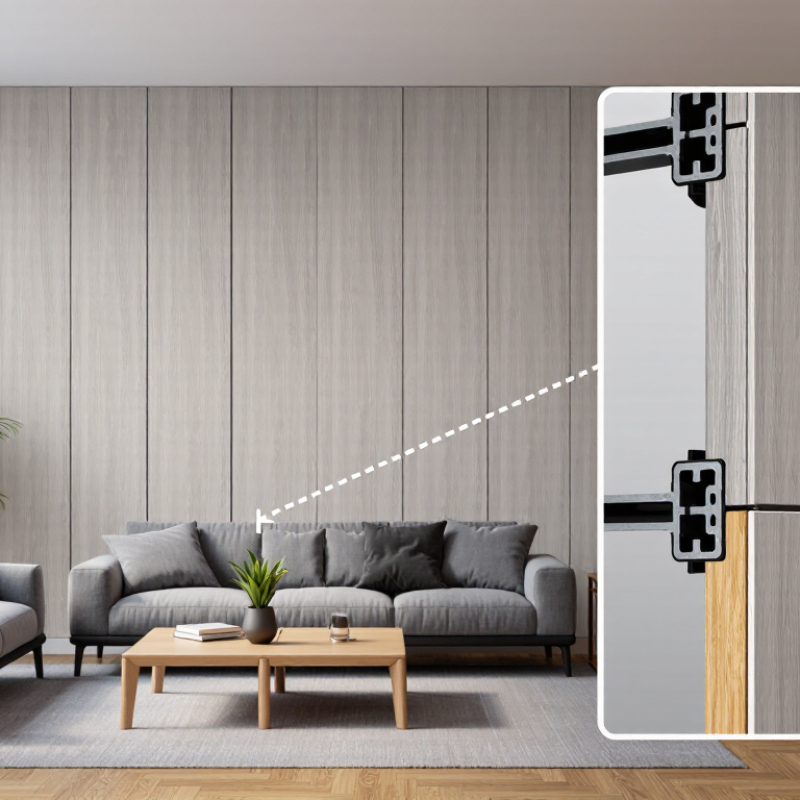
SPC wall panels typically combine a rigid mineral-filled core with decorative surface layers. The core helps panels hold their shape, while the finish can imitate stone, tile, or wood grain. They are often chosen for renovation projects because panels can cover tired walls without laying individual tiles. A sample may look convincing. Check its texture in natural light, too.
Common applications include bathrooms, laundry areas, kitchens, retail spaces, and office corridors.
In damp rooms, water resistance depends on more than the panel itself. Correctly prepared walls, sealed edges, and carefully fitted joints help limit moisture getting behind the surface. Direct water exposure may require extra attention to the installation details.
Small gaps matter.
In busy interiors, scratch resistance and easy cleaning are also practical considerations; a textured finish can collect dust in its grooves. It is easy to overvalue appearance when comparing samples. Ask about panel thickness, compatible adhesives, and cleaning guidance before choosing a system.
That matters.
A slightly uneven wall or poorly aligned joint can remain visible after installation.
How SPC Wall Panels Are Manufactured in China
China’s SPC wall panels are typically made from a rigid blend of polyvinyl chloride resin, calcium carbonate, and processing additives. Production starts with weighing and mixing these materials into a uniform compound. The blend is heated and pushed through an extrusion die, forming a continuous panel with a defined thickness and surface profile. It is then cooled, cut to length, and inspected for dimensions, color consistency, and visible defects. Small variations can still occur; a clean surface does not prove that every panel has identical internal density.
The National Bureau of Statistics of China reported 74.885 million tonnes of plastic products output in 2023. This figure describes the wider plastics sector, not SPC panels alone, but it shows the scale of China’s plastics-processing base. In a well-controlled factory, operators monitor temperature, screw speed, and line pressure during extrusion. After forming, decorative films or textures may be applied, followed by lamination and edge finishing. Buyers should ask suppliers for batch-level test records covering thickness, dimensional stability, and relevant performance claims. “Waterproof” alone is not a complete quality specification.
Tips: Request a production sample and compare its thickness at several points. Ask how the factory checks batches, not just showroom samples. It is easy to overlook storage conditions, yet heat and sunlight can affect panels before installation.
How SPC Wall Panels Are Manufactured in China
A typical production sequence, from raw-material preparation to finished-panel inspection.
The numbers indicate process order, not production volume or time. Equipment and specific procedures can vary by factory and product specification.
Key Qualities of Leading Chinese SPC Wall Panel Manufacturers
China Best SPC Wall Panel Manufacturers and Suppliers
Key Qualities of Leading Chinese SPC Wall Panel Manufacturers
Leading Chinese SPC wall panel manufacturers show quality through repeatable production, not polished samples alone. They should explain panel thickness, surface-layer options, core composition, and recommended installation conditions in clear technical documents. Ask for samples from more than one production batch. Small differences in color or edge fit can become obvious across a large wall.
Good suppliers test dimensional stability and inspect surface consistency, cutting edges, and locking or fixing details. They should share relevant test reports and explain what each test covers, rather than relying on broad claims. A practical check is to inspect a cut panel: the core should look even, without obvious voids or loose material. It is a simple check, not a substitute for laboratory testing.
Communication matters too. Responsive manufacturers clarify lead times, packaging, tolerances, and replacement procedures before an order is placed. They can provide installation guidance for corners, outlets, and transitions, where poor detailing often shows. A glossy sample can still hide uneven batch control. No factory is flawless; honest answers about limits are more useful than promises that every panel will be perfect.
How to Compare SPC Wall Panel Suppliers in China
When comparing SPC wall panel suppliers in China, start with the material, not the catalogue. Ask for core composition, thickness tolerance, density, and surface-layer weight. A 2024 Grand View Research report identifies Asia-Pacific as a major growth region for luxury vinyl products. That growth also attracts inconsistent factories. Samples can mislead. Request three samples from separate production batches.
Verify testing through independent laboratories. Check reports for dimensional stability, water resistance, impact strength, and surface wear. For fire performance, ask whether testing follows ASTM E84 or EN 13501-1, depending on the destination market. Do not accept a certificate showing only a supplier name and no specimen details. Intertek’s building-material testing guidance stresses traceable samples, defined test methods, and current reports. Details matter.
Compare factory capacity with your actual order size. Review monthly output, extrusion lines, color-matching controls, packaging design, and replacement procedures. The 2023 Freedonia industry outlook links resilient flooring demand with renovation and commercial construction, but demand forecasts do not guarantee reliable delivery. I have seen attractive quotes fail after the first container. Ask for moisture-protected cartons, corner guards, and photographs before loading. A lower price may reflect thinner wear layers or cheaper fillers. I would not judge a supplier from one successful sample. Audit the process, record defects, and leave room for doubt.