
FAQS
What Is the Best Garden Shed to Buy in 2026?
Choosing the best Garden Shed in 2026 starts with what you need to store, not with a glossy product photo. A compact plastic shed may suit a few hand tools, while bikes, a mower, and bags of soil need more floor space and a wider entrance. Measure your available area, including room for the doors to open. Check the ground, too. A shed placed on uneven soil may stick or let water collect beneath it. Small details matter.
Materials bring different trade-offs. Timber can look at home beside a garden, but it may need regular care. Metal is often sturdy, though condensation and sharp edges deserve attention. Resin models are generally easy to clean, but their panels and fixings still need checking. Look for clear assembly instructions, a solid floor, weather-resistant construction, ventilation, and a warranty with readable terms. A low price can be tempting. It may not include a base or delivery.
This guide compares common shed types and the features that affect everyday use. It also considers size, access, maintenance, security, and value, so you can match a model to your garden and budget. Product availability and specifications can change, and a review cannot recreate every climate or installation. Keep that in mind. The best choice is not necessarily the largest or most expensive. It is the one that fits your space, protects what you own, and remains practical after the first rainy season.
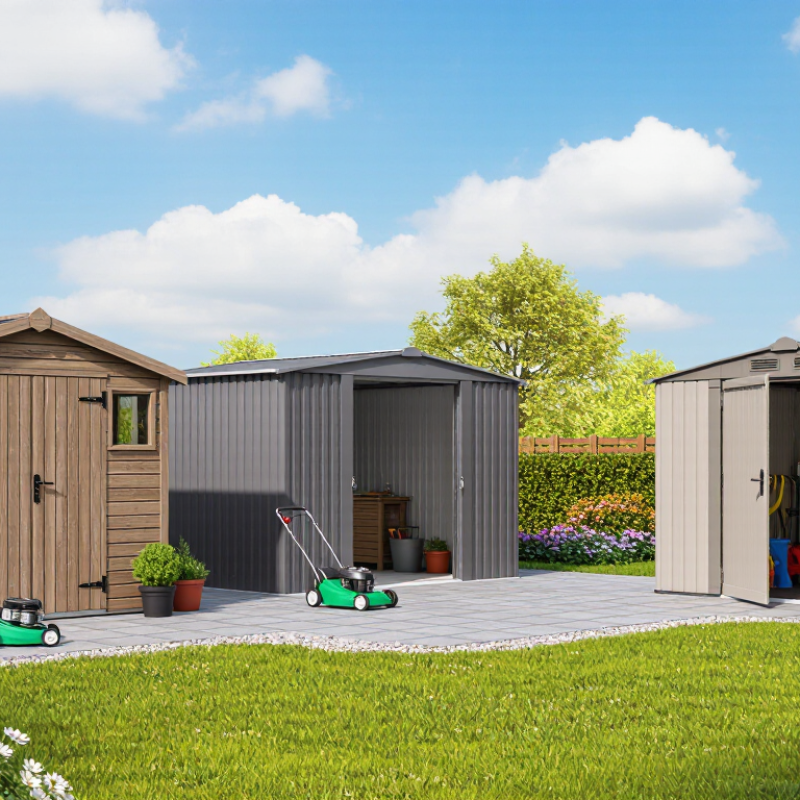
What a Garden Shed Is and How It Is Used
A garden shed is a small, separate structure for storing tools, equipment, and seasonal items. It may also provide a dry place for potting plants or completing simple garden tasks. Think of a spade leaning by the door, seed trays on a shelf, and muddy boots kept outside the kitchen. Small, but useful. A shed works best when its purpose is clear; otherwise, it can become a clutter trap. I’ve found that a narrow walkway and a few sturdy shelves often matter more than extra floor space.
Sheds vary in materials, size, and features, but their basic role is practical storage close to the garden. Houzz’s 2023 U.S. Houzz & Home Study reported median outdoor-project spending of $2,000 in 2022. That figure covers outdoor projects broadly, not sheds alone, but it shows that homeowners invest in improving outside spaces. For a useful shed, consider what needs shelter from rain, how often you’ll retrieve it, and whether the floor can handle damp tools. A window helps with daylight. It does not replace ventilation, especially when wet pots or soil are stored inside. Even careful planning misses something. Measure the largest item you expect to store before choosing the interior layout.
Which Types of Garden Sheds Are Available in 2026
In 2026, garden sheds are available in several materials and roof styles, each suited to different needs. Timber sheds offer a natural appearance and can be adapted with shelves or hooks. They usually need periodic treatment, especially where rain reaches exposed edges. Metal sheds are often practical for storing tools and lawn equipment. Check ventilation and panel thickness, since condensation or dents can become frustrations.
Resin and other plastic sheds are lightweight, easy to clean, and generally resist rot. However, a lightweight structure may need careful anchoring in windy locations. Composite sheds combine wood-like appearance with lower routine upkeep, though quality and construction vary. I would be cautious about calling any material maintenance-free. Real gardens are messier than product descriptions suggest.
Roof shape matters, too. Apex roofs provide headroom near the center and help rain run off both sides. Pent roofs slope in one direction and can fit neatly beside a wall or fence. Lean-to sheds suit narrow spaces, but allow room for doors and access. That matters. Before choosing, measure the site, check the base is level, and consider what must fit inside. A mower needs more than its own footprint. There is no single best type; climate, available space, and willingness to maintain the shed should guide the choice.
How Shed Materials, Size, and Construction Compare
Choosing a garden shed starts with what it must hold, not its advertised floor area. A mower needs a wide door and a clear turning path; shelves need headroom. Measure the largest item, then leave room to move around it. A compact shed can feel cramped surprisingly fast.
Material choice should match the site. The USDA Forest Products Laboratory’s Wood Handbook explains how moisture changes wood’s dimensions and can contribute to decay, so raised foundations, sealed end grain, and airflow matter. Metal panels resist rot, but thin walls may dent and can sweat when temperatures shift. Resin sheds need little painting, yet check panel rigidity and anchoring before buying. Not glamorous, but important. The U.S. Department of Energy reports that cool roofs can be up to 50°F cooler than conventional roofs; reflective roofing may help a sun-exposed shed, though it will not fix poor ventilation.
Construction details often decide whether a shed stays useful. Look for a level base, braced corners, weather-sheltered joints, and a roof that carries local snow and wind loads. The EPA says mold can begin growing within 24–48 hours when moisture remains, making ventilation and leak control practical priorities. Compare the assembled footprint, too—not just the stated dimensions. I would still inspect the door hardware in person; product descriptions rarely show how a latch feels after repeated use.
Which Features Affect Storage, Security, and Maintenance
A good garden shed in 2026 should fit what you actually store, not just look spacious in a product photo. Measure the mower, tool handles, and door opening before choosing a footprint. A wide doorway matters when wheeling in a mower or barrow. Leave room to walk and reach shelves. That space disappears quickly.
Security depends on more than the lock. Look for a door that closes flush, sturdy hinges, and a frame that can be anchored to a firm base. A hasp is only useful if the door and surrounding panel resist flexing. Keep valuable tools out of sight from windows. Check whether the floor is included, and whether it can support heavy equipment; some lightweight sheds need a separate base. Follow the maker’s installation guidance, especially for anchoring in exposed locations.
Material affects upkeep, but no option is maintenance-free. Metal sheds can need attention where coatings are scratched, while timber may require periodic sealing and checks for damp. Resin models often clean easily, though heat and sunlight can affect some plastics over time. Ventilation helps reduce condensation on cold mornings. Small vents matter. Before buying, inspect warranty terms, replacement-part availability, roof drainage, and the recommended clearance around the shed. I would not choose solely by advertised capacity: awkward corners and low eaves can make that number less useful than it sounds.
What Is the Best Garden Shed to Buy in 2026? — Features That Affect Storage, Security, and Maintenance
| Shed Type | Storage Considerations | Security Considerations | Maintenance Needs | Main Trade-Offs | Best Suited To |
|---|---|---|---|---|---|
| Wood | Often available in many sizes and layouts. Shelves, hooks, and interior framing can be added or adjusted to suit tools and equipment. | Door strength, hinges, framing, and the quality of the hasp or lock affect security. A lock does not make a lightweight or poorly anchored shed highly secure. | May need periodic cleaning, repainting or restaining, and checks for rot, leaks, and pest damage. Keep the base dry and allow airflow around the structure. | Easy to customize and repair, but requires more upkeep than many plastic or metal models. Assembly and weather protection matter. | Buyers who want a customizable structure and are comfortable with regular upkeep. |
| Resin or Plastic | Lightweight panels and molded interiors can simplify organization, though some models offer fewer options for attaching heavy shelves. | Check panel rigidity, door design, hinge construction, and whether the shed can be anchored. Lightweight structures may be easier to move if left unsecured. | Usually needs occasional washing and inspection. It does not require painting, but panels and fittings should be checked for damage or loosening. | Typically low-maintenance and resistant to moisture-related rot, but structural strength and customization vary by design. | Those seeking straightforward cleaning and limited routine maintenance for general garden storage. |
| Metal | Can provide useful open storage for tools and equipment. Check door clearance and ventilation, especially when storing damp items. | Security depends on the panel thickness, frame, door, hinges, lock points, and anchoring. A reinforced door and secure fixing are more important than the lock alone. | Inspect for scratches, corrosion, loose fasteners, and water entry. Keep the shed ventilated to help limit condensation. | Often needs little painting, but can be noisy in rain and may be more prone to condensation than a well-ventilated, insulated structure. | Those wanting a practical, low-paint-maintenance option for tools and general equipment. |
| Composite | Storage capacity and layout depend on the frame and panel design. Confirm the usable interior dimensions rather than relying only on external measurements. | Assess the door, frame, locking points, and anchoring in the same way as for other shed types; composite panels alone do not guarantee security. | Usually needs routine cleaning and checks of joints, hardware, and the base. Maintenance requirements depend on the specific materials used. | May combine weather-resistant materials with a finished appearance, but construction, repair options, and price vary considerably. | Buyers comparing durability and appearance who want to assess the complete construction, not just the panel material. |
How to Choose a Shed for Your Space, Needs, and Budget
What Is the Best Garden Shed to Buy in 2026?
How to Choose a Shed for Your Space, Needs, and Budget
Start with the items you actually need to store. A mower, two bicycles, and a stack of pots require different layouts. Measure the largest item, then leave room to walk around it. A narrow shed may fit the garden better, but wide doors can make daily use much easier. Check the door swing, too. It is easy to overlook.
Measure the site after rain, not just on a sunny afternoon. Low ground can stay damp and shorten the life of stored tools. A firm, level base matters for most shed types, while good airflow helps limit condensation. Timber can be repaired or repainted, but needs ongoing care. Metal is often low-maintenance, though thin panels may dent. Resin sheds resist rot, but their floor may need extra support. No option is perfect.
Set your budget around the complete setup, not only the shed price. Include the base, delivery, assembly, and any shelving or security hardware you need. Compare usable interior dimensions rather than headline capacity. If you plan to store heavy equipment, check the floor’s stated load limit. Also check local placement requirements before ordering. I would leave a little spare space, but not so much that the shed consumes the garden. A small sketch with door access and nearby fences can reveal awkward choices before money is spent.
Skip to content
