
FAQS
China Top 10 Shuttle Automation Manufacturers
Choosing a Shuttle Automation partner in China involves more than comparing equipment prices. A shuttle system may move pallets or totes through dense rack lanes, but its value depends on how well it fits the facility. A compact warehouse with fast-moving cartons has different needs from a high-bay operation handling full pallets. Details matter.
This guide to China’s top 10 Shuttle Automation manufacturers offers a starting point for evaluating suppliers, not a universal ranking for every project. It considers practical factors such as shuttle type, storage configuration, stated load capacity, control software, integration support, and access to maintenance. Buyers should check technical specifications against their own load dimensions, peak order patterns, aisle layout, and expansion plans. Ask for clear answers about commissioning, spare parts, and service response times.
Public product materials can help narrow the field, yet they do not prove how a system performs at a particular site. Request references, project details, and measurable performance data where available. Compare like with like. A polished demonstration may not reveal congestion during a busy shift, and a high throughput figure may rely on specific operating conditions. That is worth questioning. The list can help identify manufacturers for further review, but final selection should follow site assessment and direct technical discussion. Some information may be difficult to compare consistently; that limitation deserves attention, too.
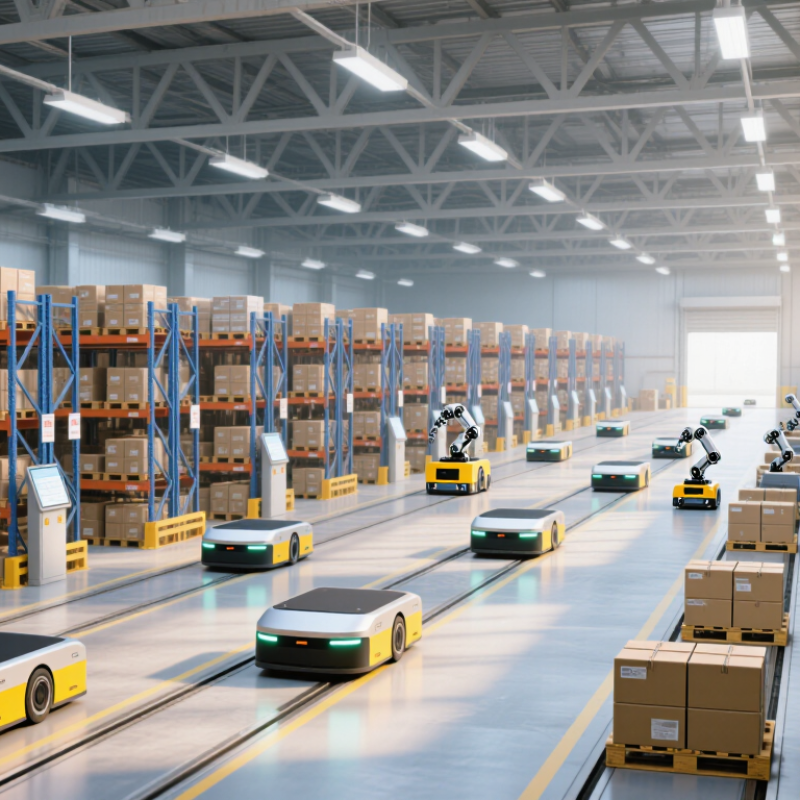
What Shuttle Automation Systems Are and How They Work
China Top 10 Shuttle Automation Manufacturers
What Shuttle Automation Systems Are and How They Work
A shuttle automation system moves totes or cartons through storage lanes using compact, motorized carriers. Each shuttle travels along rails inside a rack, retrieves a load, and delivers it to a lift or transfer point. The lift then moves items between levels and connects storage with picking or replenishment stations. Sensors help confirm position and detect obstacles. Software assigns storage locations and coordinates movements according to incoming orders. In a typical operation, a worker places a tote at a station, scans it, and waits while the system routes it to a selected lane. The process is precise, but not mysterious.
Performance depends on more than shuttle speed. Lane depth, lift capacity, item dimensions, order patterns, and peak-hour traffic all shape throughput. If one lift serves too many busy levels, queues can form even when the shuttles move quickly. That matters. Good system design begins with measured inventory and real order data, not just a target number of moves per hour. Operators should also consider maintenance access, spare parts, and how the facility will handle a stopped carrier. Automation can reduce repetitive travel, yet it adds controls and equipment that require trained support. A shuttle system is useful, but it is not a cure for poor slotting or changing processes. Even a sound plan may need adjustment after real shifts expose awkward handoffs.
How a Shuttle AS/RS Retrieval Cycle Works
This chart shows a typical retrieval sequence in a shuttle-based automated storage and retrieval system (AS/RS). The numbers indicate process order, not duration or performance; actual workflows vary by system design and control software.
Core Components and Technologies in Shuttle Automation
Shuttle automation depends on several components working as one system. A shuttle cart travels along rails inside storage lanes, carrying totes or pallets between storage positions and transfer points. Its wheels, drive motor, onboard controller, and position sensors determine how smoothly it moves. Small alignment errors matter. Over time, they can increase wear or cause unreliable transfers.
Lifts and conveyor interfaces connect different levels and move loads to picking or dispatch areas. Photoelectric sensors check whether a load is present, while encoders help track movement. Safety circuits, access gates, and emergency stops protect people during operation and maintenance. The warehouse control system assigns tasks; the warehouse management system supplies inventory and order data. Clear communication between these layers is essential. A fast shuttle cannot fix poor task logic.
Power choices also shape performance. Battery-powered carts may use charging stations or scheduled charging, depending on workload and shift patterns. Heat, dust, load weight, and peak-hour traffic should be considered during design. These details are easy to overlook. A technically capable system can still disappoint if maintenance access is cramped or spare parts are hard to reach. Real throughput depends on the whole workflow, not a single headline speed.
Applications Across Warehousing and Manufacturing
In warehousing, shuttle automation moves totes or cartons through dense rack lanes, reducing repeated forklift travel. A shuttle can retrieve stored goods and deliver them to a lift or picking station. This suits facilities with many small orders, predictable product sizes, and steady inventory movement. Operators still need clear exception procedures. A jammed tote can interrupt a whole lane.
Manufacturing sites use shuttles to hold parts near assembly cells and replenish line-side buffers. Sensors and inventory software can track each carrier, helping staff see when components are running low. This is useful when production uses many part numbers or frequent changeovers. Keep parts accessible. A fast system is not helpful if workers struggle to load it safely.
Choosing a system means checking load weights, tote dimensions, throughput peaks, and how often production schedules change. Ask manufacturers to explain recovery steps and maintenance access, not just headline speed. Pilot testing with real containers can reveal awkward handoffs and barcode issues. Paper plans miss things. Even a well-designed shuttle may need adjustment after operators use it for a few weeks.
Profiles of Ten Shuttle Automation Manufacturers in China
China’s shuttle automation manufacturers serve different warehouse needs, so a useful profile looks beyond product range. One may focus on compact shuttle systems for narrow aisles; another may engineer high-density storage for pallet loads. A third may adapt equipment for low-temperature warehouses, while a fourth specializes in tote-based picking. A fifth may combine shuttles with conveyors and lifts. Compare load limits, aisle dimensions, throughput assumptions, and safety features. These details matter more than broad efficiency claims.
Other profiles include manufacturers centered on control software, custom material handling, large-scale equipment production, installation support, or modernization of existing warehouses. Some offer broad project integration; others focus on a specific shuttle type. Ask how each system handles peak periods, blocked lanes, and maintenance access. Request layout drawings and operating assumptions, then check whether proposed figures match your actual product mix. A brochure rarely shows every constraint. No profile is perfect, and service quality can vary by project.
Tips: Confirm reference installations, spare-parts availability, software compatibility, and response times. Small details matter.
China Top 10 Shuttle Automation Manufacturers - Profiles of Ten Shuttle Automation Manufacturers in China
An anonymized technology overview. The entries below describe common shuttle-system profiles, not named companies or a verified ranking. Payload figures are indicative ranges; actual specifications vary by model and configuration.
| Profile | Shuttle System Type | Storage / Movement | Indicative Load Class | Typical Application | Key Operational Feature |
|---|---|---|---|---|---|
| 01 | Radio shuttle for pallets | Pallet shuttle travels along a lane; forklift handles lane entry and retrieval. | Commonly about 500–1,500 kg per pallet position, subject to system design. | High-density storage of similar SKUs in warehouses and cold stores. | Reduces forklift travel inside storage lanes; typically configured for FIFO or LIFO operation. |
| 02 | Four-way pallet shuttle | Shuttle moves longitudinally and transversely between storage lanes and transfer points. | Often designed for pallet loads in the several-hundred-kilogram to roughly 1,500 kg range. | Large distribution centers with multiple storage aisles and changing throughput needs. | Offers flexible routing and can reduce reliance on fixed aisle equipment. |
| 03 | Multi-tier tote shuttle | Shuttles run on storage levels and transfer totes or bins to lifts and workstations. | Typically tens of kilograms per tote; the permitted load depends on the tote and shuttle model. | E-commerce, pharmaceuticals, electronics, and small-parts fulfillment. | Supports goods-to-person order fulfillment and scalable storage across multiple levels. |
| 04 | Carton and case shuttle | Shuttle-based storage and retrieval of cartons or cases, often with lifts and conveyors. | Usually a light-load class; capacity is determined by carton dimensions and system design. | Retail replenishment, parts distribution, and split-case picking operations. | Combines dense storage with automated delivery of cartons to picking or dispatch points. |
| 05 | Mini-load shuttle | Automated storage and retrieval of trays, totes, or small containers in rack channels. | Commonly tens to a few hundred kilograms per carrier, depending on the design. | Manufacturing parts, spare parts, and compact inventory storage. | Provides high-density small-load storage and can interface with conveyors or picking stations. |
| 06 | Deep-lane pallet shuttle | Pallets are stored multiple positions deep in lanes served by a shuttle. | Pallet-load capacity is set by the rack, shuttle, and handling equipment specifications. | Bulk inventory with many pallet positions per SKU. | Improves storage density compared with single-deep pallet racking, with lane-based access. |
| 07 | Cold-storage pallet shuttle | Pallet shuttle system specified for operation in refrigerated or frozen environments. | Pallet-load capacity varies by model; temperature rating must be confirmed for each system. | Food, cold-chain logistics, and temperature-controlled inventory. | Can reduce the need for personnel and forklifts to enter cold storage lanes. |
| 08 | Shuttle system with automated lifts | Shuttles move loads within levels; lifts transfer them between levels. | Load class depends on whether the system handles totes, cartons, or pallets. | Multi-level warehouses with a need to connect storage and work areas. | Combines horizontal shuttle movement with vertical transfer for multi-level access. |
| 09 | Shuttle-based goods-to-person system | Automated storage delivers bins, totes, or cartons to operator or robotic picking stations. | Typically handles light-to-medium unit loads; carrier limits vary by installation. | High-line-count order fulfillment and replenishment. | Reduces picker travel by bringing stored inventory to a fixed picking location. |
| 10 | Integrated shuttle automation solution | Shuttles operate with rack structures, lifts, conveyors, controls, and warehouse software. | Defined by the selected load carrier and the overall system specification. | Facilities requiring coordinated storage, picking, replenishment, and dispatch flows. | System performance depends on the design of the complete material-handling and control solution. |
How to Compare Manufacturers and Choose a Suitable System
China Top 10 Shuttle Automation Manufacturers: How to Compare Manufacturers and Choose a Suitable System
A shuttle system should fit the operation, not just the warehouse drawing.
Compare manufacturers using your actual SKU mix, tote dimensions, peak orders per hour, and required storage density. Ask each supplier to model seasonal peaks, replenishment, and blocked aisles. Request a live demonstration with representative loads, not empty totes. Measure twice. Check how the control software connects with your warehouse management system, and confirm what happens during network interruptions. No spreadsheet captures every awkward handoff.
MHI’s 2024 Annual Industry Report found that 55% of surveyed supply-chain leaders planned to increase technology and innovation investment. This signals wider interest in automation, but it is not shuttle-specific evidence.
Ask for comparable site references and documented performance, including uptime, recovery time, and maintenance hours. Compare the full operating cost: installation, software, spare parts, training, and service response. A fast system can still disappoint if technicians or critical components are far away.
Tips
Bring a week of order data to supplier discussions. Have operators test the interface and emergency recovery steps. Ask for acceptance criteria in writing, then verify them before sign-off. I would not rely on one headline throughput figure; real-world results can be messier.
Skip to content
