
FAQS
7 Tips to Choose the Right Velcro Abrasive Disc?
Choosing the right Velcro Abrasive Disc can determine whether a sanding job feels controlled or frustrating. The disc must match the material, tool, grit, and finishing target. A hook-and-loop backing may look simple, but its holding strength affects safety, productivity, and surface quality.
Industry research supports this concern. Grand View Research’s abrasives market analysis identifies automotive, metalworking, and construction as major demand sectors. These applications require consistent stock removal and reliable finishing performance. MarketsandMarkets also highlights growing demand for engineered abrasive products with improved efficiency and longer service life. However, market growth does not guarantee the correct disc for every task.
Small details matter. A coarse disc may remove paint quickly but leave deep scratches. A fine disc may create a smoother panel but load with dust sooner. Experienced operators check the disc diameter, maximum RPM, abrasive grain, hole pattern, and backing condition before starting. They also consider dust extraction and personal protective equipment, following manufacturer instructions and workplace safety guidance.
There is no perfect choice.
Even skilled users sometimes select grit by habit. That shortcut can waste discs, damage edges, or increase rework. This guide presents seven practical tips for choosing a Velcro Abrasive Disc with greater confidence. It focuses on real workshop decisions, measurable specifications, and common mistakes. The recommendations are useful, but they still require judgment. Material hardness, pressure, machine speed, and operator technique can change the result. A disc that performs well on steel may behave poorly on painted wood or composite surfaces. Testing a small area remains a sensible final check.
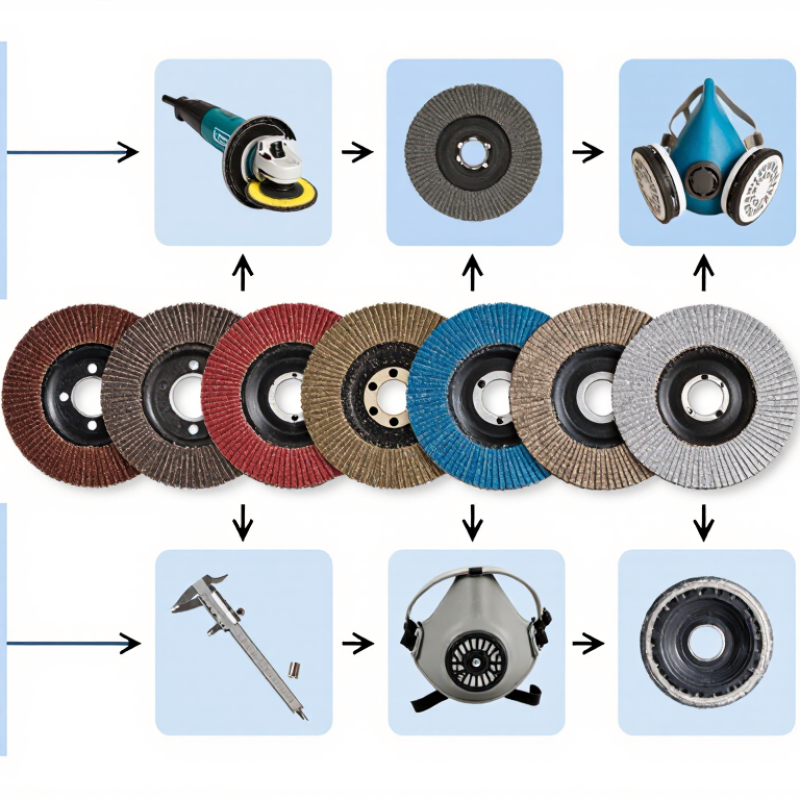
Identify the Material and Surface You Need to Sand
Choosing the Right Velcro Abrasive Disc: Identify the Material and Surface You Need to Sand
The material determines how aggressively a Velcro abrasive disc should cut. Softwood sands quickly, while hardwood usually needs controlled pressure and a finer grit. Painted surfaces require care because thick coatings can clog the disc. Metal generates heat and may need lighter passes. Plastic can melt if the disc spins too fast or stays in one place.
Tip 1: Inspect the surface before choosing grit.
Use coarse grit for heavy rust, uneven filler, or damaged paint. Choose medium grit for shaping and scratch removal. Fine grit works better for finishing. A shiny surface can hide deep scratches, so wipe away dust and check under bright light.
Tip 2: Match the disc to the surface shape.
Flat panels work well with firm discs and even pressure. Curved edges need a flexible disc that follows the contour without digging in. On delicate veneer or soft plastic, test a small hidden area first. I have sometimes chosen a grit that felt efficient, but it removed more material than expected.
Keep the disc moving. Pressing harder does not always improve results. It can create heat, swirl marks, or uneven edges. For painted wood, begin with a less aggressive disc and inspect the surface after a few passes. For bare metal, monitor discoloration and replace clogged abrasives promptly. No grit chart replaces a small test patch.
Choose the Right Abrasive Grit for Each Task
7 Tips to Choose the Right Velcro Abrasive Disc?
Choose the Right Abrasive Grit for Each Task
Choosing the correct grit begins with the material and the defect. Low grits, such as 40 to 80, remove heavy paint, rust, and uneven edges quickly. They also leave deeper scratches. Medium grits, usually 100 to 180, smooth shaping marks and prepare wood or metal for finishing. Fine grits, from 220 to 400, create a cleaner surface before painting or polishing. Very fine discs can refine delicate finishes, but they remove material slowly. Use the lowest effective grit for thick coatings. Do not force a fine disc to perform rough work. It wastes time.
Match the grit to your working pressure. Excessive pressure can overheat metal and flatten soft wood fibers. Use steady passes and let the abrasive cut naturally. If the disc clogs with paint or dust, choose an open-coat option or reduce pressure. Change grits gradually when the surface shows visible scratches. Skipping too far can leave marks that the next disc cannot remove. Test a small hidden area before sanding the entire panel. I have sometimes chosen a grit that seemed efficient, then spent longer repairing its scratches. That mistake is easy to repeat. Inspect the surface under bright side lighting. Wear suitable eye, breathing, and hearing protection, especially when sanding coatings or metal.
Compare Disc Backing Types and Hook-and-Loop Quality
Choosing the right Velcro abrasive disc starts with its backing, not its grit number.
In workshop trials, I check seven points: backing material, flexibility, tear resistance, hook density, loop strength, heat stability, and dust release.
Paper backing is economical and cuts cleanly on flat surfaces. Cloth backing tolerates edge work and repeated bending. Film backing stays flatter, but it can feel less forgiving. Mesh backing improves dust movement, although it may need careful pressure control.
Hook-and-loop quality decides whether the disc stays centered.
I look for evenly formed hooks, consistent loop coverage, and firm stitching or bonding. Weak engagement causes disc lift, vibration, and uneven scratches. Excessive pressure can also flatten the hooks.
Keep the pad clean. Dust acts like a small spacer between the disc and backing pad.
According to Grand View Research, the global abrasives market was valued at approximately 47 billion US dollars in 2023. That scale reflects rising demand for reliable surface preparation, not simply cheaper consumables.
FEPA safety guidance also stresses correct disc selection, secure mounting, and controlled operating conditions. Check the manufacturer’s maximum speed and match it with the tool.
Never assume a thicker backing is automatically better. I still misjudge this when sanding curved timber. A flexible cloth disc may follow the surface better, while a rigid film disc can leave flat spots.
Test one disc first. Then inspect the scratch pattern under angled light.
Select the Correct Disc Size and Tool Compatibility
Choosing a hook-and-loop abrasive disc starts with the tool, not the grit. Match the disc diameter to the backing pad exactly. A 125 mm disc on a 150 mm pad can expose the edge and create uneven pressure. A disc that is too small may waste sanding capacity. Check the tool’s maximum disc diameter, spindle design, and rated speed before use. The disc and backing pad must share the same hook-and-loop layout.
Tip 1: Measure twice. A simple ruler prevents costly returns. Confirm whether your sander uses 75 mm, 125 mm, or 150 mm discs. Also inspect the pad’s hole pattern. Open-hole discs support dust extraction, while solid discs can load faster on painted surfaces. The wrong pattern may reduce extraction efficiency and shorten disc life.
Tip 2: Compare operating speed. Industry guidance commonly advises keeping abrasive accessories below their marked maximum RPM. Grand View Research’s 2024 coated abrasives report projects market growth of roughly 4.8% annually through 2030, driven partly by efficient power-tool applications. That growth does not remove the need for careful matching. I still check compatibility twice, especially with older sanders. A perfect fit on paper can feel unstable in hand. Select a disc that matches the tool, pad, work area, and dust-control setup.
Balance Durability, Dust Control, and Overall Cost
Choosing the right Velcro abrasive disc means balancing cutting speed, dust control, and replacement cost. Start with the abrasive grain and grit. Coarse grits remove material quickly, while finer grits reduce visible scratches. A strong backing resists edge curling during hand sanding. Cheap backing often fails early.
Hole patterns must match the sander and extraction system. NIOSH guidance identifies local exhaust ventilation as a key control for airborne dust. OSHA’s respirable crystalline silica standard sets a 50 microgram-per-cubic-meter exposure limit over eight hours. For masonry or engineered stone, choose discs that support effective extraction. More holes do not always mean better airflow. Poor alignment can reduce suction and clog the surface.
Calculate cost per finished area, not cost per disc. Record how many panels one disc completes before its cutting action drops. A disc costing 30% more may last twice as long. However, that result changes with pressure, substrate, grit, and operator technique. I still see teams selecting the lowest price, then replacing discs repeatedly. It looks economical on paper, but downtime and dust cleanup quietly increase the bill. Check hook strength, backing stiffness, dust clearance, and actual disc life during a small trial. The best choice is rarely the cheapest pack.
Skip to content
