

FAQS
How to Choose Light Teak Grain Wooden Venetian Blinds?
Choosing Light Teak Grain Wooden Venetian Blinds is not only a matter of matching a warm colour to your walls. The grain, finish, slat width, and timber quality all influence how the blinds look and perform. In a bright living room, pale teak tones can reflect daylight softly, while darker flooring may make the grain appear richer. Samples matter. Digital images can mislead.
Window-covering specialist Michael Chen says, “Good blinds should balance natural texture, precise control, and the practical needs of the room.” That advice is useful because beauty alone does not guarantee durability. A smooth, even finish can resist dust more effectively than a heavily textured surface. Wider slats may create a cleaner appearance, but narrower slats can offer finer light adjustment. Neither option is automatically better.
Consider the window’s direction, humidity, furniture, and cleaning routine before ordering. Kitchens and bathrooms require extra caution, since natural wood may react poorly to persistent moisture. Check the cord system, headrail construction, slat alignment, and coating quality. Small defects can become obvious when sunlight crosses the window.
I have seen warm wood blinds look perfect in a showroom, then appear too yellow at home. That is an easy mistake. Test the sample beside your wall colour during morning and evening light. Also question whether the stated teak grain is genuine wood, a veneer, or a printed finish. The answer affects texture, maintenance, and long-term value. A thoughtful choice should feel attractive today, but remain sensible after years of daily use.
Understanding Light Teak Grain Wooden Venetian Blinds
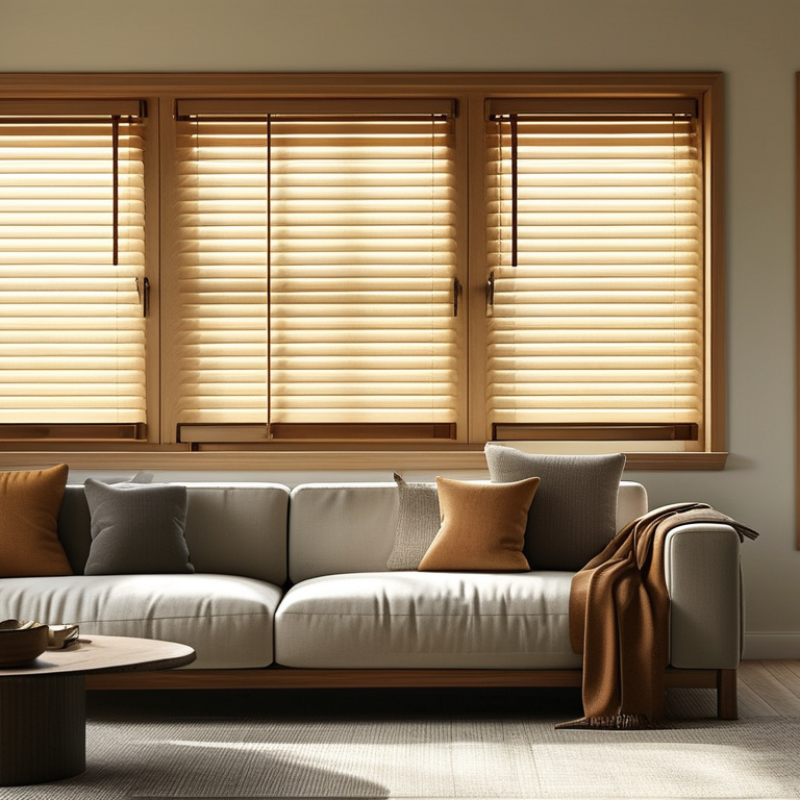
Light teak grain wooden Venetian blinds bring a warm, natural look without making a room feel heavy. The finish usually shows soft honey tones, subtle brown lines, and a visible wood pattern. However, light teak grain does not always mean the blind is made from teak. It may describe a printed or stained finish on another wood species. Check the material description carefully.
Understanding the slats is essential. Wider slats allow more daylight and create a cleaner appearance. Narrower slats offer finer light control but may need more frequent dusting. In my experience, a 50-millimetre slat suits large windows, while smaller windows often look balanced with narrower slats. Measure the window recess at several points because walls are rarely perfectly square. A small error can affect smooth operation.
Moisture matters.
Wooden blinds work best in bedrooms, studies, and living rooms. Bathrooms and kitchens may expose them to steam, grease, or repeated splashes. A moisture-resistant alternative could perform better there. Inspect the surface for even coating, straight slats, and firmly attached ladders. Tilt the slats before installation if possible. They should move quietly and return to a level position. I once chose a beautiful finish without testing the tilt mechanism, and daily use became irritating. Appearance matters, but handling reveals quality. Check cleaning guidance, operating instructions, and the available warranty before ordering.
How to Choose Light Teak Grain Wooden Venetian Blinds? - Understanding Light Teak Grain Wooden Venetian Blinds
| Selection Dimension | Recommended Specification or Data | Why It Matters |
|---|---|---|
| Overall Appearance | Choose a warm light-brown finish with visible, natural-looking grain variation and a low- to medium-gloss surface. | A light teak grain appearance adds warmth while remaining neutral enough for modern, coastal, Scandinavian, and traditional interiors. |
| Slat Material | Use responsibly sourced basswood, paulownia, or another stable hardwood with a teak-look finish. Confirm the material before ordering. | Different woods vary in weight, stability, grain character, and resistance to humidity. A teak-look finish does not necessarily mean the slats are solid teak. |
| Common Slat Widths | Approximately 25 mm, 35 mm, 50 mm, or 63 mm. | Smaller slats suit narrow windows and provide more adjustment points. Wider slats create a cleaner appearance and allow more daylight when tilted open. |
| Light Control | Tilting the slats can provide adjustable daylight control; fully closed slats significantly reduce incoming light but do not create complete blackout conditions. | Wooden Venetian blinds are suitable for glare reduction and flexible daylight management, but edge gaps and small spaces between slats may still allow light through. |
| Privacy | Good privacy is available when the slats are closed. For nighttime privacy, close the slats fully and consider side gaps during installation. | Correct slat angle and accurate fitting help reduce views into the room while preserving ventilation and daylight when desired. |
| Thermal Performance | Wood naturally provides more insulation than thin metal slats. Performance depends on window glass, blind fit, slat width, and the presence of side gaps. | Properly fitted blinds may help reduce solar heat gain and limit heat loss near the window, although they should not be treated as a replacement for high-performance glazing. |
| Room Suitability | Well suited to living rooms, bedrooms, dining rooms, studies, and home offices. | These areas usually benefit from the warm visual texture and adjustable privacy provided by wood blinds. |
| Moisture Exposure | Use caution in bathrooms, laundry rooms, kitchens, and areas with frequent condensation. Select a moisture-resistant alternative where necessary. | Natural wood can absorb moisture, expand, contract, warp, or develop finish damage when repeatedly exposed to high humidity or direct water. |
| Window Orientation | For strong sun exposure, choose a durable UV-resistant finish and consider curtains or solar shades for additional protection. | Long-term direct sunlight may gradually fade finishes and can contribute to heat buildup inside the room. |
| Finish and Coating | Look for an even stain, sealed surface, smooth edges, and a coating intended for interior wood products. | A consistent finish improves appearance and helps slow the absorption of dust and everyday moisture. |
| Color Matching | Light teak grain typically works well with white, cream, beige, soft gray, olive, navy, and natural wood furnishings. | The warm wood tone can soften cool color schemes and complement other natural materials such as linen, rattan, stone, and leather. |
| Operating System | Choose cord-free, cordless, or motorized operation where child safety, accessibility, or large window coverage is important. | Operating systems affect ease of use, safety, installation complexity, and suitability for tall or hard-to-reach windows. |
| Child and Pet Safety | Prefer cordless or motorized designs and keep operating components away from children and pets. | Window-covering cords and chains can create a strangulation hazard. Follow current local safety requirements and installation guidance. |
| Measuring Method | Measure the window width and height in at least three places, record the smallest measurements, and follow the supplier's inside- or outside-mount deduction rules. | Accurate measurements help prevent light gaps, scraping, difficult operation, and installation problems caused by uneven window openings. |
| Inside Mount | Install within the window recess when the recess has sufficient depth and is reasonably square. | Inside mounting creates a streamlined appearance but may leave small perimeter gaps around the blind. |
| Outside Mount | Mount above and beyond the window recess when greater light coverage or visual window enlargement is desired. | Outside mounting can cover more of the glass and reduce side light gaps, especially when the window recess is shallow or uneven. |
| Cleaning Requirements | Dust regularly with a soft microfiber cloth, feather duster, or vacuum brush attachment on low suction. Wipe spills promptly with a lightly damp cloth. | Excess water, abrasive cleaners, and prolonged dampness may damage the wood, stain, or protective coating. |
| Durability Indicators | Check slat thickness, smooth edges, secure ladder cords or tapes, solid headrail construction, and tested lifting hardware. | Hardware quality and construction details strongly influence operating life, alignment, and resistance to daily wear. |
| Environmental Considerations | Ask for information about wood sourcing, formaldehyde emissions, coating emissions, and packaging materials where documentation is available. | Verified material and emissions information supports healthier indoor-air choices and more responsible purchasing decisions. |
| Best Choice Summary | Select the light teak grain finish that matches the room, a suitable slat width, a moisture-appropriate material, safe operation, and precise measurements. | The best blind balances appearance, light control, privacy, maintenance, safety, window conditions, and long-term durability. |