

FAQS
How to Choose the Right Iron Pendant Light?
Choosing the right Iron Pendant Light involves more than matching a finish to your dining table. The fixture must suit the room’s scale, ceiling height, lighting needs, and daily habits. A dramatic pendant may look impressive online, yet feel oversized above a narrow breakfast bar. Measure the space before admiring the style.
Lighting designer Ingo Maurer once said, “I am not interested in the light itself, but in the effect of light.” His observation remains useful here. An Iron Pendant Light should create the intended atmosphere, not merely become a decorative object. Consider warm bulbs around 2700K for dining areas and living rooms. Choose higher brightness when the pendant supports practical tasks. A high color-rendering index can also reveal food, wood, and fabric more naturally.
Material details deserve close attention. Solid iron can provide visual weight, while thinner metal creates a lighter, more contemporary impression. Check the shade opening, cord length, canopy size, and surface finish. Matte black hides fingerprints, but pale finishes may soften a dark interior. Small details matter.
Safety cannot be treated as an afterthought. Confirm the product’s electrical specifications and installation suitability. A qualified electrician should handle permanent wiring. Damp locations require appropriate ratings.
There is no universally perfect pendant. Personal taste sometimes defeats careful measurements. That is where reflection helps. Imagine the light at breakfast, during cleaning, and late at night. Then choose the Iron Pendant Light that still feels useful after the first impression fades.
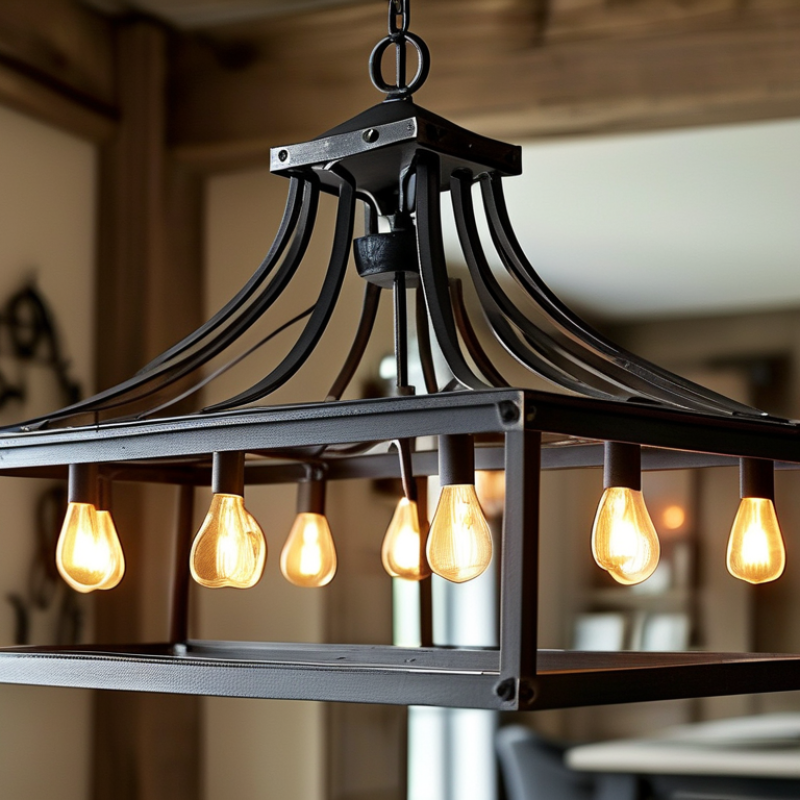
Understanding Iron Pendant Light Styles and Design Features
Choosing the right iron pendant light starts with understanding its visual language. A slim, single-arm design suits modern kitchens and compact dining areas. A cage-shaped pendant adds structure without blocking light. Try layered forms for a softer, more decorative effect. Industrial styles often show rivets, open frames, and dark finishes. Farmhouse-inspired designs may combine iron with wood or woven details. Globe shades create gentler shadows, while exposed bulbs feel more dramatic.
Scale matters as much as style. Measure the table, island, and ceiling before selecting a fixture. A pendant that looks attractive online may feel oversized above a narrow counter. Keep it balanced. For dining areas, the fixture should usually leave clear sightlines across the table. Adjustable cords or rods help accommodate different ceiling heights. I once chose a beautiful pendant with a shallow shade, but it directed glare toward seated guests. The appearance was right; the performance was not.
Iron finishes also affect the room’s mood. Matte black feels crisp, while aged or textured iron adds warmth and depth. Inspect welds, joints, and coating consistency closely. Uneven finishing is not always charming. Select a compatible bulb for brightness and color temperature, then confirm the socket rating. Installation should follow local electrical codes, especially in damp locations. Ask a qualified electrician to check the ceiling support and wiring before installation. A strong design still needs reliable construction and safe placement.
How to Choose the Right Iron Pendant Light? - Understanding Iron Pendant Light Styles and Design Features
| Selection Dimension | Common Options | Design Characteristics | Recommended Use | Practical Considerations |
|---|---|---|---|---|
| Industrial Style | Black iron, exposed socket, cage shade | Uses simple metal forms, visible hardware, and a utilitarian appearance. | Kitchens, lofts, workshops, cafés, and dining areas | An exposed bulb may create glare, so a decorative filament bulb or softer diffuser can improve comfort. |
| Modern Minimalist | Slim iron frame, dome, cylinder, or solid geometric shade | Features clean lines, restrained decoration, and balanced proportions. | Contemporary kitchens, entryways, home offices, and apartments | Choose a shade size that complements nearby furniture without visually overcrowding the room. |
| Farmhouse and Rustic | Distressed iron, matte finishes, bell shades, or lantern forms | Combines aged textures and traditional silhouettes with a warm, informal feel. | Dining rooms, breakfast nooks, porches, and country-style interiors | Distressed finishes vary naturally; check the product surface and care instructions before installation. |
| Vintage and Traditional | Scrolled arms, lantern shades, antique-look iron, or bronze-style finishes | Adds ornamental detail and a classic focal point. | Hallways, formal dining rooms, libraries, and period-inspired homes | Confirm the pendant's visual weight and suspension length, especially in rooms with low ceilings. |
| Globe and Spherical | Iron frame with clear, frosted, or opal glass globe | Softens the hard appearance of iron and distributes light more evenly. | Bedrooms, living rooms, corridors, and dining spaces | Frosted or opal glass generally reduces visible glare compared with clear glass. |
| Shade Shape | Dome, cone, cylinder, cage, lantern, or linear bar | The shade controls the direction, spread, and visual character of the light. | Select according to the task and layout of the room. | Downward shades suit task lighting; open or glass designs provide broader ambient illumination. |
| Finish and Color | Matte black, white, bronze, brass-tone, gray, or distressed finishes | Influences contrast, warmth, and how easily the fixture coordinates with other hardware. | Match or intentionally contrast cabinet handles, faucets, door hardware, and furniture. | For damp locations, use a fixture specifically rated for damp or wet conditions; indoor iron fixtures should be protected from moisture. |
| Pendant Size | Small: under 25 cm; medium: 25–45 cm; large: over 45 cm diameter | Scale affects both the visual balance and the amount of light coverage. | Use one large pendant for a focal point or several smaller pendants for wider coverage. | For multiple pendants, keep consistent spacing and align the fixtures with the surface below. |
| Hanging Height | Adjustable rod, chain, or cord suspension | Determines sightlines, usability, and the relationship between the light and furniture. | Dining tables, kitchen islands, bedside areas, and open living spaces | A common starting point is about 76–91 cm above a dining table or kitchen island, subject to room conditions and personal preference. |
| Bulb and Light Quality | LED, vintage-style filament LED, dimmable bulb, or frosted bulb | Bulb shape and color temperature affect atmosphere, brightness, and glare. | Warm white light around 2700–3000 K is commonly used for relaxed residential spaces. | Check socket type, maximum wattage, dimmer compatibility, and the fixture's electrical requirements. |
| Safety and Maintenance | Grounded wiring, secure canopy, protective coating, and accessible hardware | Supports safe installation and helps preserve the iron surface over time. | All indoor applications, with additional ratings required for bathrooms or outdoor areas | Turn off power before installation, use a qualified electrician when needed, and clean with a soft dry or slightly damp cloth. |