What Is a Compressor and How Does It Work?
A Compressor is more than a metal box producing pressurized air. It is a carefully engineered machine that draws in gas, reduces its volume, and releases it at higher pressure. You may hear its steady hum in a workshop, a refrigeration plant, or beside a natural-gas pipeline. Inside, rotors, pistons, or scrolls move with tight clearances. Small gaps matter.
Compressed-air specialist Hank van Ormer has often emphasized a practical truth: “Compressed air is not free.” His warning deserves attention. The machine consumes electricity, generates heat, and loses energy through leaks, pressure drops, and poor maintenance. A system can appear quiet while wasting power continuously. That is easy to miss.
This guide explains what a Compressor does and how its main types work. It examines positive-displacement designs, such as reciprocating, rotary screw, and scroll compressors. It also introduces dynamic compressors, including centrifugal models. Each design changes pressure differently. Each suits different flow rates, temperatures, and operating demands.
The details become real when you watch a technician check oil level, listen for abnormal vibration, or find a warm air line near a loose fitting. Those observations often reveal more than a specification sheet. Still, no single compressor fits every application. That assumption can cause expensive mistakes. Energy efficiency depends on controls, load patterns, installation, and service quality. This article offers a clear foundation, while acknowledging one uncomfortable fact: compressor performance often declines long before failure becomes obvious.
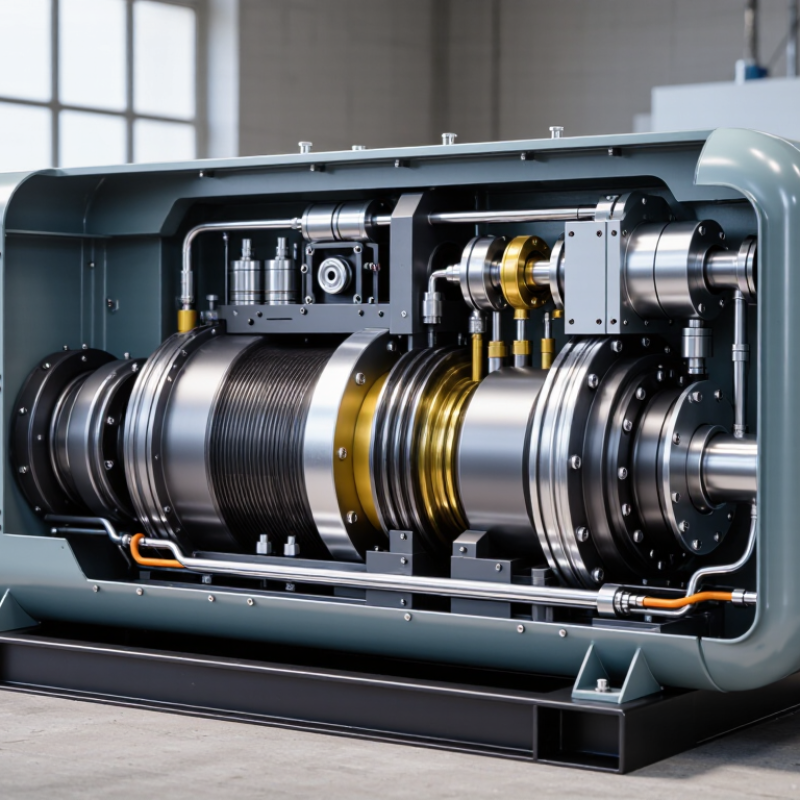
What a Compressor Is and the Role It Performs
A compressor is a machine that raises gas pressure by reducing its volume. Its role is broader than simply “making air.” It supplies controlled energy for pneumatic tools, valves, packaging equipment, refrigeration, and process lines. In a factory, the compressor is often the hidden utility behind many visible machines. When it stops, several operations may stop with it.
The U.S. Department of Energy reports that compressed-air systems can consume 10% to 15% of industrial electricity, with inefficient sites reaching higher levels. That makes the compressor a major operating-cost component. Its work begins at the intake filter, continues through compression and cooling, and ends at a receiver or distribution line. Pressure must remain stable. Excessive pressure can increase energy use, while low pressure can weaken tools and interrupt production. Small leaks matter. The Department of Energy notes that leaks may waste 20% to 30% of compressor output.
Details decide performance. A hissing joint near a metal fitting may seem harmless, yet it can force longer running hours. Moisture can also collect inside pipes, damage equipment, and reduce product quality. Regular leak surveys, filter checks, drain inspections, and pressure measurements provide practical control. Energy audits support this approach; the International Energy Agency repeatedly identifies industrial efficiency as a key route for reducing energy demand.
One assumption deserves review. Bigger capacity does not always mean better service. It may create more unloaded running and wasted electricity. The correct compressor should match demand patterns, duty cycles, air quality, and future expansion. That decision requires measurements, not guesswork.
How a Compressor Moves and Compresses Gas
A compressor moves gas by creating a pressure difference. Gas enters through an inlet when internal pressure falls below suction pressure. In a reciprocating compressor, a piston pulls gas into a cylinder. The inlet valve closes, and the piston reduces the available volume. Pressure and temperature rise together. When cylinder pressure exceeds discharge pressure, the outlet valve opens. Rotary screw compressors follow the same basic idea continuously, using rotating elements instead of pistons. Dynamic compressors work differently. An impeller accelerates the gas, then a diffuser converts velocity into pressure. The process sounds simple, but clearance, leakage, and heat make real systems less tidy.
The U.S. Department of Energy’s Improving Compressed Air System Performance handbook reports that leaks can waste 20–30% of compressor output. Well-maintained systems may hold leakage below 10%. That difference matters. A small leak can sound like a faint hiss near a fitting, yet consume power all day. The handbook also recommends measuring pressure, flow, temperature, and operating hours before changing equipment. Pressure alone can mislead. I have found that a higher setpoint sometimes hides poor piping rather than solving demand problems. That assumption deserves review.
Tips: Check filters, valves, drains, and hose connections during a planned walkdown. Use ultrasonic testing when possible. Record suction and discharge temperatures. Follow ISO 1217 test methods when comparing compressor performance. Keep the data, not just the sales claim.
Common Compressor Types and Their Operating Methods
A compressor raises gas pressure by reducing its volume or adding energy to the flow. Its basic job sounds simple, but each design handles heat, moisture, and load differently. Reciprocating compressors use pistons inside cylinders. The piston draws gas through an inlet valve, compresses it, and pushes it through an outlet valve. They suit high pressures and changing demand, although vibration and pulsation need careful control. In field maintenance, loose fasteners often reveal themselves through unusual noise before serious damage appears.
Rotary screw compressors use two meshing rotors to trap and compress gas continuously. They provide a steady supply for workshops and process equipment. Rotary vane models use sliding vanes inside an eccentric rotor, creating smaller chambers as the rotor turns. Centrifugal compressors work differently. A fast impeller increases gas velocity, and diffusers convert much of that velocity into pressure. They are efficient at large, stable flow rates, but performance can fall sharply when demand changes. Scroll compressors use orbiting spirals and usually produce smooth, low-pulsation flow. No design wins everywhere.
Tips: Check inlet filters, oil level, discharge temperature, and abnormal vibration during routine inspections. Match the compressor type to pressure, flow, duty cycle, and gas composition. Keep a service log with readings, not guesses. Small measurement errors can lead to expensive decisions. A cooling system that looks adequate may fail on the hottest production day. Allow safety margins, but avoid excessive capacity, which can increase energy waste.
Where Compressors Are Used in Everyday Systems
A compressor takes in low-pressure gas and squeezes it into a smaller space. Pressure and temperature rise. The gas then moves through a system that uses its stored energy. That sounds simple. However, oil, seals, valves, airflow, and electrical controls affect performance. A warm casing is often normal, but excessive heat deserves inspection.
In a household refrigerator, the compressor circulates refrigerant through the cooling loop. It compresses the refrigerant before the outdoor coil releases heat into the room. The refrigerant later expands and becomes cold inside the cabinet. That small motor may run quietly for hours. Dust around the coils can make it work harder, increasing energy use and shortening service life.
Compressors also appear in air conditioners, heat pumps, vehicle braking systems, workshop tools, and tire inflators. In a heat pump, they move heat against its natural direction, even during cold weather. In heavy vehicles, compressed air can operate brakes reliably, but moisture control remains essential. Industrial sites may use rotary compressors for steady airflow, while small pumps use pistons. The textbook model is incomplete. Leaks, vibration, cycling, and poor ventilation change real results. Listening for new rattles and checking pressure within the specified range can reveal trouble early.
What Is a Compressor and How Does It Work?
A compressor uses mechanical energy to reduce the volume of a gas and increase its pressure. The chart shows representative pressure ranges found in common compressor-based systems. Values are approximate and measured as gauge pressure.
Compressors are used in vehicle turbochargers, bicycle pumps, workshop air systems, refrigeration equipment, and vehicle air-brake systems. Actual pressure depends on the design, temperature, gas, and operating conditions.