
FAQS

How to Source White Pillows Globally in 2026?

Sourcing White Pillows globally in 2026 requires more than comparing factory prices. Buyers must examine fiber quality, filling recovery, stitching strength, packaging, and supplier consistency. A pillow may look bright in a sample room, yet turn gray after repeated washing. That detail matters.

Sleep specialist Dr. Michael Breus advises, “Your pillow should keep your neck in a neutral position.” This principle should guide purchasing decisions. White Pillows need suitable loft, firmness, and support for their intended market. Hotel pillows may require washable polyester clusters, while premium retail products may favor responsibly sourced down or certified recycled fibers. The cheapest option can become expensive after returns, odor complaints, or flattened filling.

A reliable sourcing process begins with documented specifications. Request fabric composition, fill weight, dimensions, washing instructions, test reports, and production samples. Check whether the supplier can maintain the same whiteness across multiple batches. Ask for certifications such as OEKO-TEX Standard 100, Global Recycled Standard, or Responsible Down Standard when relevant. Factory audits and independent inspections add useful evidence, but they do not eliminate every risk.

Global purchasing also involves lead times, carton measurements, labeling, freight planning, and changing import requirements. A supplier may promise fast delivery, then struggle during peak seasons. That happened to many buyers. It deserves honest reflection.

This guide explains how to compare manufacturers, verify quality, control costs, and build a practical sourcing plan for White Pillows in 2026. There is no flawless route. Careful testing remains the safer advantage.
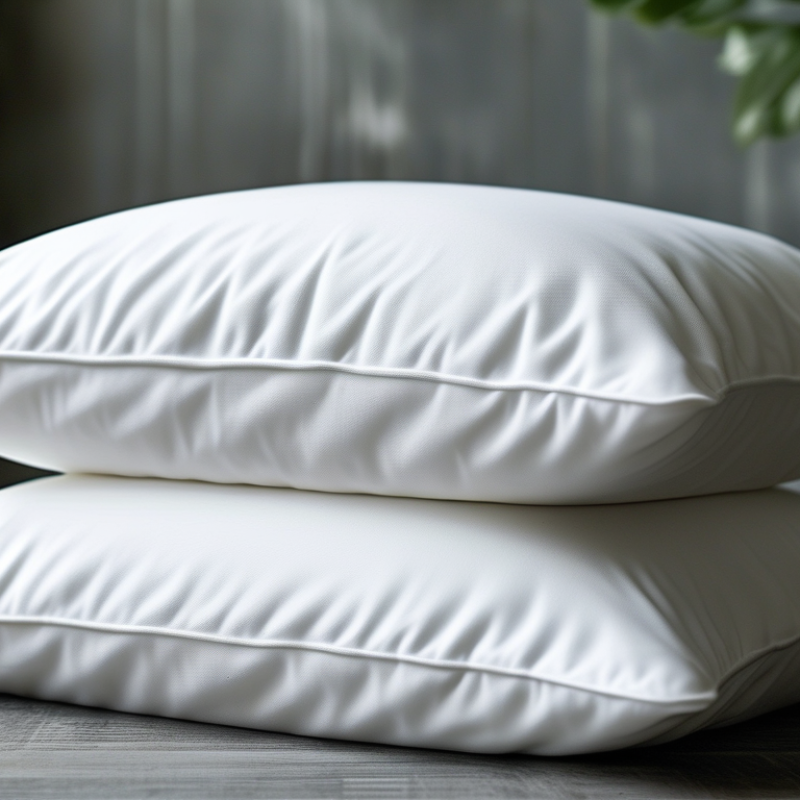
How to Source White Pillows Globally in 2026?

Define White Pillow Specifications, Materials, and Quality Standards

White pillows require precise specifications before global sourcing begins. Define the finished size, fill weight, loft, firmness, and acceptable dimensional tolerance. A standard hotel pillow may measure 50 × 75 centimetres, but regional bed sizes differ. White shows everything.

Choose materials according to use, cost, and care conditions. Textile Exchange’s 2024 Materials Market Report estimates global fiber production reached 124 million metric tonnes in 2023. Polyester represented about 57%, while cotton accounted for roughly 22%. These figures support wide material availability, but they do not guarantee comfort or durability. Specify combed cotton, recycled polyester, down, or synthetic clusters by fiber length, purity, and blend ratio. Require documented fill composition and moisture testing. Small details matter.

Quality standards should be measurable at the factory and during third-party inspection. Use ISO 12947 for fabric abrasion resistance, ISO 105 for colorfastness, and ASTM D5034 for tensile strength. For white shells, define whiteness tolerance, pH limits, shrinkage, seam strength, and freedom from visible oil marks. Request testing for restricted chemicals and microbial cleanliness under applicable market requirements. A perfect white is not always practical; optical brighteners may affect buyer preferences and environmental expectations. Review failed samples honestly, because a pillow can pass laboratory tests yet feel flat after repeated washing.

Identify Global Supplier Regions and Manufacturing Capabilities

How to Source White Pillows Globally in 2026?

Supplier geography should match the pillow’s construction, not only its quoted price.

China remains strong in high-volume synthetic filling, woven shells, quilting, and automated packing.

Vietnam and Bangladesh offer expanding cut-and-sew capacity, especially for cotton covers and export-oriented production.

India and Pakistan provide deep cotton-spinning and filling expertise.

Turkey and Eastern Europe can support shorter delivery routes into European markets.

Material evidence helps narrow the search.

Textile Exchange’s 2024 Materials Market Report estimates that polyester represented about 59% of global fiber production in 2023, while cotton accounted for roughly 19%.

This supports sourcing both recycled or virgin polyester-filled pillows and cotton-rich shells.

However, recycled content claims require transaction records, batch traceability, and testing.

A certificate alone is not enough.

Manufacturing capability needs physical verification.

Ask for monthly output, filling-weight tolerance, needle-detection controls, compression recovery tests, and wash-performance data. Inspect sample rooms, not just showrooms.

For down-alternative pillows, check fiber opening, odor control, and migration after repeated washing.

For cotton products, review yarn count, fabric density, shrinkage, and colorfastness.

The International Trade Centre’s trade data can help compare HS 9404 export patterns across supplier countries, but customs codes combine several bedding products. This creates imperfect comparisons.

I would never treat trade value as proof of factory quality.

Capacity matters. So does consistency.

Compare Sourcing Costs, Certifications, and Minimum Order Quantities

Global pillow sourcing starts with a landed-cost comparison, not the factory quote alone. Request prices under the same specification: 50 × 70 centimeters, white shell fabric, filling weight, packaging, and delivery term. Compare unit price, sampling fees, inspection costs, testing fees, duties, and ocean or air freight. A supplier offering $3.20 per pillow may become more expensive after freight and carton charges.

Certification requirements depend on the material and target market. For cotton covers, verify organic claims through a valid GOTS certificate and transaction records. OEKO-TEX Standard 100 can support textile safety claims, but check whether the certificate covers the actual fabric and finished pillow. Down-filled products may require responsible sourcing evidence, while synthetic filling needs composition and performance test reports. Ask for certificate numbers, issuing bodies, validity dates, and factory addresses. Documents can look convincing.

Minimum order quantities often vary by color, fabric, filling, and packaging. A practical supplier might accept 500 pieces for standard white fabric but require 2,000 pieces for custom labels or cartons. Smaller orders usually carry higher unit costs. Samples reveal problems that spreadsheets hide, such as uneven filling, yellowish fabric, weak stitching, or compressed cartons. I have learned that a low MOQ is not always better. It can indicate higher pricing, limited production priority, or inconsistent raw materials. Compare at least three written quotations and record every assumption before choosing a supplier.

Verify Suppliers Through Samples, Audits, and Contract Terms

How to Source White Pillows Globally in 2026?

White pillows look simple, but small defects become highly visible. Start with a written specification covering size, fill weight, fabric composition, loft, stitching, and shade tolerance. Request samples from at least three suppliers. Compare them under daylight, not only warehouse lighting. Check odor, seam strength, surface stains, and recovery after compression. Wash one sample according to the intended care label. Measure shrinkage afterward. A sample can look excellent and still fail after washing.

Use a factory audit before placing a large order. Review production capacity, raw material storage, needle control, dust management, and final inspection records. Ask how the supplier separates approved white fabric from rejected batches. Independent inspectors can verify dimensions, filling weight, packaging, and carton counts. Video calls help, but they cannot replace physical evidence. This is where many sourcing plans remain too optimistic.

Put every critical detail into the contract. Include approved sample photos, measurable tolerances, testing methods, inspection rights, corrective-action deadlines, and payment milestones. Define what happens when pillows arrive with stains, incorrect filling, or excessive shrinkage. Require traceable batch records and legally compliant labeling for the destination market. Keep a retained sample from the approved production lot. It provides a useful reference during disputes. One weakness is easy to overlook: written terms cannot fix unclear specifications. Recheck the measurements with the supplier before signing.

Plan Shipping, Customs, Compliance, and Quality Control for 2026

Sourcing white pillows in 2026 requires a landed-cost plan, not only a factory quotation. The World Bank’s Logistics Performance Index 2023 gave global customs an average score of about 2.5 out of 5. Clearance delays remain realistic. Build schedules with buffer days. Ocean freight usually suits bulk orders, while air freight protects urgent launches but can destroy margins. The International Maritime Organization reports that ships carry over 80% of global merchandise trade by volume.

Ask suppliers for fiber-content records, test reports, packing specifications, and production photographs. White fabric exposes oil marks, shade differences, stitching defects, and compression damage. Use a golden sample, measurable tolerances, and pre-shipment inspections. Check fill weight, dimensions, seam strength, odor, moisture, and recovery after compression. AQL sampling can support decisions, but it cannot replace judgment. I have seen “passed” cartons fail after humid storage.

Customs files should match exactly. Confirm the correct HS classification with a customs professional, then align the invoice, packing list, origin details, and bill of lading. Destination rules may require fiber labels, care instructions, flammability testing, chemical restrictions, or packaging declarations. The OECD Due Diligence Guidance recommends risk-based supply-chain checks, especially for materials with unclear origins. Keep test records and supplier approvals for audit trails. A perfect forecast is impossible. Recheck freight rates, port reliability, and regulatory updates quarterly. One overlooked label can hold thousands of pillows.