
FAQS
What Is a Hiking Raincoat and How Does It Work?
A Hiking Raincoat is more than a waterproof shell. It is a moving barrier against rain, wind, mud, and body heat. For hikers, that distinction matters. The Outdoor Industry Association’s 2024 Outdoor Participation Trends Report recorded 57.8 million American hiking participants in 2023. More people outdoors means greater demand for dependable rain protection.
A Hiking Raincoat usually combines a face fabric, water-shedding treatment, and waterproof membrane. The outer coating helps rain form droplets and roll away. The membrane blocks liquid water while allowing limited vapor movement. Sealed seams close vulnerable needle holes. Hood adjustment, cuffs, and pit zips manage the remaining gaps.
Breathability is not magic.
Outdoor gear expert Andrew Skurka explains the problem clearly: “Rain jackets are not breathable enough to keep you dry from the inside.” His rainwear guidance, published through Andrew Skurka’s instructional resources, reflects practical field experience rather than showroom claims. During a steep climb, sweat can soak an inner layer even when the shell performs correctly.
The European Outdoor Group’s market research also shows sustained consumer interest in technical outdoor equipment, although reports rarely isolate hiking raincoats as a separate category. That limitation deserves attention. Market data can describe demand, but it cannot prove one jacket suits every trail.
A useful evaluation considers waterproof ratings, breathability testing, fabric weight, repairability, and fit. A three-layer shell may protect better during prolonged storms. A lighter two-and-a-half-layer design may pack smaller. Neither choice is automatically superior.
The right answer depends on weather, pace, layering, and tolerance for dampness. Examine the details. Then question the marketing.
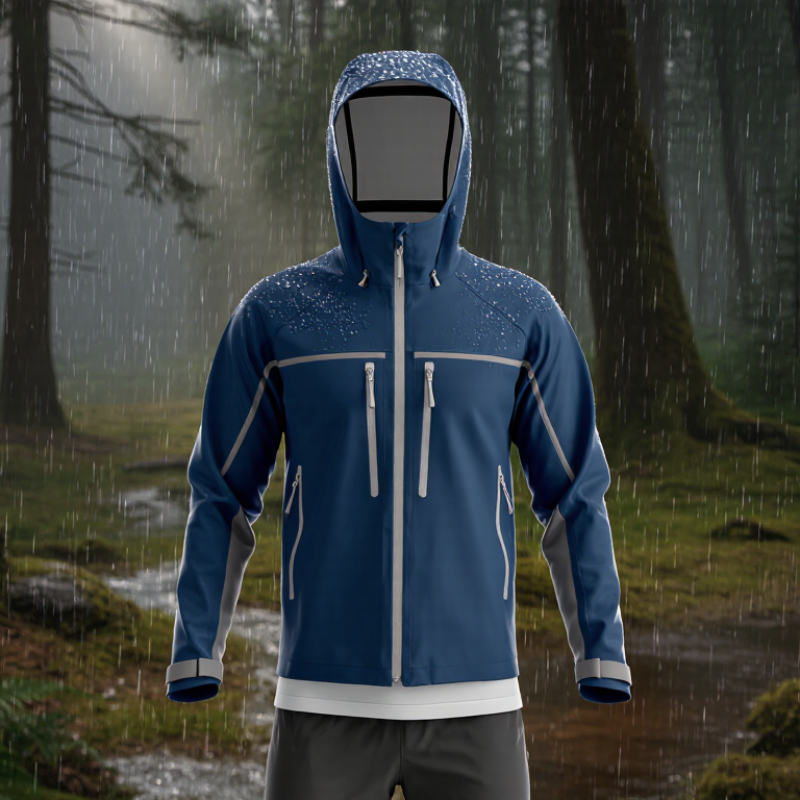
Definition and Core Purpose of a Hiking Raincoat
What Is a Hiking Raincoat and How Does It Work?
Definition and Core Purpose of a Hiking Raincoat
A hiking raincoat is a lightweight shell designed to block rain during outdoor travel. Its core purpose is simple: keep liquid water outside while reducing sweat buildup inside.
The Outdoor Foundation’s 2024 Outdoor Participation Trends Report recorded about 59.6 million U.S. hiking participants in 2023. That number reflects varied conditions, from light showers to prolonged mountain rain. A suitable raincoat therefore needs more than a water-repellent surface. It usually combines a coated or laminated fabric, sealed seams, adjustable cuffs, and a protective hood.
The fabric resists rainfall through a waterproof barrier. Breathability works differently. It allows some water vapor from perspiration to escape. ISO 811:2018 evaluates fabric resistance to water penetration under controlled pressure. However, laboratory performance does not perfectly represent a windy trail or a soaked backpack strap.
Practical testing exposes the gaps. A coat may resist heavy rain but feel clammy during a steep climb. Ventilation zippers can help, although they may also admit rain. A loose hood can leak around the face. A tight one can restrict vision. No raincoat performs perfectly forever; abrasion, washing, and repeated folding can weaken its finish. The most useful definition is not “completely waterproof.” It is a protective hiking shell that manages rain, movement, and body heat with reasonable balance.
Main Materials and Protective Layers
A hiking raincoat is more than a thin waterproof shell. It combines several materials and protective layers to keep rain outside while allowing some body heat and moisture to escape. During wet trail walks, I have noticed that fabric alone is not enough. The construction matters just as much.
Most technical raincoats use a tightly woven outer fabric, a waterproof membrane, and an inner protective layer. The membrane contains tiny pores. They block larger water droplets but may let water vapor move outward. Two-layer designs often add a separate lining for comfort. Two-and-a-half-layer coats use a printed inner pattern, which reduces weight. Three-layer coats bond the outer fabric, membrane, and inner layer together. They usually feel tougher and more stable during heavy use.
The outer fabric often receives a durable water-repellent treatment. It makes rain bead and roll away. This treatment can wear off through friction, dirt, or repeated washing. Taped seams are also important because needle holes can leak. Cuffs, zippers, and the hood need careful design. A hood that turns with your head is safer on exposed paths. Still, no raincoat is perfectly breathable. I once trusted a high waterproof rating and became damp from sweat.
Tips: Check the seam tape, hood adjustment, and ventilation openings before buying. Choose a relaxed fit for a warm mid-layer. Wash the coat gently, and follow its care label. Reapply water repellency only when droplets stop forming beads. A heavier shell may protect better, but it can feel uncomfortable on steep climbs.
How Waterproofing and Breathability Work Together
What Is a Hiking Raincoat and How Does It Work?
A hiking raincoat uses several layers to block rain while releasing body vapor. The outer fabric usually has a water-repellent finish. Rain beads up and rolls away. Under it, a waterproof membrane contains tiny pores. These pores are too small for liquid water droplets, but they can allow some vapor to escape.
Waterproofing and breathability must work together. A strong membrane can stop heavy rain, but it may feel warm during a steep climb. Breathability depends on temperature, humidity, movement, and clothing underneath. When your body produces more vapor than the fabric can release, moisture builds inside. No jacket solves that perfectly.
During wet trail testing, I noticed sweat gathering around my lower back, even when the shoulders stayed dry. Opening the vents helped quickly. Keep moving slowly. A raincoat also needs sealed seams, adjustable cuffs, and a hood that turns with your head. Without these details, water can enter through small gaps.
A durable outer finish can lose performance after dirt, skin oil, or repeated use. Then the fabric may “wet out,” causing the surface to look soaked. The membrane might still block rain, but airflow becomes weaker. Gentle cleaning and careful drying can restore some performance. I once trusted a jacket too much in humid weather. That mistake taught me to carry a light base layer and avoid overdressing. Temperature control starts before the rain arrives.
What Is a Hiking Raincoat and How Does It Work? — How Waterproofing and Breathability Work Together
| Data Dimension | What It Means | Typical Technical Information | Why It Matters on a Hike |
|---|---|---|---|
| Primary Function | A hiking raincoat is an outer shell designed to reduce the entry of rain and wind while helping moisture vapor escape from the inside. | Weather protection plus moisture management | It helps keep the wearer drier during rain, wind, and changing outdoor conditions. |
| Waterproof Construction | Water resistance is created through a fabric membrane or coating, together with sealed or protected seams. | Common constructions include coated fabrics, microporous membranes, and nonporous hydrophilic membranes. | A waterproof face fabric alone is not enough if water can enter through seams, zippers, or openings. |
| Hydrostatic Water-Pressure Rating | This laboratory measurement indicates how much water pressure a fabric can withstand before leakage occurs. | Reported in millimetres of water column; higher values generally indicate greater resistance to water pressure. | Higher ratings are useful for sustained rain, wet vegetation, kneeling, or pressure from a backpack. |
| Waterproof Rating Guide | A general way to interpret hydrostatic-head results. | Around 5,000 mm: light rain and limited exposure; around 10,000 mm: moderate rain and regular hiking; 20,000 mm or more: stronger protection for prolonged or severe wet conditions. | Actual performance also depends on seam sealing, garment design, fabric wear, and test method. |
| Breathability | Breathability describes how effectively water vapour from perspiration moves through the garment. | Often reported as moisture-vapour transmission, such as g/m²/24 h, or through evaporative resistance testing. | Better moisture-vapour transfer can reduce clamminess during uphill walking and other high-output activities. |
| How a Microporous Membrane Works | Very small pores can block liquid water droplets while allowing smaller water-vapour molecules to pass under suitable conditions. | The pores must remain clear and the fabric must be maintained correctly. | This structure can provide a balance between rain protection and moisture-vapour release. |
| How a Hydrophilic Membrane Works | A nonporous membrane can move water vapour through the material by absorbing and releasing moisture along a concentration gradient. | Performance depends on humidity, temperature, activity level, and the difference between the inside and outside air. | It can continue functioning without open pores, but it may feel less breathable when conditions are warm and humid. |
| Durable Water Repellent Finish | A surface treatment makes water bead up and roll off the face fabric instead of soaking into it. | It supports, but does not replace, the waterproof membrane or coating. | Maintaining surface repellency helps the outer fabric resist wetting and can preserve comfort and breathability. |
| Seam Sealing | Tape or liquid sealant covers needle holes and joins created during sewing. | Fully taped seams generally provide more complete rain protection than partially sealed seams. | Seam sealing prevents water from bypassing an otherwise waterproof fabric. |
| Water-Resistant Zippers and Closures | Zipper flaps, coated zippers, storm flaps, adjustable cuffs, and hem drawcords limit water entry through openings. | Protection varies according to zipper design and how well openings are adjusted. | These details are especially important in wind-driven rain and prolonged storms. |
| Air Permeability | Air permeability measures how easily air passes through a fabric, which is different from water-vapour breathability. | A fabric may have low air permeability while still allowing water vapour to move through a membrane. | Understanding the difference prevents breathability claims from being interpreted as direct ventilation. |
| Mechanical Ventilation | Vents allow warm, humid air to escape directly rather than relying only on the fabric. | Common examples include pit zips, front zippers, mesh-lined pockets, and adjustable cuffs. | Ventilation is often more effective than membrane transport during intense exertion or humid weather. |
| Fit and Layering | The jacket should allow movement and accommodate insulating or mid-layer clothing without creating large gaps. | Adjustable hoods, cuffs, hems, and articulated sleeves improve coverage and mobility. | A suitable fit helps maintain protection while reducing drafts, pressure points, and restricted movement. |
| Backpack Compatibility | Shoulder straps and hip belts can compress fabric and increase pressure on the jacket surface. | Higher waterproofing, reinforced areas, and a suitable hem length can improve performance under a pack. | Compression may increase the chance of water penetration in heavily stressed areas. |
| Why Waterproofing and Breathability Conflict | A garment designed to block liquid water also creates a barrier that limits the movement of moisture and heat. | Breathability is affected by weather conditions, exertion, clothing layers, fabric contamination, and ventilation. | No raincoat remains perfectly dry inside during every activity; managing heat and exertion is also necessary. |
| Care and Maintenance | Dirt, body oils, detergent residue, and abrasion can reduce surface water repellency and affect moisture transfer. | Follow the care label, use suitable cleaning methods, and renew the water-repellent finish when needed. | Regular care helps preserve waterproofing, breathability, and fabric durability. |
Important: Waterproof and breathability values are not directly comparable across every test method. Real-world performance depends on fabric construction, seam sealing, garment design, weather, activity intensity, and maintenance.
Key Design Features for Hiking Conditions
What Is a Hiking Raincoat and How Does It Work?
A hiking raincoat is a lightweight shell designed to block rain and wind during outdoor travel. Its fabric usually combines a water-resistant outer layer with a breathable inner structure. Rain stays outside, while some body moisture can escape. This balance matters on steep climbs, when heat builds quickly under the jacket.
Key Design Features for Hiking Conditions
A well-designed hood should move with your head without blocking side vision. Adjustable toggles help secure it during sudden gusts. Sealed seams reduce leakage, especially across the shoulders and upper back. Waterproof zippers protect pockets and front openings. Underarm vents can release heat faster than fabric alone.
Cuffs should tighten around gloves, while an adjustable hem stops rain from entering below. A longer back panel offers extra protection when bending over or carrying a pack. Useful pockets sit above the hip belt, keeping their contents reachable. I prefer a jacket that packs small but still feels durable against rough rock. Lightweight fabric can tear more easily. That trade-off deserves attention.
On wet trails, breathability is never perfect. Sweat may still collect inside during a hard ascent. Opening vents early often helps more than waiting until the jacket feels soaked. Before a trip, test the hood, zippers, and cuffs with your actual layers. A raincoat should fit comfortably over insulation, but excessive space can let wind enter. Small details become important when rain lasts for hours.
Choosing the Right Raincoat for Different Trails
What Is a Hiking Raincoat and How Does It Work?
A hiking raincoat shields your body from rain and wind while allowing sweat vapor to escape. Its outer fabric has a water-resistant surface, a waterproof membrane, and sealed seams. These layers work together, but none performs perfectly in every condition. A coat may keep out heavy rain yet feel humid during a steep climb.
Choosing the right raincoat depends on the trail, weather, and your pace. For short forest walks, a lightweight shell with a simple hood may be enough. It should cover your hips and leave room for a thin fleece. On exposed ridges, choose stronger fabric, adjustable cuffs, and a hood that turns with your head. Wind can make small gaps feel surprisingly cold. Look for sealed zippers and a brim that keeps water away from your eyes.
For warm, wet trails, breathability matters more than extra insulation. Underarm vents can release heat during long ascents. In colder regions, size the coat for a base layer and an insulating jacket. I once chose a compact shell for a stormy ridge, but its short back exposed my pack straps and lower shirt. That mistake taught me to check coverage while wearing a backpack. Try moving your arms before buying. The sleeves should not pull upward when you reach for a branch. Packs get heavy. Weak fabric may tear against rough rock, so durability matters on technical routes. Carry a small repair patch, even when the forecast looks reliable.
Skip to content
