FAQS

How to Choose an Infrared Bar Heater?

Choosing an infrared bar heater is not simply a matter of selecting the highest wattage. The right model must match room size, ceiling height, insulation, mounting position, and usage patterns. A heater that feels powerful in a small bathroom may perform poorly in a draughty workshop. Context matters.

The International Energy Agency reports that buildings consume about 30% of global final energy and produce roughly 26% of energy-related emissions. This makes heating decisions worth examining carefully. The U.S. Department of Energy explains that radiant heaters warm people and nearby objects directly, rather than heating all surrounding air first. That approach can suit intermittently occupied spaces, especially when users remain within the heater’s effective range. However, radiant heating is not automatically cheaper. Electricity prices, room heat loss, thermostat settings, and operating time still control actual costs.

A practical review should compare wattage, coverage guidance, heat distribution, control options, installation height, and safety certification. Check the IP rating when installing an infrared bar heater near moisture, and follow local electrical requirements. Look for overheat protection, stable brackets, and clear manufacturer instructions. Small details matter. A loose mount can change the heating angle noticeably.

Professional specifications are useful, but they are not perfect predictions. Advertised coverage may assume mild conditions, low wind, and ideal installation. Real rooms are less cooperative. Measure the space, identify cold surfaces, and consider how people actually use it. Energy labels and independent test evidence deserve more trust than impressive marketing language. A thoughtful choice balances comfort, safety, durability, and operating cost, rather than chasing maximum heat.

How to Choose an Infrared Bar Heater?

Identify Infrared Types by Wavelength: 0.78–1,000 μm

When choosing an infrared bar heater, start with its wavelength range. Infrared radiation spans roughly 0.78 to 1,000 μm. This broad range behaves differently on skin, furniture, walls, and open air.

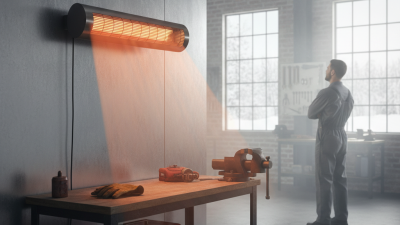
Near-infrared heaters usually operate around 0.78–1.4 μm. They produce intense, quick heat and often use a visibly glowing element. Choose this range for patios, workshops, or short heating periods. Keep a clear distance from fabrics and other combustible surfaces. Short-wave classifications may extend toward 2.5 μm, so product labels can overlap. Check the actual wavelength, not only terms like “fast heat.”

Medium-wave infrared commonly falls near 1.4–3 μm. It offers strong radiant warmth with less visible glow. This range can suit enclosed rooms, work areas, and spaces needing steadier comfort. Far-infrared heating extends approximately from 3 to 1,000 μm. It relies more on warm surfaces than bright elements. Ceramic panels and heated walls often work in this region. Results depend heavily on surface temperature, insulation, distance, and room drafts.

Do not judge performance by wavelength alone. A heater with high output may feel weak when aimed across a windy area. Measure the mounting height and the people’s actual position. Check the reflector shape, control accuracy, electrical rating, and safety clearance. My practical mistake was comparing wattage without considering direction. The higher-rated unit did not feel better at the seating area. Some product categories also use inconsistent wavelength boundaries, so ask for technical data before buying.

How to Choose an Infrared Bar Heater? Identify Infrared Types by Wavelength: 0.78–1,000 μm

Infrared heaters are commonly grouped by peak emission wavelength. Short-wave infrared, approximately 0.78–1.4 μm, provides fast radiant response; medium-wave infrared, approximately 1.4–3 μm, offers balanced heating; and long-wave infrared, approximately 3–1,000 μm, is associated with gentler, surface-oriented heating. Actual heater performance also depends on temperature, materials, airflow, and installation.

Size Heat Output at 100–150 W/m² for Typical Indoor Spaces

How to Choose an Infrared Bar Heater?

For typical indoor spaces, begin with 100–150 W/m² of installed heat output. A 12 m² bedroom may therefore need approximately 1,200–1,800 W. This is a planning range, not a guarantee. CIBSE Guide A and the ASHRAE Handbook—Fundamentals calculate heating demand from insulation, ventilation, window area, outdoor temperature, and internal heat gains. A fixed wattage rule cannot capture every room.

Room conditions matter. A well-insulated office with double glazing may work near 100 W/m². A drafty workshop, high-ceilinged room, or poorly insulated extension may need 150 W/m² or more. Measure the floor area first. Then check ceiling height, wall exposure, and frequent door opening. Cold surfaces can also reduce comfort, even when the air temperature appears acceptable.

Placement changes performance. Mounting bars across a long external wall can improve radiant coverage. Avoid blocking them with shelves, curtains, or tall furniture. Use multiple lower-output units when one large unit would create uneven warmth. The UK government’s Energy Related Products research and EN 12831 heating-load guidance both underline the importance of building fabric and heat-loss calculations. The 100–150 W/m² estimate remains useful, but it is imperfect. A heat-loss assessment is wiser for large, occupied, or unusually cold spaces.

Compare Electric Efficiency: Nearly 100% of Input Power Becomes Heat

Choosing an infrared bar heater starts with understanding how electricity becomes warmth. Electric resistance elements convert nearly 100% of their input power into heat at the point of use. That sounds simple, but it needs context. Energy can still be wasted through poor placement, open doors, or heating an empty room.

Infrared heat warms people and surfaces directly instead of relying only on circulating air. In a workshop, a correctly aimed bar can warm hands at a bench within minutes. A lower setting may feel comfortable while using less electricity. Check the rated wattage, operating modes, timer, and thermostat before buying. A 1,500-watt heater uses about 1.5 kilowatt-hours when running continuously for one hour.

Placement matters greatly. Mount the heater where its radiant path reaches the occupied area without nearby combustible materials. Follow the clearance instructions carefully. Avoid covering the unit, even briefly. Dust on the reflector can also reduce effective warmth, so regular cleaning is practical. My first assumption was too simple: high conversion efficiency does not guarantee low running costs. Room size, insulation, electricity prices, and usage time still control the final bill. Measure comfort, not just temperature. A small thermometer may show a cool room while your skin feels pleasantly warm.

Verify Outdoor Protection with IEC 60529 IP Ratings, Such as IP65

When choosing an infrared bar heater for outdoor use, do not judge protection by appearance alone. Check its IEC 60529 IP rating on the specification sheet. This standard describes how effectively an enclosure resists dust and water.

IP65 is a practical target for many exposed outdoor areas.

The first digit, 6, means the enclosure is dust-tight. The second digit, 5, indicates protection against water jets from different directions. It does not mean the heater can be submerged. That distinction matters during heavy rain, cleaning, or accidental splashing.

Look beyond the rating itself. Confirm that the complete heater assembly carries the stated IP protection, including switches, cable entries, connectors, and mounting points. A damaged seal can weaken protection. So can incorrect installation. Keep cables directed downward where possible, and follow the specified clearance from walls, fabrics, and other materials. Check local electrical requirements before installation.

Outdoor conditions are rarely gentle. Salt air, strong sunlight, temperature changes, and dust may affect long-term performance, even when the enclosure meets IP65.

Inspect seals and cable glands periodically. Replace damaged parts promptly.

It is easy to trust a number too much. An IP rating does not confirm heating efficiency, corrosion resistance, or safe placement. That part still requires careful judgment.

Check Safety Compliance Under IEC 60335-2-30 for Room Heaters

How to Choose an Infrared Bar Heater?

When choosing an infrared bar heater, check safety compliance under IEC 60335-2-30. This standard covers household and similar electric room heaters. It addresses protection against electric shock, abnormal operation, surface temperatures, stability, and mechanical strength. Ask for a valid test report or certification from a competent laboratory. A product label alone is not enough.

Look closely at the heater’s construction. The protective grille should resist accidental contact with the glowing element. Thermal cut-outs should limit overheating if airflow is blocked. The heater must remain stable when mounted or placed according to its instructions. Check the required clearance from curtains, bedding, painted walls, and other combustible materials. Installation guidance should specify mounting height, angle, electrical supply, and outdoor-use limitations. Small details matter. In practice, unclear instructions often create more risk than the heater itself. I would also verify the standard’s applicable edition, because safety requirements and national adoption can change.

Tips: Request the complete compliance documentation, not only a test summary. Confirm that the rated voltage matches your local supply. Inspect the cable, plug, switch, and mounting hardware before installation. Keep a safe distance from fabrics. Do not cover the heater, even briefly. If the surface becomes unusually hot or the cut-out activates repeatedly, stop using it and arrange a qualified inspection.

How to Choose an Infrared Bar Heater? — Check Safety Compliance Under IEC 60335-2-30 for Room Heaters

Practical screening table for selecting and reviewing electric infrared room heaters

Evaluation Dimension What to Check Recommended Selection Data IEC 60335-2-30 Safety Relevance Verification Evidence Priority
Heater technology Heating element and radiation method Quartz, carbon, ceramic, or metal infrared element; exposed or guarded element Construction must prevent accessible live parts, hazardous hot surfaces, and foreseeable misuse. Product construction review, technical drawings, temperature measurements, and type-test report Required
Rated electrical input Voltage, frequency, and power rating Match the local supply, such as 220–240 V AC at 50 Hz or 120 V AC at 60 Hz Electrical insulation, current, temperature rise, controls, and abnormal-operation tests depend on the declared rating. Rating plate, wiring diagram, laboratory test record, and production-line verification Required
Installation method Wall-mounted, ceiling-mounted, portable, or floor-standing use Choose a model whose installation method is explicitly defined in the instructions. Stability, mounting strength, clearances, cable routing, and protection against overturning vary by installation type. Installation instructions, mounting hardware specification, stability test, and mechanical-strength test Required
Protection against electric shock Access to live parts during normal use, cleaning, and servicing Finger-safe guards and enclosure design; no accessible hazardous live parts during intended use IEC 60335-2-30 is used with IEC 60335-1 to assess protection against electric shock. Accessibility probe test, insulation system review, and dielectric-strength test Required
Earthing arrangement Appliance protection class Class I with protective earth, or Class II with reinforced/double insulation, as declared by design The protective measure must be consistent with the construction, supply cord, plug, and installation instructions. Protective-earth continuity test or insulation-system documentation, as applicable Required
Ingress protection Suitability for dry rooms or locations exposed to water Use only in locations permitted by the manufacturer; bathroom or splash-area use requires specifically declared protection. Moisture resistance and enclosure protection must correspond to the intended environment and applicable national installation rules. IP classification evidence where claimed, moisture test report, and installation limitations Conditional
Surface temperature Accessible surfaces, grille, reflector, controls, and nearby mounting surfaces Guarded hot zones, heat-resistant materials, and clearly defined minimum clearances Room heaters create a foreseeable burn and fire hazard; accessible temperatures and surrounding materials must be evaluated. Temperature-rise test under normal operation and review of material temperature ratings Required
Abnormal operation Operation with blocked airflow, covered grille, stalled controls, or other foreseeable faults Thermal cut-out, thermal fuse, current protection, or other independent protective measure where required by the design The heater must not create an unacceptable risk of fire, electric shock, or hazardous overheating under abnormal conditions. Abnormal-operation test report and confirmation of non-self-resetting protection where the design requires it Required
Control system Thermostat, timer, remote control, electronic switching, and reset function Controls should be clearly identified and should not defeat required thermal protection. Control failure and automatic operation are relevant to overheating, unattended use, and abnormal-operation safety. Functional test, control circuit diagram, component ratings, and fault-condition assessment Required
Tip-over protection Portable or floor-standing heater stability Wide stable base, secure support, and automatic shutoff where provided by the design or required for the product configuration Portable room heaters must be assessed for stability and foreseeable overturning hazards. Stability test, tip-over test where applicable, and automatic shutoff verification Required
Materials and flammability Plastic parts, insulation, reflector, grille, cable entry, and mounting components Heat-resistant and suitably flame-resistant materials in areas exposed to the heating element or abnormal temperatures Materials must withstand expected heat and must not contribute to an unacceptable fire hazard. Material specifications, flammability documentation, heat-resistance assessment, and fire-enclosure review Required
Power cord and cable entry Flexible cord type, routing, strain relief, and connection points Correct cord rating for the declared supply and temperature environment; protected cable entry and effective strain relief Improper cord routing or strain relief can lead to electric shock, short circuit, or fire. Pull test, flexing assessment where applicable, cord-temperature review, and wiring inspection Required
Mechanical strength Grille, guard, enclosure, mounting bracket, switch, and reflector Parts should resist impact, vibration, mounting loads, and foreseeable handling without exposing hazards. Mechanical damage must not reduce protection against electric shock, overheating, or contact with hot elements. Mechanical-strength test, impact assessment, mounting-load test, and post-test inspection Required
Markings and instructions Rating plate, warnings, installation clearances, cleaning, and operating limitations Permanent markings showing rated voltage, frequency, power, appliance identification, and required safety warnings Users need sufficient information to install and operate the room heater without creating foreseeable hazards. Label artwork, instruction manual, warning review, and legibility/permanence assessment Required
Cleaning and maintenance Dust removal, grille cleaning, filter access, and replacement of protective parts Cleaning instructions must not require users to access hazardous live parts or dismantle safety-critical components. Accumulated dust and incorrect cleaning can increase overheating and fire risk. Cleaning procedure review, accessible-parts assessment, and maintenance instructions Verify
Energy and operating suitability Heat output, control range, room size, noise, and operating duration Compare rated input, control steps, thermostat behavior, timer range, and intended room application. Performance data does not replace safety compliance, but correct sizing reduces overheating, misuse, and continuous overloading. Operating test, control-function test, rated-input measurement, and user-instruction review Verify
Compliance note: IEC 60335-2-30 should be assessed together with the applicable edition of IEC 60335-1, relevant national deviations, and local installation requirements. A product claim should be supported by a complete test report or certification record for the exact model, rated input, construction, and intended installation.