

FAQS
How to Choose Polyolefin Heat Shrink Sleeve?
Choosing the right Polyolefin Heat Shrink Sleeve is not a simple matter of selecting the clearest film. The sleeve must protect the product, fit the container, and perform reliably during high-speed packaging. A small mismatch can cause wrinkles, weak seams, poor coverage, or sleeve splitting near sharp edges.
Walter Soroka, a respected packaging author, described packaging as “the science, art and technology of enclosing and protecting products.” That principle applies directly here. A suitable sleeve begins with the container’s diameter, height, shape, and surface details. Then, evaluate shrink ratio, film thickness, clarity, stiffness, sealing strength, and resistance to moisture or abrasion. Polyolefin films often provide balanced toughness and attractive presentation, but performance still depends on the grade and processing conditions.
Real production experience matters. A sleeve that looks excellent on a sample bottle may behave differently inside a steam tunnel. Check the tunnel temperature, conveyor speed, air circulation, and sleeve placement. Test the material on filled containers, not empty ones. Product weight can change handling and distortion. Be careful with tapered shoulders, recessed caps, and uneven surfaces.
There is no perfect specification for every application. Sometimes a thinner film reduces material use but increases handling problems. Sometimes a higher shrink ratio improves conformity but creates more visual stress. These trade-offs deserve honest testing. Measure results, inspect failures, and revise the choice before full production. The best Polyolefin Heat Shrink Sleeve is the one that remains consistent from the first package to the last.
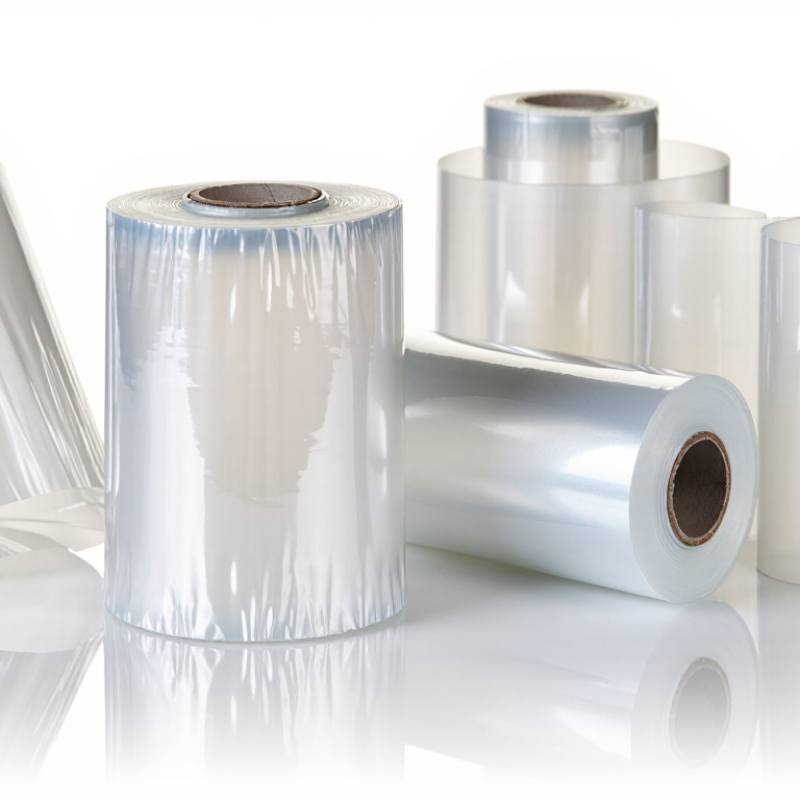
What Is a Polyolefin Heat Shrink Sleeve?
A polyolefin heat shrink sleeve is a polymer tube that contracts when heated. It wraps cables, connectors, pipes, and packaged products with a close, protective layer. Most sleeves use cross-linked polyolefin, commonly based on polyethylene or polypropylene. Heat breaks the material’s stored shape memory. The sleeve then recovers around the object.
Many products shrink at approximately 90–125°C, depending on formulation and design. Common recovery ratios include 2:1 and 3:1. A 3:1 sleeve can cover a wider range of component diameters. It still needs correct sizing. Oversizing may leave wrinkles or weak sealing. Undersizing may prevent full coverage. That mistake is surprisingly common.
The material offers useful resistance to abrasion, moisture, oils, and many chemicals. Performance changes with wall thickness, additives, and exposure time. For electrical applications, engineers should verify dielectric strength, operating temperature, and flame behavior through test certificates. ASTM D2671 is widely referenced for heat-shrinkable tubing evaluation. Industry demand also supports its relevance: Grand View Research estimated the global shrink film market at about USD 9 billion in 2023, with continued growth linked to packaging and protection needs. Packaging is only part of the picture. Cable protection remains a practical use. Before choosing a sleeve, measure the object’s maximum diameter, required recovered diameter, and installation temperature. A perfect fit is not always achieved on the first trial.
How to Choose Polyolefin Heat Shrink Sleeve? - What Is a Polyolefin Heat Shrink Sleeve?
| Selection Dimension | Typical Polyolefin Heat Shrink Sleeve Data | Why It Matters | Practical Selection Guidance |
|---|---|---|---|
| What it is | A thermoplastic polymer sleeve made primarily from cross-linked polyolefin. It contracts when heated and forms a close-fitting layer around a component. | The sleeve can provide electrical insulation, mechanical protection, strain relief, bundling, and light environmental sealing. | Use it when a lightweight, flexible, electrically insulating protective layer is required. |
| Material characteristics | Cross-linked polyolefin is generally lightweight, flexible, abrasion resistant, and resistant to many common oils and chemicals. | Material properties affect service life, flexibility, insulation performance, and resistance to handling damage. | Check the technical datasheet for the exact chemical, abrasion, flame, and flexibility requirements of the application. |
| Common shrink ratio | 2:1 is common. 3:1 and 4:1 versions are also available for assemblies with greater variation in diameter. | The ratio indicates the approximate relationship between the supplied diameter and the recovered diameter. | Select a sleeve whose recovered diameter fits snugly over the smallest section while its supplied diameter fits over the largest section. |
| Starting diameter | The sleeve should be large enough to slide over the component, connector, splice, or other feature before heating. | Insufficient clearance can make installation difficult or cause stretching and uneven recovery. | Measure the maximum outside diameter, including raised areas, and allow practical installation clearance. |
| Recovered diameter | The final diameter after the sleeve has been heated and fully recovered. Exact values depend on the product construction and tolerance. | A loose fit may allow movement, while excessive recovery over sharp features may create stress or damage. | Compare the stated minimum recovered diameter with the smallest diameter of the assembly. |
| Shrink temperature | Many polyolefin sleeves begin to shrink at approximately 70–90°C and are commonly fully recovered around 100–135°C, depending on construction. | The temperature must be compatible with the wire insulation, connector, substrate, and nearby components. | Use the supplier’s specified recovery temperature and avoid overheating the sleeve or the underlying assembly. |
| Continuous operating temperature | A common general-purpose range is approximately −55°C to +125°C, but the actual range varies by formulation and construction. | Long-term exposure outside the rated range can reduce flexibility, insulation reliability, or mechanical strength. | Choose a temperature rating above the highest and below the lowest expected service temperature. |
| Wall thickness | Available constructions range from thin-wall to medium-wall and heavy-wall designs. Wall thickness increases after recovery and is product-specific. | Thicker walls generally provide greater mechanical protection and insulation distance but reduce flexibility. | Use thin-wall sleeves for space-sensitive wiring and thicker walls where abrasion, impact, or added protection is important. |
| Electrical insulation | Polyolefin is commonly used as an insulating material for wires, cable joints, terminals, and electronic assemblies. | Electrical performance depends on dielectric strength, wall thickness, cleanliness, voltage, and installation quality. | Verify voltage rating, dielectric requirements, and applicable electrical standards for the finished assembly. |
| Flame performance | Some polyolefin sleeves are flame-retardant, while standard grades may not provide the same flame performance. | Flame behavior can be critical in transportation, equipment, control panels, and enclosed electrical systems. | Do not assume flame resistance; select a grade with the required flammability rating and verify test conditions. |
| Adhesive lining | Unlined sleeves provide insulation and protection. Adhesive-lined versions contain a heat-activated inner layer that can improve sealing and bonding. | Adhesive lining helps reduce moisture ingress and movement, but it adds thickness and may require more installation space. | Choose unlined material for basic insulation; choose adhesive-lined material when environmental sealing or strain relief is required. |
| Flexibility and bending | Thin-wall polyolefin is generally more flexible than medium-wall or heavy-wall constructions. | The selected sleeve must tolerate bending, vibration, and movement without splitting or lifting from the assembly. | For moving cables, select a flexible grade and confirm bend radius, vibration, and fatigue requirements. |
| Installation method | A controlled heat source, such as a hot-air tool, is typically used. The sleeve should recover evenly without scorching or localized overheating. | Uniform heating improves fit, appearance, electrical insulation, and sealing performance. | Center the sleeve, heat gradually around its circumference, and follow the specified recovery temperature and safety procedures. |
Note: Values shown are typical industry ranges for general-purpose polyolefin heat shrink sleeves. Always confirm the exact dimensions, temperature ratings, electrical properties, chemical resistance, and compliance information on the selected product datasheet.