
FAQS

China Top 10 Camping Tarp Manufacturers?

China’s camping supply chain has become a serious sourcing destination for outdoor brands, distributors, and private-label retailers. Grand View Research valued the global camping equipment market at approximately USD 23.16 billion in 2023 and projects continued growth through 2030. This expansion increases demand for reliable Camping Tarp products, especially lightweight shelters for rain, wind, hiking, festivals, and family camping.

A strong manufacturer must offer more than attractive catalog photos. Buyers should examine coated fabric specifications, seam-taping quality, waterproof ratings, UV resistance, packing size, and production consistency. A tarp that looks bright in a showroom may fail after one storm. Factory audits, sample testing, and documented quality procedures therefore matter. The Outdoor Industry Association’s 2024 participation report also shows sustained interest in outdoor recreation, supporting the need for practical and durable shelter products.

This guide reviews ten leading Chinese Camping Tarp manufacturers using practical sourcing criteria. These include manufacturing experience, export capability, material options, customization support, certifications, minimum order quantities, and after-sales communication. Public company information, product documentation, industry visibility, and buyer-focused evidence inform the comparison. However, no ranking is perfect. Some factories disclose limited production data, while online reviews can be incomplete or outdated. That limitation deserves attention.

The selected suppliers may serve different needs. One could specialize in ultralight silnylon tarps, while another focuses on heavy-duty PVC shelters or OEM production. Readers should request current samples and verify test results before placing an order. A careful shortlist reduces risk, but it cannot replace hands-on inspection.
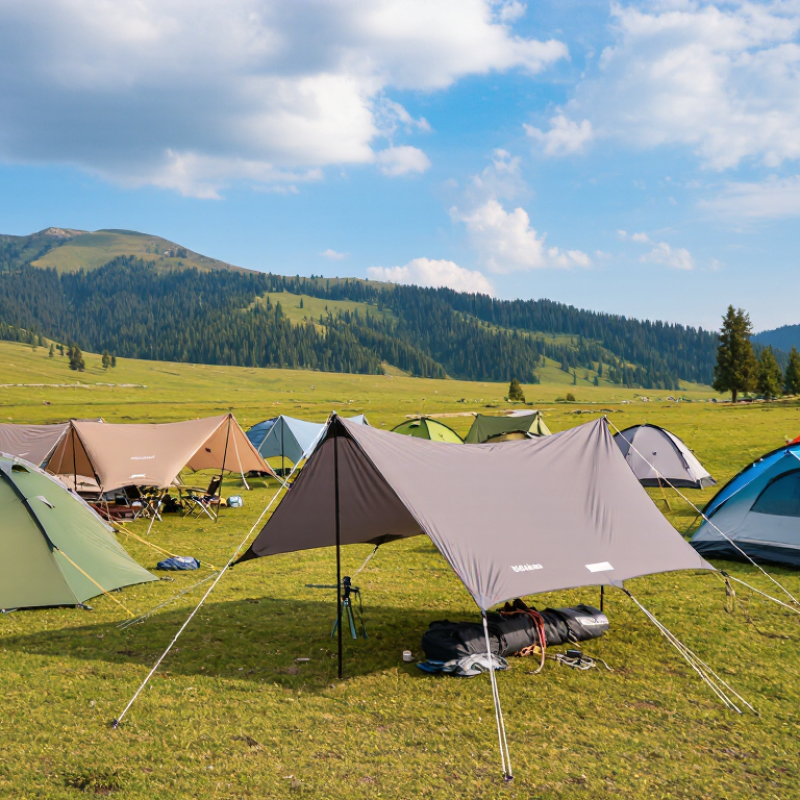
China Top 10 Camping Tarp Manufacturers?

What Is a Camping Tarp and Why Does Manufacturing Quality Matter?

A camping tarp is a lightweight sheet used for shelter, shade, or ground protection outdoors. It may hang above a sleeping area or cover equipment during rain. The best designs balance low weight, tear resistance, waterproofing, and easy setup. Simple? Not quite. A small stitching defect can become a large opening during a storm.

Manufacturing quality begins with material selection. Ripstop polyester and nylon are common because their woven structures can limit tear growth. A dependable waterproof coating should remain flexible after folding and packing. Seams also matter. Carefully sealed seams reduce leakage around tie-out points, where tension is highest. Experienced manufacturers test fabric strength, water resistance, coating adhesion, and seam performance before shipment. They should record these results, not rely only on visual inspection.

Quality control should continue through cutting, sewing, packaging, and random product checks. Uneven hems, weak webbing, or poorly aligned grommets can make field setup frustrating. Buyers evaluating Chinese tarp manufacturers should request material specifications, inspection procedures, production samples, and traceable test records. Factory visits can reveal practical details, such as clean work areas and consistent sewing tension. Still, paperwork is not proof of perfect performance. Samples may pass controlled tests yet behave differently after repeated exposure, abrasion, and careless packing. That limitation deserves honest discussion.

How to Evaluate China’s Camping Tarp Manufacturers

Evaluating China’s camping tarp manufacturers requires more than comparing online prices. A reliable review begins with material evidence. Ask for fabric weight, fiber type, coating, waterproof rating, and UV-resistance data. A sample should arrive with a clear specification sheet. Inspect the cut edges, grommets, guy points, and seam sealing. Hold it under bright light. Uneven pinholes are easy to miss. They are not easy to forgive in rain.

Factory capability matters as much as product appearance. Request production photos, quality-control records, and a recent sample from regular output. Check whether the same workshop handles cutting, stitching, coating, and packing. Ask how workers measure seam width and tension. For bulk orders, require pre-shipment inspection and carton drop testing. Small details matter. A weak corner patch can fail before the fabric does. Compare promised lead times with actual capacity, not optimistic quotations.

Professional communication is another useful test. A dependable manufacturer answers technical questions directly and identifies limits. It should explain tolerances, repair procedures, replacement terms, and export documents. Verify business registration, factory location, third-party test reports, and references from comparable outdoor projects. Do not treat certificates as automatic proof; confirm their scope and validity. No checklist is perfect. I may still overlook a small production risk. However, a plain sample, measured carefully, often reveals more than polished product photography.

China Top 10 Camping Tarp Manufacturers? - How to Evaluate China’s Camping Tarp Manufacturers
A practical, company-neutral scorecard for comparing camping tarp manufacturers in China. The benchmarks below are purchasing reference points and should be confirmed through samples, technical documents, and independent testing.
No. Evaluation Dimension Practical Benchmark for Camping Tarps Recommended Verification Method Weight
1 Fabric Construction Common commercial options include coated polyester or nylon in approximately 210D–500D fabric weights. Higher-denier fabrics generally provide better abrasion resistance but add weight and packing volume. Request the fabric specification, denier, weave type, finished weight in g/m², and a production sample. Compare the supplier’s stated specifications with a calibrated weighing and thickness check. 15%
2 Waterproof Performance For general camping use, a hydrostatic head of approximately 1,500–3,000 mm is a commonly used purchasing range. Heavy rain and prolonged exposure may require a higher specification. Ask for a hydrostatic-pressure test report based on ISO 811 or an equivalent recognized method. Test the finished tarp, not only the unsewn fabric. 15%
3 Seam and Attachment Strength Reinforced corners, webbing loops, bar-tacks, and properly sealed or taped seams are essential because tie-out points receive concentrated loads during wind and rain. Inspect corner patches and webbing directly. Conduct repeated pull tests on tie-out points and check for needle holes, skipped stitches, loose threads, and incomplete seam sealing. 14%
4 Tear and Tensile Strength The required strength depends on fabric denier, intended use, and tarp size. A suitable supplier should provide tear and tensile data for the exact production fabric and coating combination. Review laboratory results using relevant methods such as ASTM D2261 for tongue tear or ASTM D5034 for grab tensile strength. Confirm that the report identifies the same fabric construction as the sample. 12%
5 Coating and Hydrolysis Resistance Polyurethane, silicone, or other compatible coatings should remain bonded without visible flaking, cracking, excessive stickiness, or delamination during normal storage and use. Request coating type, coating weight, curing information, and accelerated-aging or hydrolysis data where applicable. Examine folded areas and seam zones after heat and humidity exposure. 10%
6 UV and Colorfastness Performance Outdoor tarps should use fabric and thread selected for sunlight exposure. Darker colors may absorb more heat, while inadequate UV resistance can cause fading and strength loss. Request colorfastness-to-light results, such as testing under AATCC 16.3 or an equivalent method. Compare exposed and unexposed sample sections after an outdoor trial or accelerated test. 8%
7 Hardware and Webbing Quality Grommets, sliders, buckles, cords, and webbing should be corrosion-resistant, dimensionally consistent, and compatible with the tarp fabric and expected loading conditions. Check hardware material and finish, measure webbing width and thickness, and perform pull testing on representative assemblies. Inspect for sharp edges that may damage fabric or users. 8%
8 Quality Control System A reliable factory should use documented incoming-material inspection, in-process checks, final inspection, defect classification, and traceable production records. Review the quality manual, inspection checklist, corrective-action records, and batch traceability. Confirm whether inspections cover dimensions, waterproofing, stitching, accessories, and packaging. 7%
9 Customization and Production Capability Relevant capabilities may include custom dimensions, fabrics, colors, logos, packaging, reinforced layouts, and pattern development. Customization should not compromise waterproofing or structural strength. Request a pre-production sample, approved technical drawing, bill of materials, tolerance range, and sample-to-bulk production control procedure. Confirm the factory’s equipment and skilled operations. 6%
10 Compliance and Documentation Export-ready products should have accurate material declarations, care instructions, packaging information, and test documentation appropriate to the destination market. Check test reports, restricted-substance declarations, country-specific labeling requirements, packaging specifications, and the consistency of all documents with the final production sample. 5%
Suggested evaluation method: score each dimension from 1 to 5, multiply the score by the listed weight, and compare only suppliers that pass the sample inspection and documentation review. Performance ranges vary by tarp design, fabric composition, coating system, and intended climate.

Top 10 China Camping Tarp Manufacturers and Their Core Strengths

China Top 10 Camping Tarp Manufacturers: Core Strengths

China’s leading camping tarp manufacturers compete through fabric control, production scale, and practical customization. Grand View Research projects steady growth in the global camping equipment market through 2030, increasing demand for lighter, stronger shelters. The strongest suppliers typically offer ripstop polyester, Oxford fabric, PU or silicone coatings, and reinforced webbing. Their core strengths differ: some focus on high-volume OEM production, while others specialize in ultralight tarps, family shelters, or emergency-grade waterproof covers.

Several manufacturers stand out for advanced seam sealing and controlled waterproof testing. Others provide accurate digital printing, low minimum orders, and rapid sample development. A dependable factory should explain hydrostatic pressure results, coating thickness, fabric weight, and shrinkage rates. Details matter. A tarp that looks durable may still leak around stress points. Production experience helps identify this weakness before shipment.

Industry reports from Fortune Business Insights and Grand View Research also highlight rising consumer interest in portable, weather-resistant outdoor products. This trend rewards manufacturers with flexible material sourcing and consistent quality inspection. Some factories maintain ISO-based procedures, while others rely heavily on manual checks. That difference deserves attention. Buyers should review inspection records, seam samples, packaging methods, and corrective-action history. “Top ten” rankings are never absolute. Factory strengths change with order size, material choice, testing requirements, and delivery pressure.

Key Products, Materials, and Customization Services

China Top 10 Camping Tarp Manufacturers: Key Products, Materials, and Customization Services

When comparing China’s top ten camping tarp manufacturers, examine product range before factory size. Common products include flat tarps, hammock shelters, rain flies, truck tarps, and lightweight emergency covers. A useful outdoor tarp should pack small, pitch cleanly, and resist sudden rain. I usually check reinforced corners, webbing strength, grommet spacing, and seam construction. Small details matter.

Material choices affect weight, weather resistance, and price. 210D or 420D nylon offers low weight and compact packing. Polyester usually provides better UV stability and less stretch when wet. PU coatings support waterproof performance, while silicone coatings can reduce fabric weight and improve flexibility. However, no material is perfect. A very light tarp may sacrifice abrasion resistance. Buyers should request fabric specifications, hydrostatic pressure results, colorfastness data, and sample testing records.

Customization can include dimensions, fabric colors, camouflage-free prints, logo placement, seam tape, packaging, and private labels. Many manufacturers also support CAD drawings and prototype development. Ask about minimum order quantities, sample charges, lead times, and inspection procedures. A reliable supplier should confirm tolerances in writing. Pre-shipment inspection is valuable, especially for corner reinforcement and coating consistency. I have seen attractive samples fail after repeated folding. That weakness is easy to miss. A practical manufacturer will discuss such risks instead of promising everything.

How to Choose the Right Chinese Camping Tarp Manufacturer

China Top 10 Camping Tarp Manufacturers?
How to Choose the Right Chinese Camping Tarp Manufacturer

A top-ten list can start your search, but it cannot replace factory evaluation. The right manufacturer should understand waterproof fabrics, reinforced corners, reliable eyelets, and practical shelter design. Ask for fabric specifications, coating details, seam construction, and test reports. Samples reveal weaknesses. A tarp may look strong outdoors but fail around stress points after repeated folding.

Tips: Request a sample before discussing large orders. Compare its weight, stitching, waterproof performance, packed size, and smell. Ask how the factory checks fabric width, seam sealing, and accessory strength. Confirm production capacity, minimum order quantity, lead time, packaging, and communication procedures. Clear answers usually indicate better process control.

During supplier discussions, request photos or videos of cutting, sewing, inspection, and packing areas. A professional team should explain its quality standards instead of making vague promises. Check whether the sample matches the final production specification. This is often overlooked. Also review the manufacturer’s experience with similar tarp designs, seasonal demand, and custom packaging. Price matters, but an unusually low quotation may hide thinner fabric or weaker hardware. I would keep a written checklist and score each supplier consistently. My own judgment can still be imperfect, especially when factory visits are unavailable. Independent inspection may be worthwhile before shipment.

China Top 10 Camping Tarp Manufacturers: How to Choose the Right Supplier

This supplier-shortlisting benchmark uses practical procurement criteria rather than company or brand data. Product performance and quality consistency receive the highest weighting, followed by manufacturing capability, compliance, customization, and delivery reliability.

Article Source: