
FAQS
China Top 10 Deep Boring Machine Manufacturers?
China’s deep manufacturing base has made it a major source of advanced Deep Boring Machine equipment. Chinese suppliers now serve automotive, energy, aerospace, hydraulic, and mold-making industries. Their machines may look similar, but performance differs sharply inside the cutting zone.
Industry reports provide useful context. Grand View Research estimates that the global machine tools market reached approximately USD 86 billion in 2023. Its forecast also indicates continued growth through 2030, driven by automation, aerospace demand, and precision manufacturing. MarketsandMarkets identifies computer numerical control, process monitoring, and higher machining accuracy as important technology trends. However, most reports combine deep-hole drilling, boring, and related machine-tool categories. Exact market rankings remain difficult.
That matters.
A “top ten” list should not rely on factory size alone. Spindle stability, boring-bar support, coolant pressure, chip evacuation, hole straightness, and after-sales service deserve equal attention. Professor Yusuf Altintas, a leading machining researcher, has stated, “Machining is an interaction between the cutting tool and the workpiece.” This principle explains why identical specifications can produce different results on the shop floor.
Our review of China’s leading Deep Boring Machine manufacturers considers engineering experience, product range, customization ability, export performance, certifications, and customer support. Real operating details matter: a stable boring bar, clean coolant flow, and controlled vibration can decide whether a 1,500-millimeter bore meets tolerance. The comparison is not perfect. Public data varies, and supplier claims require verification. Still, this guide offers a practical starting point for buyers seeking dependable equipment rather than impressive brochures.
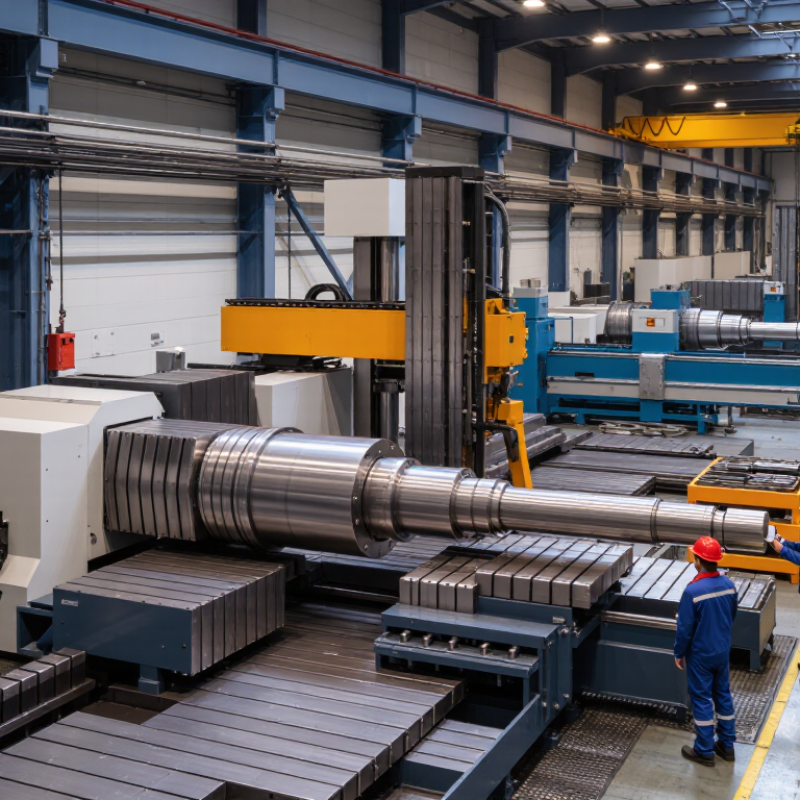
What Is a Deep Boring Machine and How Does It Work?
A deep boring machine enlarges and finishes holes that are much deeper than their diameter. In many workshops, the depth-to-diameter ratio exceeds 10:1. These machines serve hydraulic cylinders, molds, shafts, and other precision components. The workpiece is secured firmly, while a long boring bar enters the existing hole. Its cutting tool rotates or moves along the bore, removing a controlled layer of metal.
The machine controls tool speed, feed rate, coolant flow, and cutting depth. Coolant carries heat and metal chips away from the cutting zone. A steady guide system helps prevent vibration, taper, and unwanted marks on the inner wall. Skilled operators check straightness, diameter, surface roughness, and tool wear during production. A hole may look smooth but still fail inspection. That detail is easy to underestimate.
Tips: Confirm the required depth and tolerance before choosing equipment. Use suitable coolant and remove chips continuously. Measure the bore at several points, not just one end. Reduce feed speed when vibration appears. In practice, perfect settings rarely remain perfect. Material hardness, tool condition, and alignment can change the result. Careful records make those changes easier to understand.
Key Criteria for Evaluating Chinese Deep Boring Machine Manufacturers
Choosing among China’s top deep boring machine manufacturers requires more than comparing prices. Gardner Intelligence’s 2024 World Machine Tool Survey placed China among the largest global producers and reported machine tool consumption above US$30 billion in 2023. That scale suggests strong supply depth, but it does not prove boring accuracy. Request documented boring diameter ranges, maximum workpiece length, spindle torque, and tested alignment results.
Experience matters on the factory floor. Ask for acceptance records based on ISO 230-2 positioning tests, not only brochure figures. Check repeatability after thermal cycling, especially when boring long steel components.
A reliable supplier should explain how it controls vibration, guideway wear, coolant temperature, and chip evacuation. CMTBA industry releases also distinguish orders, production, and exports; these figures should not be confused with a manufacturer’s real delivery capacity. One practical warning: glossy data can hide weak service coverage.
Tips:
Visit a completed installation if possible. Inspect a boring bar after production, not just a showroom sample. Request three years of spare-part response records and a written factory acceptance plan. Compare cutting trials using your material, tolerance, and actual hole depth.
My own preference is cautious: a slightly slower machine with stable repeatability often outperforms a faster model that needs constant adjustment.
China’s Top 10 Deep Boring Machine Manufacturers
China’s Top 10 Deep Boring Machine Manufacturers are often evaluated by engineering depth, not advertising volume. No single official ranking covers every factory. Capabilities also change as workshops upgrade equipment.
The strongest manufacturers usually offer deep-hole boring systems for hydraulic cylinders, mold bases, oilfield components, and large steel shafts. Their machines may support boring diameters from several millimeters to more than one meter. Bed length, spindle torque, guideway stability, and coolant control deserve close attention. Ask for verified tolerance records, not only sample photos.
Factory experience matters. A reliable supplier should explain tool deflection, chip removal, vibration control, and workpiece alignment in practical terms. On-site inspection can reveal calibration habits, operator training, and assembly quality. Measure twice. Cut once.
Technical documentation should include installation requirements, power consumption, boring-tool specifications, and maintenance intervals. After-sales support is equally important, especially for servo drives, hydraulic units, and custom fixtures. Request references from comparable projects and review their production timelines.
Some rankings may favor company size or export volume. That can be misleading. A smaller engineering team may understand unusual workpieces better, while a large factory may provide faster spare-parts access. This is where buyers need careful judgment. Even experienced purchasers can overlook operator skill and local service coverage. A transparent manufacturer will discuss limitations, admit achievable tolerances, and suggest testing before contract approval.
Applications and Industries Served by Deep Boring Machines
Deep boring machines serve industries that require long, accurate internal holes in metal components. In heavy equipment manufacturing, they produce hydraulic cylinders, excavator arms, and large drive shafts. A controlled boring process improves bore alignment and reduces leakage around seals. Operators monitor cutting temperature, vibration, and chip removal during production. Small errors become expensive rework.
Energy equipment manufacturers use these machines for valve bodies, turbine parts, and pump housings. Shipyards apply them to stern tubes and propulsion components, where bore length can exceed several meters. Railway workshops machine axle housings and suspension parts. Mining equipment makers depend on deep boring for oversized pins and cylinder barrels. These applications demand stable workholding and careful tool support. A weak setup can damage both accuracy and surface quality.
Aerospace suppliers also use deep boring for selected landing-gear and structural parts. Here, traceable inspection matters as much as cutting speed. Coordinate measuring machines, calibrated gauges, and documented tool settings support reliable results. In practice, production plans are not always perfect. Material hardness may vary, and cooling performance can change during a long cycle. That is why experienced teams test a smaller section before full production. No machine fits every job. Diameter, depth, material, tolerance, and batch size should guide the selection of a suitable deep boring system.
China Top 10 Deep Boring Machine Manufacturers? - Applications and Industries Served by Deep Boring Machines
| No. | Application | Typical Workpiece | Common Deep-Boring Method | Typical Bore Diameter | Typical Boring Depth | Industries Served | Key Processing Requirements |
|---|---|---|---|---|---|---|---|
| 1 | Hydraulic Cylinder Honing | Cylinder tubes and hydraulic barrels | BTA boring followed by honing | 50–1,000 mm | 0.5–12 m | Hydraulics, construction equipment, agricultural machinery | Low surface roughness, straightness, roundness, and consistent internal diameter |
| 2 | Mold and Die Cooling Channels | Plastic injection molds, die-casting dies, and large tool blocks | Gun drilling or single-tube BTA boring | 10–80 mm | 0.3–3 m | Tool and die, plastics, automotive components | Accurate channel positioning, chip evacuation, and leak-free coolant passages |
| 3 | Oil and Gas Drill Components | Drill collars, stabilizers, subs, and tubular components | BTA boring, trepanning, and internal turning | 50–500 mm | 1–10 m | Oil and gas, drilling services, energy equipment | High material-removal capacity, concentricity, and reliable chip control in alloy steel |
| 4 | Power-Generation Shafts | Turbine shafts, generator rotors, and large rotor forgings | Deep-hole boring with steady-rest support | 80–500 mm | 2–15 m | Power generation, renewable energy, heavy engineering | Long-part stability, high concentricity, thermal control, and vibration suppression |
| 5 | Aerospace Landing-Gear Components | Landing-gear cylinders, actuators, and high-strength forgings | Gun drilling and precision boring | 20–250 mm | 0.5–5 m | Aerospace, defense, aircraft maintenance | Tight dimensional tolerances, clean bores, traceability, and non-destructive inspection compatibility |
| 6 | Automotive Engine and Transmission Parts | Crankshafts, camshafts, gear blanks, and transmission housings | Gun drilling, deep-hole drilling, and cross-hole machining | 3–60 mm | 0.1–2 m | Automotive, commercial vehicles, powertrain manufacturing | High repeatability, cycle-time efficiency, precise hole location, and automated loading |
| 7 | Shipbuilding and Marine Components | Propeller shafts, rudder stocks, stern tubes, and marine bushings | Large-diameter boring and trepanning | 100–1,200 mm | 2–20 m | Shipbuilding, marine engineering, offshore equipment | Large work envelope, alignment over long lengths, controlled cutting forces, and heavy-duty fixturing |
| 8 | Hydraulic and Pneumatic Valve Bodies | Valve blocks, manifolds, spool housings, and actuator bodies | Gun drilling and multi-axis deep-hole drilling | 5–100 mm | 0.1–1.5 m | Fluid power, industrial automation, mobile machinery | Intersecting-hole accuracy, burr minimization, sealing-surface protection, and pressure integrity |
| 9 | Plastic and Rubber Extrusion Equipment | Extruder barrels, screw shafts, and temperature-control sections | BTA boring, internal honing, and deep-hole drilling | 30–400 mm | 0.5–8 m | Plastics processing, rubber processing, chemical equipment | Uniform internal geometry, coolant-channel accuracy, wear-resistant tooling, and surface finish control |
| 10 | Mining and Heavy-Equipment Components | Mining cylinders, hydraulic booms, rollers, and large bearing housings | BTA boring, deep-hole drilling, and internal turning | 80–800 mm | 1–10 m | Mining, construction machinery, material handling, heavy equipment | High rigidity, high torque, effective chip removal, and reliable operation on hardened or alloy steels |
Note: The diameter and depth figures are representative industry ranges. Actual capacity depends on machine configuration, workpiece material, tooling system, coolant pressure, required tolerance, and production method.
How to Select the Right Chinese Manufacturer for Your Needs
How to Select the Right Chinese Deep Boring Machine Manufacturer
Choosing a Chinese deep boring machine manufacturer requires more than comparing quotations. Start with geology, hole diameter, target depth, rock strength, and required torque. A machine designed for limestone may struggle in hard granite. Ask for verified case records from similar ground conditions.
USGS Mineral Commodity Summaries 2024 reported about 2.5 billion tonnes of global iron ore production in 2023. That scale increases demand for reliable drilling equipment, but factory capacity still needs careful checking.
Request drawings, motor curves, drilling logs, and factory acceptance test records. Check whether the manufacturer can adapt feed systems, mud pumps, control panels, and dust protection. Inspect the assembly floor through a live video call or an independent audit. Look closely at weld quality, spare-part storage, and calibration labels. Small details matter. ISO 9001 certification helps, but it does not replace performance evidence.
The IEA’s Global Critical Minerals Outlook 2024 expects demand for several energy-transition minerals to rise sharply by 2035. This may shorten delivery schedules, so confirm production capacity before signing.
Compare total ownership cost, not only the purchase price. Include installation, operator training, consumables, software support, and emergency parts. Ask for response times in writing.
A low quote can look clever. It can also hide weak after-sales service.
I would require reference calls with previous users, although references can be selective. That limitation deserves attention. Use milestone payments linked to inspection, testing, shipment, and commissioning.
Skip to content
