
FAQS
Top 35kV Power Transformer Manufacturers Worldwide
The global demand for reliable medium-voltage infrastructure is rising as cities expand, industries electrify, and renewable projects connect to aging grids. The International Energy Agency’s Electricity 2024 report expects global electricity demand to grow strongly through 2026. Its World Energy Investment 2024 report also highlights the need for higher grid investment, including transformers, substations, and transmission equipment. These trends make the 35kv Power Transformer an important link between generation assets and distribution networks.
This guide examines leading 35kV transformer manufacturers worldwide through practical purchasing criteria. Production capacity matters. So does field experience. A reliable supplier should demonstrate tested designs, traceable materials, stable insulation performance, and responsive after-sales support. Factory acceptance testing, temperature-rise results, partial-discharge control, and short-circuit strength deserve close attention. Compliance with IEC 60076 or relevant IEEE standards provides a useful technical baseline, but certification alone cannot prove long-term reliability.
Real projects reveal more than brochures. A transformer installed beside a dusty cement plant faces different conditions from one serving a coastal wind farm. Oil quality, enclosure design, cooling performance, noise levels, and maintenance access can change the ownership cost significantly. CIGRE technical publications repeatedly emphasize asset management, condition monitoring, and lifecycle planning for transformer fleets. Still, no ranking is perfect. Manufacturer data may be incomplete, regional service quality can vary, and delivery promises require verification. Buyers should compare test reports, reference projects, warranty terms, and local support before selecting a supplier. The strongest manufacturers combine engineering depth with measurable performance in the field. That distinction deserves careful review.
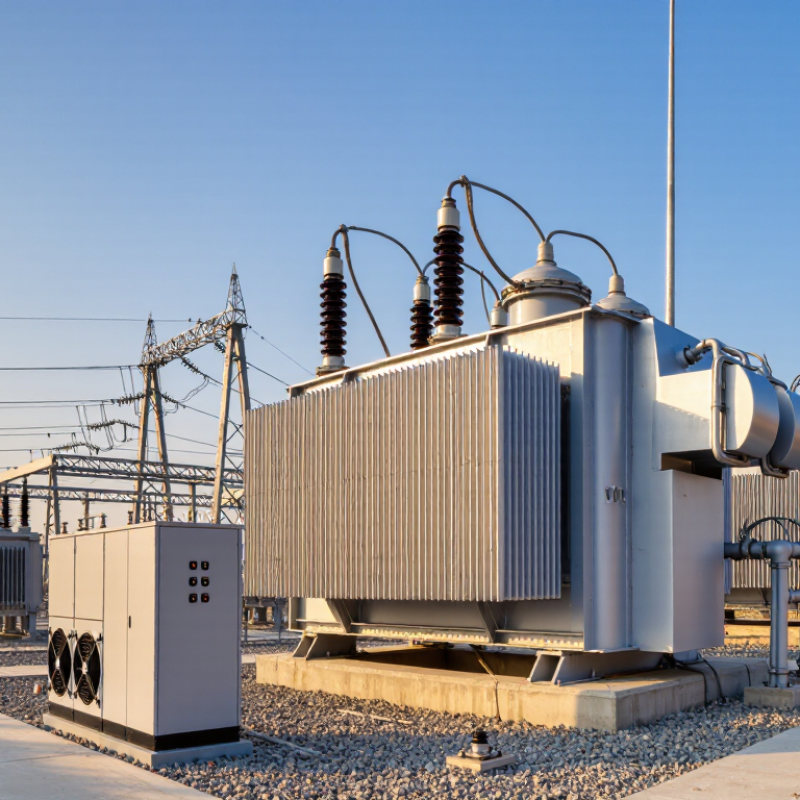
What Is a 35kV Power Transformer?
A 35kV power transformer transfers electrical energy between high-voltage and lower-voltage systems. Its primary winding receives electricity near 35 kilovolts, while the secondary winding supplies a usable voltage for factories, substations, or regional networks. The exact output depends on the grid design and equipment requirements. It uses electromagnetic induction, not direct electrical contact between windings. This design supports efficient transmission and electrical isolation.
In field applications, a 35kV transformer usually includes a steel tank, insulated windings, cooling equipment, bushings, and protective devices. Oil-filled models are common because insulating oil removes heat effectively. Dry-type units may suit indoor locations with stricter fire-control needs. A simple definition can mislead. Actual performance depends on load size, ambient temperature, short-circuit strength, and installation altitude. Engineers also check losses, impedance, tap range, noise, and maintenance access. Small specification errors can create costly operating problems.
Tips: Confirm the rated voltage, frequency, vector group, cooling method, and insulation level before ordering. Inspect oil condition and bushings during service visits. Keep clearances around radiators and cable connections. Do not choose only by purchase price; lifetime losses may matter more. Local standards should guide testing and installation, although real site conditions sometimes expose gaps in a neat specification.
How Global 35kV Transformer Manufacturers Are Evaluated
Evaluating global 35kV transformer manufacturers requires more than comparing price lists. Experienced buyers examine compliance with applicable IEC, IEEE, and local grid requirements. They review design calculations, material traceability, and previous project records. A reliable manufacturer should explain insulation levels, cooling methods, impedance tolerance, and expected service life in clear language.
Factory evaluation adds practical evidence. Inspectors check winding cleanliness, core assembly, vacuum treatment, and oil sealing procedures. Routine tests should include winding resistance, ratio accuracy, insulation resistance, applied voltage, and temperature-rise verification. Type-test reports matter, but their laboratory status and test conditions need confirmation. Partial-discharge data can reveal weaknesses invisible during normal operation. Small details count.
Field performance also influences the assessment. Reviewers compare failure rates, maintenance records, spare-part access, and response times after commissioning. A strong supplier provides readable drawings, test certificates, installation guidance, and training for local technicians. Delivery history should be measured against actual contracts, not promotional claims. Some evaluations still rely too heavily on brochures. That is a weakness. Site visits, customer references, and independent inspection often reveal gaps between stated capability and delivered quality. Even a technically excellent unit may underperform if humidity, altitude, grounding, or load patterns were poorly considered.
Leading 35kV Power Transformer Manufacturers by Region
North American 35kV power transformer manufacturers often focus on utility reliability, wildfire resilience, and strict grid requirements. Their factories typically produce oil-immersed units with robust bushings, sealed tanks, and carefully tested insulation systems. Engineers may customize winding layouts for long feeder distances and frequent load changes. Field experience matters here. A transformer can pass factory tests yet struggle with poor site ventilation or unexpected harmonics.
European manufacturers commonly emphasize compact designs, energy efficiency, and lower environmental impact. Urban substations may require reduced noise, smaller footprints, and fire-conscious fluid options. Many production teams use automated winding equipment and digital quality records. These practices improve traceability. However, advanced monitoring does not replace physical inspection, especially around gaskets, cable boxes, and tap changers.
Asian manufacturers serve large industrial projects, renewable-energy parks, and rapidly expanding distribution networks. Their strengths often include broad production capacity, flexible specifications, and competitive delivery schedules. Some facilities test 35kV transformers under heat, humidity, and simulated overload conditions. Regional sourcing can shorten lead times, but buyers should verify material consistency and after-sales support. This remains an imperfect area. Documentation may look complete while practical commissioning guidance stays vague. Selecting a manufacturer requires comparing tested performance, service response, cooling design, and maintenance access for the actual installation site.
Top 35kV Power Transformer Manufacturers Worldwide - Leading 35kV Power Transformer Manufacturers by Region
| Region | Representative Manufacturing Markets | Common High-Voltage Designation | Typical Product Range | Common Transformer Types | Applicable Standards | Typical Cooling Methods | Primary Applications | Key Procurement Considerations |
|---|---|---|---|---|---|---|---|---|
| East Asia | China, Japan, South Korea, Taiwan | 33–36 kV | 1–63 MVA; oil-immersed and dry-type units | Distribution, step-up, step-down, and industrial substation transformers | IEC 60076; GB/T 1094; JEC or national utility specifications where applicable | ONAN, ONAF, AN, and AF | Utility distribution, renewable-energy collection, rail systems, data centers, and heavy industry | Verify local grid voltage, short-circuit impedance, seismic requirements, noise limits, and factory routine-test documentation |
| South Asia | India, Pakistan, Bangladesh, Sri Lanka | 33–36 kV | 1–50 MVA; outdoor oil-immersed units are widely used | Distribution, power, furnace, solar, and wind-farm transformers | IEC 60076; IS 2026; utility-specific technical schedules | ONAN and ONAF | Public distribution networks, industrial plants, renewable projects, and rural electrification | Check tap-changer type, ambient-temperature design, altitude, corrosion protection, and local efficiency requirements |
| Southeast Asia | Vietnam, Thailand, Malaysia, Indonesia, Philippines | 33–36 kV | 1–40 MVA; compact distribution and substation designs | Oil-immersed distribution, packaged substations, and dry-type transformers | IEC 60076; national utility standards; selected IEEE requirements | ONAN, ONAF, AN, and AF | Urban distribution, manufacturing facilities, ports, commercial buildings, and renewable generation | Consider high humidity, salt contamination, tropical temperature, flooding risk, and enclosure protection |
| Europe | Germany, Italy, France, Spain, Türkiye, Poland, Czech Republic | 36 kV | 1–63 MVA; high-efficiency oil and cast-resin solutions | Distribution, cast-resin, wind-farm, solar, and grid-substation transformers | IEC 60076; EN 50588-1; EU Ecodesign Regulation requirements | ONAN, ONAF, AN, and AF | Medium-voltage grids, offshore and onshore wind, solar plants, railways, and commercial infrastructure | Evaluate no-load and load losses, eco-design compliance, fire performance, acoustic limits, and recyclability |
| North America | United States, Canada, Mexico | 34.5 kV | 2.5–75 MVA; utility and industrial substation configurations | Substation, pad-mounted, dry-type, and renewable interconnection transformers | IEEE C57 series; CSA requirements; NEMA and utility specifications where applicable | ONAN, ONAF, and AN | Distribution utilities, commercial facilities, data centers, mining, and renewable interconnections | Confirm ANSI winding connections, BIL, impedance tolerance, grounding method, accessory requirements, and utility acceptance tests |
| Latin America | Brazil, Argentina, Chile, Colombia, Peru, Mexico | 33–36 kV | 1–50 MVA; utility, mining, and renewable-project designs | Oil-immersed distribution, substation, mining, and solar transformers | IEC 60076; IEEE C57 series; national utility standards | ONAN and ONAF | Mining, hydropower, solar, industrial processing, and regional distribution networks | Specify altitude correction, seismic classification, high-temperature operation, dust protection, and logistics constraints |
| Middle East | Saudi Arabia, United Arab Emirates, Qatar, Oman, Israel | 33–36 kV | 5–63 MVA; rugged outdoor oil-immersed units | Distribution, utility substation, oil and gas, and solar transformers | IEC 60076; IEEE C57 series; regional utility specifications | ONAN and ONAF | Oil and gas facilities, utility networks, desalination plants, airports, and large solar projects | Pay particular attention to ambient temperature, solar radiation, sand and dust, corrosion category, and fire safety |
| Africa | South Africa, Egypt, Morocco, Nigeria, Kenya, Algeria | 33–36 kV | 1–40 MVA; distribution and medium-sized substation units | Oil-immersed distribution, renewable, mining, and industrial transformers | IEC 60076; regional grid-code and utility requirements | ONAN and ONAF | Mining, utility expansion, rural electrification, solar farms, and industrial plants | Check high ambient temperature, altitude, lightning exposure, dust, spare-parts support, and site accessibility |
| Oceania | Australia and New Zealand | 33–36 kV | 1–50 MVA; utility, mining, and renewable applications | Distribution, wind, solar, mining, and industrial substation transformers | IEC 60076; AS 60076; utility-specific standards | ONAN, ONAF, AN, and AF | Mining operations, remote grids, wind farms, solar plants, and urban distribution | Assess bushfire exposure, seismic conditions, remote-service requirements, harmonic loading, and transport limitations |
Technical ranges are representative regional specifications for the 35 kV voltage class, which commonly includes 33 kV, 34.5 kV, 35 kV, and 36 kV systems. Final ratings, insulation levels, cooling arrangements, efficiency targets, and testing requirements must be confirmed against the applicable grid code and project specification.
Key Technologies and Product Types in 35kV Transformers
Top 35kV Power Transformer Manufacturers Worldwide
Key technologies define the real value of a 35kV transformer. The IEA Electricity 2024 report forecasts global electricity demand to grow by about 3.5% annually through 2026. That pressure makes compact, reliable medium-voltage equipment increasingly important.
Oil-immersed transformers remain common for substations because they offer strong cooling and high overload tolerance.
Dry-type units suit hospitals, factories, tunnels, and buildings where fire safety matters. Their resin insulation reduces leakage risks, but ventilation and installation space still require careful review.
Modern 35kV designs often use ONAN or ONAF cooling, off-circuit tap changers, sealed tanks, and low-loss magnetic cores. Amorphous-core technology can reduce no-load losses, especially in continuously energized networks. Digital temperature sensors and partial-discharge monitoring improve maintenance decisions.
The U.S. Department of Energy’s 2024 transformer efficiency rule reflects a wider industry shift toward lower lifecycle losses. Yet efficiency figures alone can mislead. Noise, harmonics, altitude, humidity, and short-circuit strength also affect field performance.
Tips: Match the product type to the load profile, not only the purchase price. Check insulation levels, vector group, impedance, cooling class, and tap range. Ask for routine test records and temperature-rise results. IEC 60076 provides a useful technical reference. A practical gap remains: many specifications ignore future load growth. Leave capacity margin, but avoid excessive oversizing, which increases idle losses and project cost.
How to Choose a Reliable 35kV Transformer Manufacturer
Choosing a reliable 35kV power transformer manufacturer requires more than comparing prices. The IEA’s Electricity Grids and Secure Energy Transitions report states that annual grid investment must rise from about $300 billion to over $600 billion by 2030. This expansion increases pressure on transformer quality, delivery, and lifecycle support.
Ask manufacturers for verified type-test reports based on IEC 60076 or equivalent national standards. Check lightning impulse, temperature rise, short-circuit strength, insulation, and partial-discharge results. These documents should match the proposed design, not an unrelated model. Review factory experience with 35kV systems, production capacity, quality-control records, and traceable material certificates. A serious supplier can explain core steel, winding conductors, oil protection, and enclosure design in practical terms.
Energy losses also deserve attention. The U.S. Department of Energy’s distribution transformer rule projects major long-term energy savings from improved efficiency. Request guaranteed no-load and load-loss values, then calculate costs across the expected service life. Inspect the factory if possible. Look for clean assembly areas, calibrated testing equipment, and controlled drying processes. References from similar climates are useful, but not perfect. A supplier may have strong test results and weak field support. Confirm spare-part access, response times, installation guidance, and warranty exclusions in writing. Mistakes often appear after energization. 在天天中彩票
Skip to content
