
FAQS
10 Best Beta Protection Shield Suppliers for Global Buyers?
Choosing a Beta Protection Shield supplier requires more than comparing prices or browsing polished catalogs. Global buyers need dependable evidence, clear specifications, and practical support after delivery.
This guide examines ten suppliers serving laboratories, medical facilities, research centers, and industrial environments. It considers shielding materials, panel thickness, dimensions, surface durability, and handling design. A reliable supplier should provide traceable test reports and explain how its products perform under defined beta radiation conditions. Product claims deserve careful review. Marketing language alone is not technical proof.
Experience also matters. A shield may appear suitable on paper but become awkward beside a crowded workbench. Heavy panels can complicate installation. Poorly finished edges may increase cleaning time. Suppliers with responsive engineering teams can address these details through drawings, samples, and documented revisions. They should also explain packaging, export procedures, lead times, warranty coverage, and replacement support.
No single supplier fits every project. That is worth remembering. Some companies offer broad customization, while others excel at standard laboratory equipment. Prices may change with material availability, certification requirements, and shipping distance. Our evaluation therefore balances technical competence, manufacturing consistency, communication quality, and buyer feedback. It also recognizes uncertainty where public information remains limited.
The following comparison is designed to support informed purchasing decisions. Buyers should still verify current certifications, applicable safety requirements, and installation conditions with qualified professionals. A careful supplier review can reduce costly revisions and improve workplace reliability. Industry expertise helps, but independent verification remains essential.
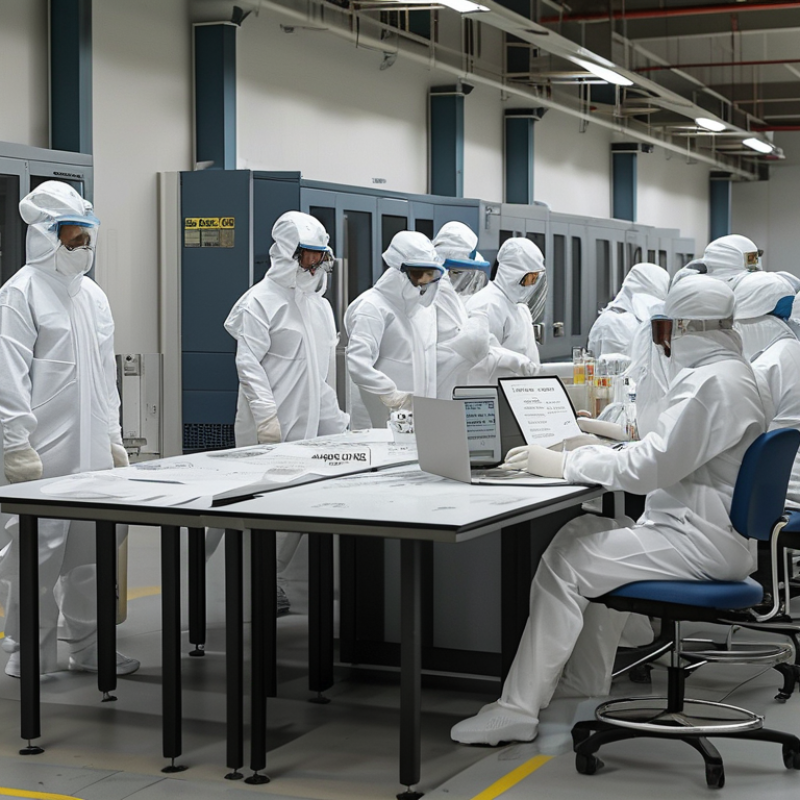
Understanding Beta Radiation Protection Shields and Their Applications
Beta radiation protection shields are designed to reduce exposure from high-energy electrons. Unlike alpha particles, beta particles can travel farther through air and skin. They may also create bremsstrahlung when stopped by dense materials. This makes shield selection a technical decision, not a simple thickness comparison.
In practical settings, acrylic, polycarbonate, and other low-atomic-number materials are often preferred. They can slow beta particles while limiting secondary X-ray production. The required thickness depends on particle energy, source strength, working distance, and exposure time. A qualified radiation safety professional should review the shield design.
Measurements with calibrated survey instruments remain essential. A shield may look substantial, yet perform poorly if gaps surround the source area. I have seen plans fail because they ignored viewing windows, cable openings, or movable joints.
Tips: Request material certificates, energy-range data, and test results from every supplier. Check whether the panel remains stable under heat, light, and repeated movement. Use personal dosimetry and routine area surveys during operation. Never assume a clear shield provides complete protection; transparency does not indicate radiation performance. It is also wise to inspect edges and fasteners regularly. Small cracks can become important over time. Supplier claims should be compared with independent calculations and applicable workplace requirements. The safest choice may not be the thickest panel, but the one matched accurately to the beta spectrum and installation conditions.
Key Criteria for Evaluating Global Shield Suppliers
Choosing among the 10 best beta protection shield suppliers requires more than comparing prices. Buyers should request material certificates, tested attenuation data, and traceable batch records. Beta particles can create bremsstrahlung in high-density materials, so acrylic or polycarbonate often suits primary shielding. Lead may require careful secondary shielding design. NCRP Report No. 144 emphasizes that shielding depends on radiation energy, source activity, distance, and workload.
Supplier documentation should match real operating conditions. Ask for test reports showing energy ranges, thickness, geometry, and measurement methods. Independent laboratory verification is more reliable than a sales brochure. The IAEA General Safety Requirements, GSR Part 3, sets an occupational effective dose limit of 20 mSv per year averaged over five years. Public exposure should not exceed 1 mSv annually. These figures help buyers judge whether a supplier understands practical protection targets.
Look for ISO 9001-based controls, inspection records, worker training, and clear replacement guidance. Check whether the supplier can provide custom dimensions without weakening joints or viewing windows. Delivery reliability also deserves attention; a perfect shield arriving late is still a procurement failure. In practice, buyers often overvalue thickness and undervalue installation. That is a mistake. UNSCEAR’s 2020/2021 report places average global natural radiation exposure near 2.4 mSv annually, but workplace conditions can differ sharply. A stronger evaluation combines engineering evidence, field experience, transparent limitations, and independent review.
Top Beta Protection Shield Suppliers for International Buyers
International buyers need more than a catalog when selecting beta protection shield suppliers. Reliable suppliers should provide acrylic or polycarbonate shielding, because low-Z materials can reduce bremsstrahlung during beta radiation work. They should also explain thickness calculations, source energy limits, viewing-window design, and compatibility with laboratory equipment. According to IAEA General Safety Requirements Part 3, occupational exposure should remain within 20 mSv per year averaged over five years, while public exposure is limited to 1 mSv annually. These figures make verified shielding performance essential.
Supplier evaluation should include material certificates, test reports from ISO/IEC 17025-accredited laboratories, dimensional tolerances, and export documentation. International buyers should request drawings before ordering. A small gap can weaken practical protection. Delivery reliability also matters, especially for custom cabinets, bench shields, or movable barriers. Industry procurement data often highlights lead time and compliance paperwork as major risks in cross-border equipment purchases. A lower price may look attractive, but unclear testing can create expensive delays. Some specifications are still overlooked.
Comparing Materials, Customization, Certifications, and Pricing
For global buyers, beta shield selection starts with material science, not catalogue size. Acrylic and polycarbonate are common low-Z choices because they limit bremsstrahlung generation. NIST’s ESTAR database reports an approximate 0.43 g/cm² CSDA range for 1 MeV electrons in plastic-like materials. Thickness must still match the radionuclide, activity, geometry, and working distance. It is not a universal number.
Customization affects both safety and price. Ask suppliers for rounded edges, sealed joints, viewing windows, lifting points, and replaceable panels. A transparent 10 mm panel may suit one application, while a thicker layered design is safer elsewhere. IAEA Safety Standards Series SSG-46 supports risk-based shielding design and controlled exposure assessment. Suppliers should provide calculation records, material certificates, and dose-rate test results.
Certifications need careful checking. ISO 9001 indicates process control, but it does not prove shielding performance. Request testing from an ISO/IEC 17025-accredited laboratory, with traceable instruments and defined beta energies. Compare prices by total ownership cost. Include machining, freight, packaging, inspection, and future replacement parts. The lowest quotation may exclude critical testing. I would question any supplier offering one fixed thickness for every beta source. That sounds convenient, but the engineering is incomplete.
How to Select and Purchase the Right Supplier Worldwide
Selecting a beta protection shield supplier requires more than comparing online prices. Confirm the supplier’s technical experience with beta radiation, not only general laboratory equipment. Ask for material composition, thickness options, attenuation data, and independent test reports. Acrylic and polycarbonate are often considered because they can reduce bremsstrahlung risk compared with high-density metals. The correct choice still depends on beta energy and workload.
Request a quotation with exact dimensions, mounting details, surface finish, and delivery terms. A reliable supplier should provide batch traceability, inspection records, and clear replacement procedures. Check whether the shield arrived with scratches, clouding, weak joints, or unstable supports. Small defects can affect visibility and safe handling. They matter.
For international purchasing, review packaging strength, customs documents, insurance, and local radiation-safety requirements. Ask how the supplier manages design changes and delayed production. An experienced technical contact should explain limitations without making unsupported promises. Independent verification by a qualified radiation safety professional is wise before routine use. I would also compare at least three suppliers using the same specification sheet. Otherwise, a cheaper offer may simply exclude testing, installation support, or suitable shielding thickness. One practical warning remains: supplier certificates can look impressive, yet their scope may not match your application. Check the issuing laboratory, test date, and measured conditions carefully.
Skip to content
