
FAQS
2026 Top Carbon Fiber Card Manufacturers for Global Buyers
Carbon Fiber Card products can look similar in a catalog, yet differ in core construction, surface finish, edge quality, and production consistency. For global buyers, those details affect durability, print clarity, and how reliably a card performs in daily use. A glossy sample may impress under showroom lights. It may reveal little about wear after months in a wallet.
Composites researcher Stephen W. Tsai is known for emphasizing a systems-based view of composite materials. In paraphrase, the principle is: “Judge the complete material system, not the carbon fiber alone.” That is a useful lens for comparing manufacturers. Buyers should examine fiber orientation, resin choice, thickness tolerance, finishing methods, and quality-control records. Ask for clear specifications and representative samples. Check whether the finished card matches its approved sample across repeated production runs.
This guide to the 2026 Top Carbon Fiber Card Manufacturers for Global Buyers focuses on those practical distinctions. It considers manufacturing capability, customization, communication, and evidence of consistent quality. Small details matter. A rough corner or uneven coating can undermine an otherwise attractive card. Supplier claims also deserve careful checking; polished product photos are not proof of long-term performance. The comparison is not a substitute for testing to your own requirements. And no ranking can remove every uncertainty. Buyers should confirm current specifications directly with each manufacturer before making a decision.
What Carbon Fiber Cards Are and How They Are Manufactured
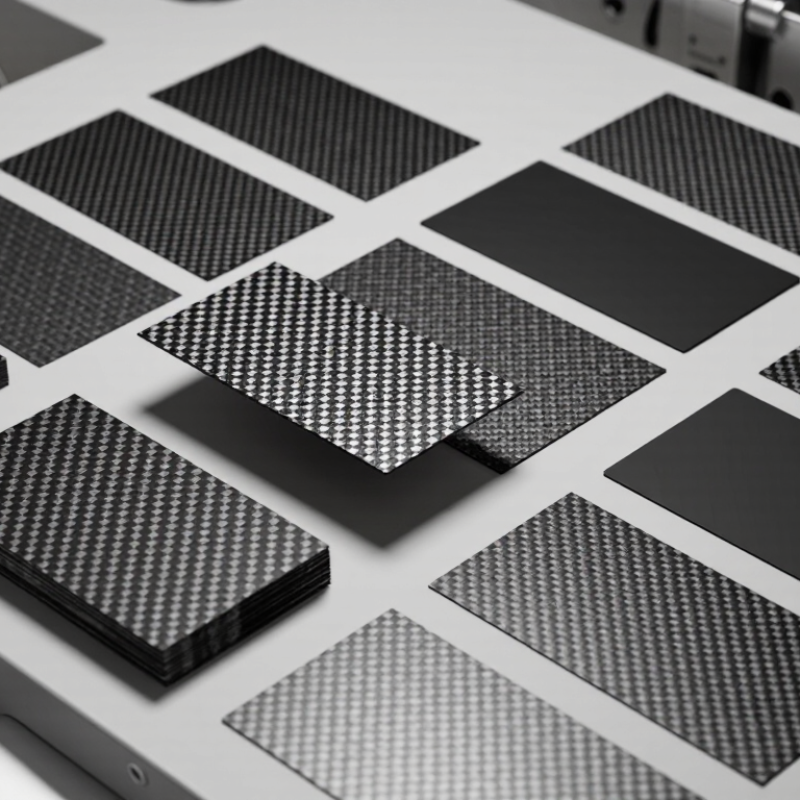
A carbon fiber card is a thin composite component, not a sheet of pure carbon. Its fibers are held in a polymer resin, creating a stiff, lightweight laminate. Manufacturers may combine carbon-fiber layers with a polymer core or decorative face sheets to control thickness, flexibility, and appearance. The pattern can be woven or unidirectional. Small details matter: exposed edges, resin coverage, and surface finish all affect the final feel.
Production typically begins by cutting fiber-reinforced sheets to size and stacking them in selected directions. Heat and pressure bond the layers; controlled curing sets the resin. After cooling, the laminate is trimmed, finished, and checked for thickness, warping, and edge quality. Designs that include an electronic component need suitable cavities and careful assembly. Not every card uses the same process. That is easy to overlook.
Grand View Research estimated the global carbon-fiber market at about US$6.3 billion in 2023, with projected growth through 2030. This figure covers many industries, not card production specifically. For buyers, it signals a mature materials supply chain, but not uniform card quality. Request sample cards and inspect corners, surface consistency, and bending behavior under realistic handling. A perfect-looking sample can still hide uneven bonding; testing more than one batch is wiser.
Key Performance Standards for Comparing Carbon Fiber Card Makers
When comparing carbon fiber card makers, look beyond the surface pattern. A neat weave can hide uneven thickness, rough edges, or inconsistent bonding. Ask for stated thickness and dimensional tolerances, plus inspection records from more than one production batch. These details help reveal whether a sample reflects routine output or careful hand-finishing.
Performance claims need clear test conditions. Ask how makers assess bending, abrasion, edge wear, and resistance to common skin oils or moisture. Results are useful only when the method, sample size, and acceptance limits are disclosed. There is no single test that captures every card’s real-world use. Small differences show. Compare cards made with the same layup and finish, then inspect corners under good light. A vague “durable” claim is not evidence.
Also check whether the carbon fiber layer is bonded securely to the card core and whether printing or surface coatings affect feel and wear. Request a production sample and handle it with clean, dry hands before checking flex and finish. I would not treat one successful sample as proof of long-term consistency; that is an easy mistake. My checklist can miss issues that appear only after months of daily use, so warranty terms and a practical defect-handling process deserve attention too.
2026 Buyer Benchmark: Carbon Fiber Modulus Ranges
Typical carbon fiber modulus ranges vary by fiber grade. Use these material-level benchmarks as a starting point when reviewing suppliers; request test data for the finished card laminate, since card construction and processing affect final performance.
How to Evaluate Manufacturers for Quality, Capacity, and Customization
Choosing a carbon fiber card manufacturer requires more than reviewing product photos. Ask for material specifications, card thickness, and documented quality checks. Compare samples under bright light. Look for consistent edges, clean printing, and surfaces without visible bubbles or scratches. Small defects matter when cards are handled every day. Request measurements from multiple pieces, not only one approved sample.
Capacity claims need evidence. Ask about typical monthly output, current lead times, and how production changes during busy periods. A large stated capacity means little if inspection records or delivery schedules are unclear. Request a sample production plan for your order size. Then confirm how rejected pieces are recorded and replaced. Details can reveal more than a polished presentation.
Customization should be tested before a full order. Discuss artwork formats, colors, finishes, edge treatments, and packaging, then review a physical prototype. Confirm which features affect price, timing, or durability. A glossy finish may show fingerprints more readily; a distinctive texture may alter print appearance. No review catches everything. Even a careful sample check can miss variation in a larger batch, so agree on written tolerances and approval steps before production begins.
Leading Carbon Fiber Card Manufacturers Serving Global Buyers in 2026
Global buyers evaluating carbon fiber card manufacturers in 2026 should look beyond a glossy sample. Ask how the carbon-fiber layer is bonded, how edges are finished, and whether thickness stays consistent across production runs. A clean weave matters. So does a flat surface that will not snag in a wallet. Request a physical sample and written specifications before approving production.
Reliable manufacturers serving international customers should explain material options, minimum order quantities, lead times, and inspection steps clearly. Confirm whether artwork, personalization, and packaging are handled in-house or by partners. Ask how they check dimensions, surface defects, and print alignment. A small pilot order can reveal issues that a presentation cannot. Shipping deserves attention, too: protective sleeves and rigid cartons help limit scratches and corner damage during transit.
Experience shows in how a supplier responds when requirements change. Do they explain trade-offs among weight, finish, durability, and cost? Do they provide realistic sampling and production dates? Those answers are useful evidence, not guarantees. Buyers should compare specifications on equal terms and keep approval records. Carbon fiber’s appearance can shift with its weave and the lighting, so inspect samples under ordinary indoor light. No process is flawless. Even careful checks can miss a cosmetic defect.
Global Sourcing, Compliance, and Supplier Verification Considerations
Global buyers should assess carbon fiber card manufacturers beyond catalog photos and quoted prices. Ask for the fiber grade, resin system, layer structure, thickness tolerance, and surface-finish options in writing. A sample can reveal uneven edges, visible weave variation, or a finish that scratches too easily. Details matter. Compare samples with the approved specification, not just with one another.
Supplier verification needs evidence. Request current quality records, production-site details, batch traceability, and test reports that identify the tested material and method. Confirm that reports come from a qualified, independent laboratory when appropriate. Paperwork can mislead. Check dates, product scope, and whether the results match the exact card construction being purchased. A video call or site audit may help clarify who controls production and inspection.
Compliance requirements differ across destination markets and intended uses. Buyers should verify applicable material, labeling, packaging, and import requirements with qualified local advisers before placing a large order. Keep written records of specifications, approved samples, corrective actions, and shipment inspections. This takes time, and smaller suppliers may not maintain perfect documentation. That gap matters. Discuss a realistic improvement plan, set clear acceptance criteria, and inspect an initial production batch before scaling orders.
2026 Top Carbon Fiber Card Manufacturers for Global Buyers - Global Sourcing, Compliance, and Supplier Verification Considerations
| Evaluation Area | What Buyers Should Verify | Relevant Standard or Reference | Practical Verification Method |
|---|---|---|---|
| Product definition and drawing control | Confirm the card or plate dimensions, thickness, tolerances, flatness, hole locations, edge finish, surface finish, fiber orientation, and resin system against an approved drawing. | Buyer-approved technical drawing and revision control; no single standard defines every carbon-fiber card specification. | Request a signed drawing review, a first-article inspection report, and measurement results for the agreed critical dimensions. |
| Material and construction traceability | Identify the fiber and resin specifications, laminate schedule, batch or lot number, manufacturing date, and any permitted material substitutions. | Purchase specification and supplier material traceability records. | Compare material certificates and production records with the purchase order; require written approval before substitutions. |
| Quality management system | Check whether the supplier’s quality system is appropriate for the intended market and product risk. Certification scope and site should cover the actual manufacturing operation. | ISO 9001:2015; AS9100D for organizations in the aviation, space, and defense supply chain; IATF 16949:2016 for applicable automotive supply chains. | Request a current certificate and verify its validity, scope, issuing certification body, and covered production site with the issuer or accreditation database. |
| Mechanical test evidence | Check that test methods, specimen preparation, conditioning, and reported results match the material form and acceptance criteria in the contract. | ASTM D3039/D3039M for tensile properties of polymer-matrix composite materials; ASTM D790 for flexural properties of plastics; ASTM D2344/D2344M for short-beam strength of polymer-matrix composite materials. | Review dated test reports for the relevant material construction and lot. Confirm the laboratory, test method edition, sample details, and results; do not treat unlike layups as directly comparable. |
| Dimensional and visual inspection | Define acceptance limits for thickness, flatness, surface defects, edge quality, and visible voids or delamination indications. | Contract-specific inspection plan and acceptance criteria. | Ask for inspection records tied to the shipment lot and agree in advance on sampling, measurement equipment, and defect disposition. |
| Restricted substances and market compliance | Determine which laws apply to the product’s destination and end use. Request substance declarations for the actual supplied material and any coatings, adhesives, or finishes. | EU REACH Regulation (EC) No 1907/2006; EU RoHS Directive 2011/65/EU applies to electrical and electronic equipment within its scope, not automatically to every carbon-fiber product. | Obtain a current, product-specific declaration and supporting test or supplier records where appropriate. Confirm applicability with the importer or compliance specialist. |
| Environmental management | Assess whether environmental controls, waste handling, and relevant site procedures meet the buyer’s supply-chain requirements. | ISO 14001:2015 environmental management systems. | Verify the certificate’s site and scope; treat certification as evidence of a management system, not proof that a particular product meets every environmental requirement. |
| Production capability and capacity | Confirm the supplier’s actual processes, available panel or part sizes, machining capability, lead-time assumptions, minimum order quantities, and capacity for repeat orders. | Capability statement and buyer-approved process requirements. | Request process-flow information, recent examples of comparable work, a production schedule, and a documented contingency plan for delays or equipment outages. |
| Supplier identity and site verification | Establish the legal entity, manufacturing address, ownership or authorized trading role, and whether production is performed in-house or subcontracted. | Business registration and applicable local licensing records. | Cross-check legal documents, invoices, bank-beneficiary details, and the production-site address. Conduct a site audit or use an independent inspection when risk warrants it. |
| Sampling and change control | Agree on sample approval, production-equivalence requirements, and advance notification of changes to materials, processes, tooling, site, or subcontractors. | Contract quality clauses and an agreed change-notification procedure. | Retain an approved reference sample where practical and require written review of changes before affected goods are produced or shipped. |
| Packaging and international shipping | Specify protection against impact, abrasion, moisture, contamination, and transit movement; agree on labeling and shipment documentation. | Purchase order and agreed packaging specification; Incoterms® 2020 rules for allocating specified delivery obligations, costs, and risks. | Review a packaging sample or packing photographs. State the named place and selected Incoterms® rule in the contract and confirm export-document responsibilities. |
| Customs classification and origin | Confirm the product description, declared customs value, origin, and tariff classification for the importing country. | Destination-country customs rules and tariff schedule; classification depends on product characteristics and jurisdiction. | Have the importer or customs broker validate the classification and origin documents. Do not rely solely on a supplier’s suggested tariff code. |
| Commercial and delivery risk | Set payment milestones, inspection rights, remedies for nonconforming goods, delivery dates, warranty terms, and responsibility for freight and insurance. | Written purchase contract and the selected Incoterms® 2020 rule. | Match contract terms across the quotation, purchase order, invoice, and shipping documents; use independently verified payment details. |
Buyer note: This checklist supports supplier comparison and due diligence; it is not a verified ranking of manufacturers or a substitute for product-specific legal, regulatory, engineering, or customs advice. Confirm current requirements for the destination market and intended end use before placing an order.
Skip to content
