
FAQS
China Top Garment Labels Suppliers for Buyers?
Choosing a garment label supplier in China involves more than comparing unit prices. Buyers need to assess material options, sample quality, communication, and production capacity. Garment Labels may be woven, printed, heat-transferred, or made with recycled fibers, and each option suits different products. A soft satin care label feels different from a firm woven brand tab. Those details affect comfort, appearance, and durability.
This guide introduces practical ways to evaluate suppliers before placing an order. It looks at product range, customization, minimum order quantities, sample processes, lead times, and quality checks. Buyers can ask for clear quotations and physical samples, then compare colors, edges, text legibility, and attachment methods. Small details matter. It is also sensible to confirm how a supplier handles revisions and production delays. These points help create a more reliable comparison, though they cannot guarantee a perfect order. A polished catalog may not show how consistently a factory produces at scale. That judgment takes care.
The right supplier depends on the label’s purpose, budget, and expected volume. A new clothing brand may value flexible sampling, while a larger buyer may focus on repeatability and delivery planning. The sections ahead provide questions and criteria for building a shortlist, not a universal ranking. Buyers should verify claims directly and keep specifications in writing. That extra step can feel slow, but skipping it may create avoidable surprises.
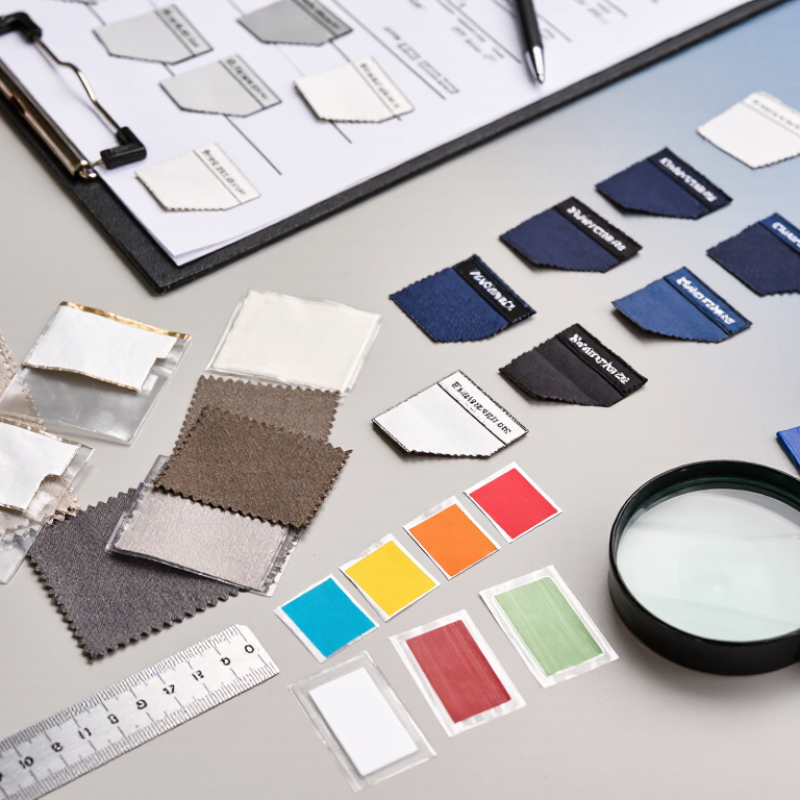
Types of Garment Labels Available from Chinese Suppliers
Chinese suppliers offer several garment label types, each suited to a different job. Woven labels use threads to form text or symbols, giving them a durable, textured finish. They work well on collars and side seams, though dense designs can become hard to read at small sizes. Printed labels carry fine details on satin, cotton, or polyester tape. They are often softer against skin, making them a practical choice for care instructions and inner neck labels. Always request a physical sample; screen images cannot show the true hand feel.
Heat-transfer labels apply lettering directly to fabric, leaving no sewn edge. They suit lightweight sportswear, but adhesion and comfort should be checked after washing. Size tabs, care labels, and origin labels can be supplied separately or combined, depending on the garment and production plan. Hang tags are different: they attach outside the garment and usually carry product information rather than serving as a permanent label. Ask suppliers to confirm material, dimensions, color matching, and wash-test results in writing. Small details matter. A label that feels smooth in a sample may still irritate when sewn into a tight neckline, so fit it to the actual garment before approving bulk production.
How to Evaluate Chinese Garment Label Suppliers
China Top Garment Labels Suppliers for Buyers?
How to Evaluate Chinese Garment Label Suppliers
Choosing a Chinese garment label supplier takes more than comparing prices and catalog photos. Request samples made with the materials, colors, and finishes you plan to order. Inspect woven edges, printed text, backing, and cut consistency under good light. Small details matter. If labels will be washed, test them under the care conditions expected for the finished garment.
Ask for evidence of quality checks, production capacity, and realistic lead times. Confirm minimum order quantities, sample charges, packaging, and how the supplier handles defects. Clear answers are useful, but records and consistent samples are stronger signals. A polished sample can still differ from a bulk run, so agree on written specifications and an approval sample before production.
Pay attention to communication during the evaluation. Share artwork files and ask the supplier to confirm dimensions, color references, and any finishing limits. Ask for evidence. Consider how promptly they flag unclear details instead of simply agreeing. A supplier may not meet every requirement, and that is worth discussing early. Compare the actual samples and terms, not just promises.
Leading Supplier Profiles and Their Specialties
Garment-label suppliers usually specialize in distinct production needs. Woven-label makers focus on durable logos and fine lettering; printed-label specialists handle care instructions and small text. Other suppliers offer hangtags, heat transfers, or RFID-enabled labels. Textile Exchange’s Materials Market Report 2024 estimates global fiber production reached 124 million tonnes in 2023. That scale makes clear material descriptions and traceable sourcing increasingly relevant to buyers, though the report does not measure label production itself.
Compare samples, not promises alone. Check whether tiny care symbols remain readable after washing, whether woven edges feel smooth against skin, and whether color stays consistent across repeat orders. Ask for material composition, production lead times, minimum quantities, and quality-control procedures. Request documentation that matches the actual label materials. A polished sample can still hide uneven stitching or weak adhesive. Supplier profiles are useful, but they rarely tell the whole story; I would treat a single sample as evidence, not proof.
Tips: Send artwork with exact dimensions and test labels on the finished garment. Keep one approved sample for future order checks. Small details matter.
How Buyers Can Request Samples and Compare Quotes
When contacting garment label suppliers, send the same brief to each one. Include label dimensions, fabric or paper type, weave, colors, edge finish, and attachment method. Add a clear artwork file and state the expected order quantity. Small details matter. A folded edge can feel different from a cut edge, while a color viewed on screen may shift in production.
Ask for a physical sample made with the proposed materials, not only a digital mock-up. Confirm whether sample fees, delivery, and revisions are included, and request an estimated production timeline. Check the label under ordinary lighting and handle it beside the garment fabric. Does the text stay legible? Does the backing suit the intended sewing process? Test it. One sample cannot prove consistency across a full run, so ask how production batches are checked.
Compare written quotes line by line. Separate unit price from setup charges, sample costs, packaging, freight, and any minimum quantity. Ask how long the quote remains valid and what changes could affect the price. A very low figure may omit a useful detail; clarify it rather than assuming. Keep replies and approved sample notes together. It is easy to overlook a color reference when suppliers use different naming systems. Some comparisons still involve judgment, especially for texture and hand feel.
Quality Standards, Customization, and Order Considerations
Garment labels must stay readable after sewing, washing, and daily wear. Ask suppliers for material specifications, colorfastness results, and wash-test samples. ISO 9001 describes a quality-management system; it does not guarantee every label will perform well. Check the supplier’s actual testing process. A glossy sample can conceal a weak adhesive or fraying edges. Textile Exchange’s Materials Market Report 2024 estimates global fiber production reached 124 million tonnes in 2023, with polyester accounting for 57%. This scale makes clear material descriptions and traceability questions increasingly relevant.
Customization works best when artwork is production-ready. Share exact dimensions, fabric type, color references, fold style, and attachment method. Request a pre-production sample, then inspect small text and fine lines under ordinary lighting. They can disappear. Confirm whether recycled-content or safety claims apply to the finished label, not just one input material. Some details are easy to overlook.
Tips: Before placing an order, confirm minimum quantities, sample fees, lead times, and acceptable color or size tolerances in writing. Ask how reorders will match the approved sample. Keep a dated sample for comparison. One weakness: buyers sometimes focus on unit price and miss setup costs or shipping delays. Review the full landed cost and build a time buffer, especially for a first order.
| Label Type | Common Materials and Uses | Quality Checks | Customization Options | Buyer Order Considerations |
|---|---|---|---|---|
| Woven labels | Typically woven from polyester or cotton yarn; used for brand, size, and decorative labels. | Check legibility at the intended size, edge finish, color consistency, weave density, and resistance to fraying. | Artwork, yarn colors, dimensions, fold style, cut type, and backing can often be specified. | Confirm the finished size and fold method with a sample. Fine details may need simplified artwork for small labels. |
| Printed care labels | Commonly printed on satin, polyester, or other suitable textile tapes; used for care instructions, fiber content, and origin information. | Review print clarity, rub resistance, wash durability, and whether the material remains comfortable against skin. | Text, symbols, layout, tape width, print color, and label length can be tailored. | Provide approved care and fiber-content information. Labeling rules vary by destination market, product, and garment type. |
| Heat-transfer labels | Printed transfers applied directly to fabric; often used for neck, size, or interior branding where a sewn label is not preferred. | Test adhesion, wash durability, cracking, peeling, and performance on the actual garment fabric. | Shape, size, colors, artwork, and application instructions can be customized. | Test application temperature, pressure, and time on production fabric before bulk use; fabric finishes can affect adhesion. |
| Hang tags | Usually made from paper or card stock; used for product information, pricing, and retail presentation. | Check print quality, color matching, card thickness, hole placement, and attachment strength. | Paper stock, size, finish, printing, die-cut shape, and string or fastener can be specified. | Confirm artwork, barcode readability where needed, attachment method, and packaging requirements before production. |
| Recycled-content labels | May use recycled polyester yarn or recycled paper, depending on the label type and supplier’s documented material source. | Request supporting material and chain-of-custody documentation when making recycled-content claims; check normal durability and print or weave quality. | Material choice, label construction, artwork, and finishing can be customized subject to available certified inputs. | Verify that certificates and transaction documents cover the specific material and order. Do not rely on a logo or claim without supporting records. |
| Paper labels from certified sources | Paper or card products may be sourced from responsibly managed forests when the relevant certification and supply-chain requirements are met. | Check paper specification, print quality, finish, and documentation for any sourcing claim. | Paper grade, dimensions, print, coating, shape, and attachment options can be discussed. | Confirm whether certification applies to the supplied product and whether required claims or marks are authorized for use. |
| Buyer note: Ask for a pre-production sample, written material specifications, color approval, packaging details, and agreed inspection criteria. Standards such as OEKO-TEX STANDARD 100, Global Recycled Standard, or FSC certification apply only within their defined scope; verify current certificates and product coverage directly. Minimum quantities, lead times, and available processes vary by supplier and order specification. | ||||
Skip to content
