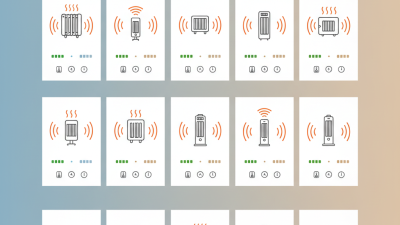
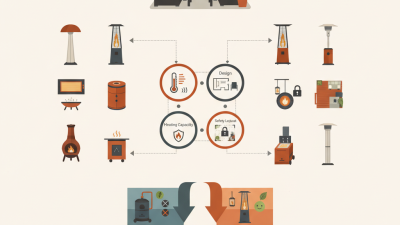
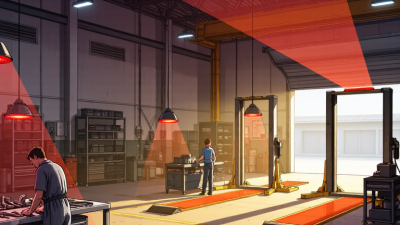
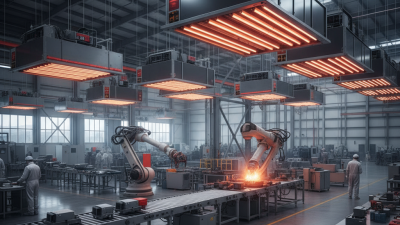
China Top Industrial Infrared Heater Suppliers?
China has become a major manufacturing base for industrial infrared heaters, serving factories, warehouses, paint lines, food plants, and drying systems. Supplier quality, however, varies sharply between catalog products and engineered installations.
The U.S. Department of Energy identifies process heating as a major industrial energy use, accounting for about 51% of manufacturing energy consumption in the United States. The International Energy Agency also reports that industry remains one of the world’s largest energy-consuming sectors. These figures explain the growing interest in targeted infrared heating. It can warm a surface directly, reduce heat loss, and shorten production cycles when correctly specified.
This guide examines China’s top industrial infrared heaters suppliers through practical criteria. It considers emitter technology, wavelength control, temperature uniformity, energy testing, certifications, customization, spare parts, and after-sales support. A polished factory may still provide weak technical documentation. That matters.
Dr. R. Keith Mobley, a recognized reliability engineering authority, wrote, “Reliability is not a department; it is a culture.” His principle applies here. A dependable supplier should demonstrate reliability through test records, thermal images, material data, and repeatable quality controls—not attractive brochures alone.
Market reports from Grand View Research and MarketsandMarkets indicate continued growth in infrared heating and industrial process equipment. Their forecasts differ because market definitions are inconsistent. That is worth remembering. No ranking is perfect.
The strongest Chinese suppliers usually combine efficient emitters with application engineering. They also explain installation distance, reflector design, control systems, and maintenance needs clearly. This introduction provides a grounded starting point for comparing manufacturers, while leaving room for verification before any purchasing decision.
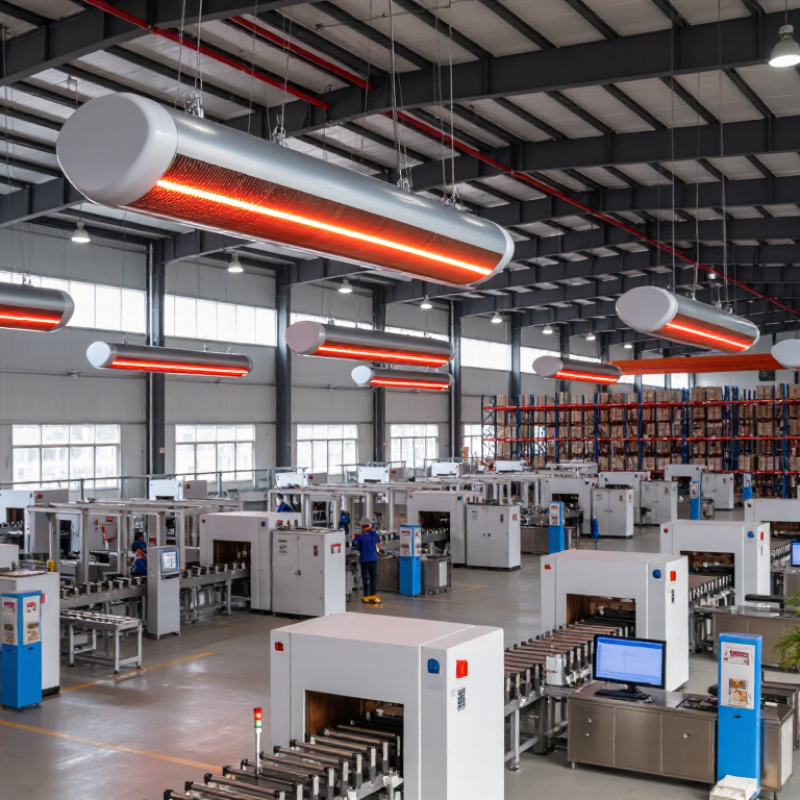
Industrial Infrared Heaters: Definition, Principles, and Main Applications
Industrial infrared heaters convert electrical or fuel energy into radiant heat. Unlike convection systems, they warm surfaces directly through infrared waves. Emitters transfer energy to coatings, textiles, plastics, metals, and other target materials. Air temperature may remain moderate while the product surface heats quickly.
The operating principle depends on wavelength, emitter temperature, distance, and material absorption. Short-wave infrared suits rapid curing and high-temperature processes. Medium-wave systems often support paint drying, food processing, and textile treatment. Long-wave heaters provide gentler surface heating. The U.S. Department of Energy identifies process heating as a major industrial energy user, accounting for roughly half of manufacturing fuel consumption. The IEA’s Energy Efficiency 2023 report also places industry near 37% of global final energy demand. These figures explain the interest in precise radiant heating. Still, efficiency claims need real production data, not showroom estimates.
Tips: Ask suppliers for wavelength ranges, heat-density maps, warm-up times, and measured energy use. Check temperature uniformity across moving products. A practical mistake is sizing heaters only by area. Moisture, conveyor speed, insulation, and surface color also matter. Pilot testing remains valuable, although it can expose weaknesses in an otherwise impressive design. For China-based industrial heater sourcing, request test records, electrical certifications, spare-part plans, and installation support. A lower purchase price may become expensive when emitters fail early or controls lack calibration.
Key Types of Industrial Infrared Heaters Used in China
China’s industrial heating market reflects its enormous manufacturing base. The China Electricity Council reported about 6.1 trillion kWh of secondary-industry electricity consumption in 2023. Energy efficiency therefore matters during every heating cycle. The IEA’s Energy Efficiency 2023 report also states that industry used approximately 37% of global final energy in 2022.
Electric resistance infrared heaters are widely used for coating, printing, plastics, and component drying.
Quartz emitters respond quickly, while ceramic panels provide steadier medium- and long-wave radiation. Metal-sheathed elements suit harsher workshops, but their slower response can increase idle losses. Gas-fired ceramic and radiant-tube heaters are common in large factories, warehouses, and steel-related spaces. They deliver strong output across open areas. Ventilation design remains essential.
Short-wave infrared heats surfaces rapidly.
Medium-wave units penetrate coatings more gently. Far-infrared systems support slower, uniform warming of bulky materials. Wavelength labels can mislead. They are not performance guarantees. Actual results depend on distance, emissivity, airflow, insulation, and conveyor speed.
Field testing with a surface thermometer is more reliable than relying on brochures alone. A practical supplier should provide measured output, control accuracy, replacement guidance, and documented safety compliance. Some specifications still look impressive but omit heat-loss assumptions. That deserves closer review.
Evaluation Criteria for Selecting Chinese Infrared Heater Suppliers
Choosing China’s top industrial infrared heater suppliers requires more than comparing prices. The evaluation should begin with application knowledge. Ask whether the supplier understands your material, heating distance, target temperature, and production speed. Ceramic, quartz, and metal-sheathed elements behave differently.
Request measured data, not promotional estimates. Check wavelength range, watt density, heating uniformity, response time, and expected service life. A reliable supplier should provide wiring diagrams, insulation-resistance results, temperature curves, and clear installation instructions. Proof matters.
Factory capability also deserves close inspection. Review production records, incoming-material checks, calibration methods, and final-load testing. Ask how each heater is traced by batch or serial number. Confirm compliance with relevant safety requirements, including electrical protection and enclosure ratings. Certificates alone are not enough.
After-sales support can determine the real operating cost. Examine warranty terms, replacement-element availability, troubleshooting procedures, and response times across different time zones. Ask for references from similar industrial applications, then verify the details independently. Small details matter.
A sample test is often more revealing than a polished brochure. Install several units under actual airflow and conveyor conditions. Measure surface temperature at multiple points with a calibrated instrument. I have seen suppliers publish excellent peak temperatures while overlooking cold edges and unstable control. That weakness may appear only after continuous operation. Leave room for doubt, and record every assumption before signing a purchase agreement.
Evaluation Criteria for Selecting Chinese Industrial Infrared Heater Suppliers
The chart presents a practical weighting framework for comparing industrial infrared heater suppliers. Product safety, heating performance, temperature control, customization, delivery capability, and service support are key purchasing considerations.
Higher percentages indicate criteria that typically require greater attention during supplier evaluation. Buyers should verify certifications, technical test data, production capacity, quality-control procedures, delivery terms, and after-sales support before making a final decision.
Leading Industrial Infrared Heater Suppliers and Their Product Strengths
Industrial infrared heater suppliers in China serve factories, warehouses, workshops, and outdoor production areas. Their product strengths often include fast heating, focused radiation, and lower heat loss than conventional air systems. Experienced suppliers can provide ceramic, quartz, or metal infrared heaters for different operating conditions. Each type behaves differently under dust, moisture, vibration, and frequent temperature changes.
Reliable suppliers should explain wattage, heating distance, surface temperature, control options, and expected service life. They should also provide test data, installation guidance, and replacement-part support. A professional supplier usually asks about ceiling height, workspace size, insulation, and production schedules before recommending equipment. This practical approach matters more than a polished catalogue. I have seen oversized heaters create uneven warmth and unnecessary energy use. That mistake is easy to overlook.
Tips: Request a sample test before bulk purchasing. Measure warm-up time at the actual installation height. Check whether the heater supports stable temperature control. Confirm electrical protection, mounting clearance, and maintenance access. Ask for clear technical documents, not vague promises. A dependable supplier should discuss limitations openly, including cold airflow, reflective surfaces, and uneven layouts. Product strength is not only heating power. It also includes safe design, consistent performance, responsive service, and honest engineering advice.
Quality Standards, Customization, and Export Considerations in China
China Top Industrial Infrared Heater Suppliers?
Selecting an industrial infrared heater supplier requires more than comparing prices. Quality starts with traceable materials, stable heating elements, and documented production controls. Ask for ISO 9001 evidence, electrical safety reports, and test records for the exact model. A certificate for another product proves little. It happens more often than buyers expect.
Customization should match the process, not only the requested voltage. Discuss heating wavelength, output range, mounting distance, reflector design, control interfaces, and protection ratings. For dusty workshops, enclosure design matters. For continuous production, thermal cycling data is valuable. Request a sample and measure surface temperature, warm-up time, and energy use. Small tests reveal large inconsistencies. One weakness is common: buyers often approve drawings without checking installation conditions. That mistake can create uneven heating later.
Export planning needs equal attention. Confirm voltage, frequency, plug type, wiring diagrams, spare parts, and packaging strength before production. The supplier should provide commercial invoices, packing lists, certificates of origin, and applicable conformity documents. Check the destination market’s import rules independently. CE marking may be relevant for some European shipments, while other markets require different approvals. Clarify HS classification with a customs professional. Agree on Incoterms, inspection stages, lead times, and warranty handling in writing. Photos are useful, but they cannot replace independent inspection.