
FAQS

Top Modbus Converter for Global Industrial Networks?

Choosing the top Modbus Converter for global industrial networks requires more than comparing prices or port counts. The right device must connect legacy Modbus RTU equipment with modern Ethernet, cloud, or supervisory systems without weakening data reliability. In a factory, this may mean moving temperature readings from a noisy RS-485 line to a control room dashboard several hundred meters away.

Practical evaluation should examine protocol support, baud-rate flexibility, isolation, surge protection, enclosure quality, and configuration tools. A dependable converter should recover smoothly after communication errors and provide clear diagnostics through LEDs, logs, or accessible software. Small details matter. A readable terminal label can prevent hours of troubleshooting during maintenance.

Network conditions vary across mining sites, water plants, energy facilities, and manufacturing lines. Therefore, no single model is universally best. A converter that performs well in a quiet laboratory may struggle near variable-frequency drives or long cable runs. This is where technical documentation, independent testing, warranty terms, and responsive vendor support become important evidence. Specifications alone can mislead.

This guide compares leading options through an engineering-focused lens, considering compatibility, installation effort, cybersecurity features, lifecycle value, and real operating conditions. It also recognizes an uncomfortable limitation: published performance data rarely captures every field problem. Careful testing remains necessary. Readers should verify connector types, power requirements, supported Modbus functions, and environmental ratings before deployment. The best choice is not merely the fastest converter; it is the one that keeps vital industrial data moving predictably, visibly, and safely across changing network environments.
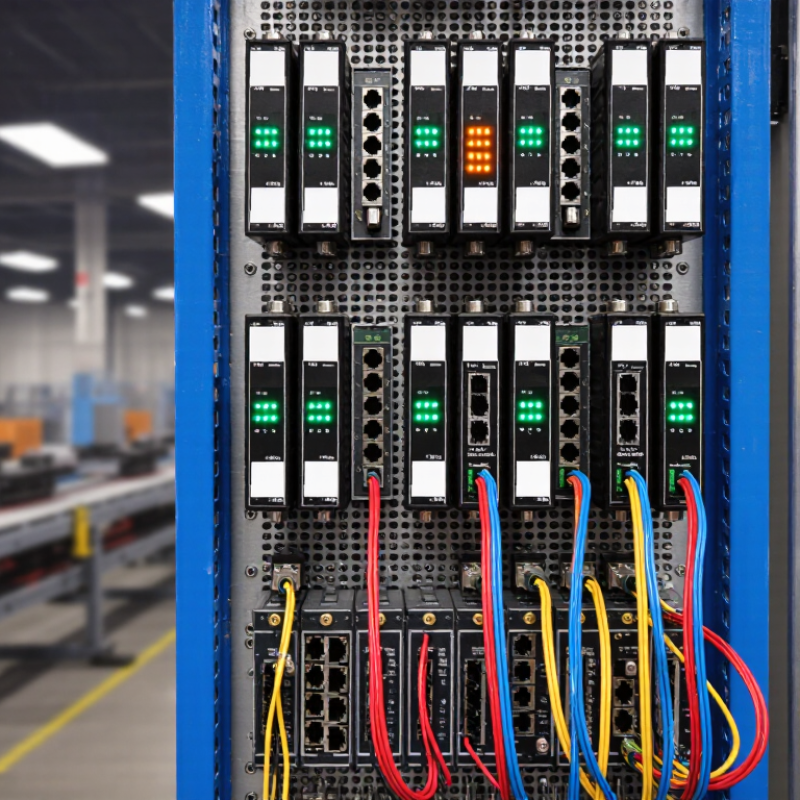
Top Modbus Converter for Global Industrial Networks?

Modbus Converter Fundamentals and Core Communication Standards

A Modbus converter is a protocol translator, not merely a cable adapter. It connects serial devices using Modbus RTU or ASCII with Ethernet systems using Modbus TCP. RTU commonly runs over RS-485, where differential signaling supports longer industrial cable routes and multiple addressed devices. TCP uses standard Ethernet and port 502, enabling communication across routed plant networks.

The Modbus Application Protocol defines function codes, device addresses, registers, and exception responses. IEC 61158 provides broader fieldbus communication guidance, while IEC 62443 emphasizes segmentation and controlled access for industrial networks. NIST SP 800-82 Rev. 3 also recommends separating operational technology from business networks. That matters when a converter bridges an old controller and a modern supervisory system.

Practical testing remains essential. Check baud rate, parity, stop bits, unit identifiers, register order, and timeout behavior. A reversed RS-485 pair can produce silence. A wrong word order can show 12.5 as an impossible value.

IEA’s Electricity Grids report estimates that about 80 million kilometers of grids must be added or upgraded by 2040. More infrastructure means more mixed-generation equipment and more protocol boundaries. The best converter supports diagnostics, isolation, clear status indicators, and documented mappings. Yet “universal” is often overstated. Some devices still require manual register interpretation, and field conditions can expose weaknesses that laboratory tests miss.

Key Features for Global Industrial Network Compatibility

Top Modbus Converter for Global Industrial Networks?

Global industrial networks need more than protocol conversion. A reliable Modbus converter should support Modbus RTU and Modbus TCP across common baud rates, parity settings, and address ranges. Galvanic isolation protects serial equipment from ground loops and electrical noise. This matters near motors, inverters, and long cable runs. Dual power input options can also reduce downtime during maintenance.

Network compatibility includes more than connectors. Look for wide voltage support, stable operation across temperature changes, and clear diagnostic indicators. Ethernet features should include static IP configuration, adjustable timeout settings, and dependable recovery after communication loss. In field commissioning, simple web settings save hours. Still, a converter may pass bench tests and fail beside a noisy motor. Site conditions deserve attention.

Tips: Record every device address, baud rate, and parity setting before installation. Test one segment at a time. Use shielded cabling where appropriate, but avoid careless grounding at both ends. Check isolation ratings and environmental specifications against the actual cabinet location. Firmware quality also matters; documented updates and readable event logs improve long-term reliability. Regional installations may require different approvals, power standards, or environmental ratings. Verify these requirements before purchase, not after delivery. Some assumptions will be wrong. That is normal, but undocumented assumptions become expensive faults.

Comparing Modbus RTU, Modbus TCP, and Hybrid Converter Types

Choosing a Modbus converter starts with the cable already installed. Modbus RTU uses serial communication over twisted-pair wiring. It offers predictable timing and modest bandwidth. During a retrofit, I check termination, bias resistors, baud rate, and slave addresses. A 300-meter cable run may work, but grounding and electrical noise often matter more than distance claims. RTU remains practical for meters, drives, and older controllers. One incorrect address can still delay commissioning.

Modbus TCP uses standard Ethernet and usually simplifies network expansion. Existing switches, structured cabling, and diagnostic tools can reduce installation time. IP addresses, port settings, and network segmentation require careful documentation. A packet capture can reveal repeated requests, timeouts, or unusual response delays. TCP is not automatically faster in every plant. Congested switches and poor network design can affect control performance.

Hybrid converters connect legacy RTU devices with modern Ethernet systems. They suit facilities upgrading gradually instead of replacing every instrument. I normally test response times under normal and peak traffic. Register mapping must match the original device manual, not assumptions. Hybrid designs are flexible, but they introduce more configuration points. Firmware compatibility also deserves attention. This part is easy to underestimate. A converter may communicate successfully during bench testing, then behave differently beside variable-speed drives. Testing under real electrical conditions is necessary.

Top Modbus Converter for Global Industrial Networks: RTU, TCP, and Hybrid Types

The chart compares typical maximum physical cable-segment lengths. Modbus RTU commonly uses RS-485, which can reach up to approximately 1,200 m under low-speed conditions. Modbus TCP normally uses twisted-pair Ethernet with a typical copper segment limit of 100 m. Hybrid converters combine both interfaces, so their practical reach is limited to about 1,200 m on the RTU side and 100 m on the Ethernet side. Actual distance depends on baud rate, cable quality, network topology, and installation conditions.

Selection Criteria for Different Industrial Applications

Choosing a Modbus converter for a global industrial network starts with the application, not the product label. A wastewater plant may need rugged isolation, while a packaging line may value low latency and compact mounting. Remote pumping stations often require wide temperature tolerance and stable communication over long cable runs. Confirm support for Modbus RTU, ASCII, and TCP before comparing extra features.

Site conditions deserve careful attention. Check serial interfaces, baud rates, parity settings, and maximum network distance. Electrical isolation can reduce failures caused by ground potential differences and motor noise. In a crowded control cabinet, DIN-rail mounting and clear status indicators save valuable maintenance time. Shortcuts hurt.

For dependable operation, review power-input tolerance, surge protection, watchdog behavior, and diagnostic records. Redundant communication may justify its cost in continuous-process facilities, but it can be unnecessary for a small machine cell. Regional EMC and safety requirements also affect selection, especially across different operating countries. Request detailed manuals, test evidence, and firmware support periods rather than relying on sales claims.

Field experience has taught me that installation quality can matter as much as converter specifications. One overlooked shield connection may create intermittent faults that appear to be protocol errors. Test the converter with the actual PLC, cable length, and electrical load before deployment. A controlled pilot may reveal timing problems that laboratory tests miss. No selection process is perfect, and engineers should document uncertain assumptions for later review.

Installation, Configuration, and Long-Term Network Maintenance

A reliable Modbus converter begins with disciplined installation, not a quick cable connection. Mount it inside a dry, ventilated cabinet, away from motor starters and high-current conductors. Use shielded twisted-pair cable for serial links, and bond the shield according to the site grounding plan. Keep RS-485 polarity consistent across every segment. One reversed pair can stop an entire line.

Configuration should match the real process. Set baud rate, parity, slave address, timeout, and register format before connecting field devices. Document each setting beside the converter. A 2024 industrial network market study reported that Ethernet represented 71% of newly installed industrial nodes, while fieldbus technologies remained widely deployed. This mixed environment makes protocol conversion practical, but mapping errors remain common. Test one register at a time. Confirm scaling, byte order, and alarm states with a calibrated meter or simulator.

Long-term maintenance needs evidence. Schedule quarterly checks for connector corrosion, cabinet temperature, diagnostic counters, and unexplained retries. Keep a controlled backup of configuration files. Review firmware through an approved change process, never during an unplanned production window. The 2024 Cost of a Data Breach Report placed the global average incident cost at 4.88 million dollars, reinforcing the need to isolate control networks and restrict management access. A practical weakness is often overlooked: technicians may change a timeout during troubleshooting and forget to restore it. Record every temporary adjustment. Better still, require a second person to verify it.