FAQS

What Are the Top Radiant Tube Heater Types in 2026?

In 2026, choosing a radiant tube heater is less about finding one universal winner and more about matching its design to the building. The U.S. Energy Information Administration’s 2018 Commercial Buildings Energy Consumption Survey reported that commercial buildings used 6.8 quadrillion Btu of energy. That figure covers all building uses, not heating alone, but it shows why heat delivery deserves careful attention. The U.S. Department of Energy’s Energy Saver guidance explains that radiant systems warm people and surfaces directly, rather than relying only on heated air. In a drafty workshop, that distinction can matter.

This guide compares common heater types by tube layout, burner arrangement, fuel, and control strategy. Straight-tube and U-tube models suit different installation layouts; single-stage, two-stage, and modulating burners offer different levels of output control. High-intensity and low-intensity designs also serve different spaces, so labels alone do not settle the choice. Fit matters.

We will assess practical factors such as ceiling height, zone control, maintenance access, and heat distribution. Manufacturer specifications and qualified installer advice should guide final sizing; a general ranking cannot replace a site assessment. That caveat is easy to overlook. Fuel availability, ventilation, and local operating conditions can shift the best option, even between similar buildings. The sections ahead identify leading radiant tube heater types for 2026 and explain where each may perform well—and where it may fall short.
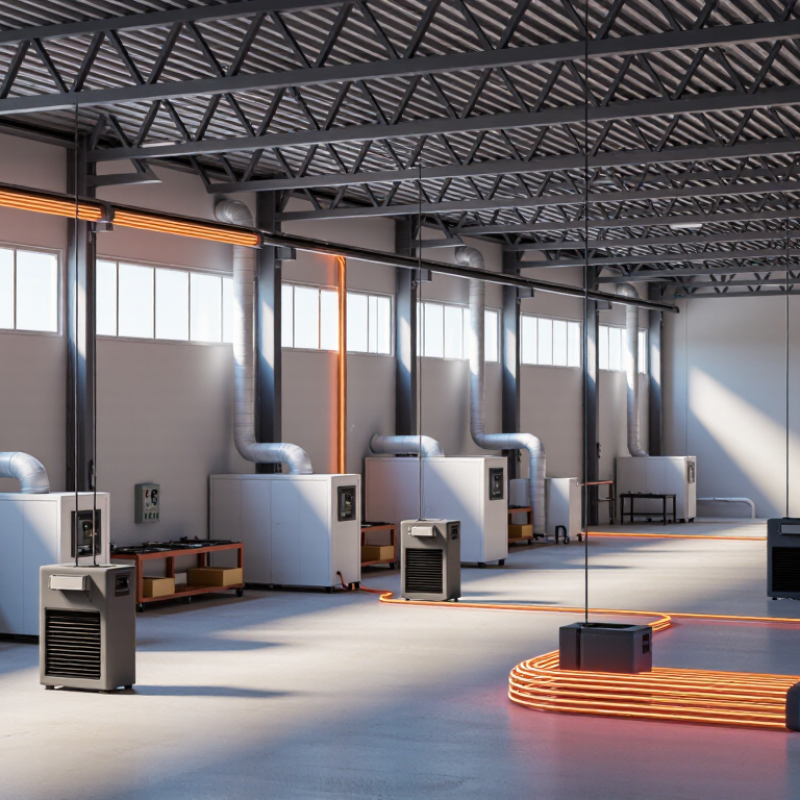
What Are the Top Radiant Tube Heater Types in 2026?

How Radiant Tube Heaters Produce and Distribute Heat

Radiant tube heaters produce heat by burning fuel inside a sealed metal tube or by transferring heat from a separate combustion chamber. The hot tube emits infrared energy, which travels across the space and warms people, equipment, floors, and work surfaces directly. The air is heated later, as those surfaces release warmth. This is why a worker beneath a heater may feel comfortable while the air near the roof remains cooler.

The tube’s shape affects heat coverage. Straight-tube designs suit long, open areas, while U-shaped tubes can fit shorter layouts. Reflectors above the tube direct more radiant energy downward and reduce heat sent toward the ceiling. Think of the warm patch on a concrete floor under a heater: its size and intensity depend on mounting height, reflector angle, tube length, and nearby obstructions.

Small layout details matter. A rack, partition, or poorly aimed reflector can leave cold zones, even when the heater runs properly.

Not perfectly, though. Radiant heating is not uniform like a warm-air system, and a floor plan alone may not reveal every draft or shadow. Check manufacturer specifications and have a qualified heating professional assess the space before selecting a heater type or placement.

Which Main Radiant Tube Heater Types Are Available in 2026?

Radiant tube heaters in 2026 mainly differ by tube layout and burner control. Straight-tube models send heat along a single, extended run. They suit long work areas, loading bays, and production lines. U-tube models turn exhaust back through a second leg, producing a compact footprint with heat directed beneath the unit. Both use reflectors to guide infrared energy toward floors, equipment, and people. The right choice depends on ceiling height, mounting position, and how evenly the space needs heating.

Control options add another distinction. Single-stage heaters run at one output; two-stage and modulating versions adjust heat as demand changes. Multi-burner systems can serve longer zones, but poor zoning may leave some areas too warm. A useful context: the U.S. Energy Information Administration’s 2018 Commercial Buildings Energy Consumption Survey estimated that space heating accounted for about 32% of commercial-building energy use. That figure covers many heating systems, not radiant tubes alone. Keep that difference in mind. This classification is practical, but not perfect: suppliers may use different labels for similar layouts. Check the heater’s output, tube length, control method, and installation clearances against the actual space. A cold doorway changes the picture.

How Heater Types Differ in Fuel, Layout, and Performance

What Are the Top Radiant Tube Heater Types in 2026?

How Heater Types Differ in Fuel, Layout, and Performance

Radiant tube heaters vary by fuel, burner arrangement, and tube shape. Straight-tube models place the burner at one end and suit long, open spaces. U-tube designs fold the tube back toward the burner, making them useful where installation length is limited. Some systems use several burners or tube runs to spread heat across wider work areas. Common fuel options include natural gas and propane; availability and site connections often guide the choice.

Layout affects more than fit. A long, straight tube can create a warmer zone along its length, while multiple runs may provide broader coverage. Reflectors direct infrared heat toward floors, workstations, or stored materials. Ceiling height, insulation, airflow, and mounting angle all influence comfort and fuel use. That matters. A heater that looks powerful on paper may leave cold patches if its layout does not match the room. My own comparison would not stop at fuel type; installation details can change the result substantially.

Tips: Measure the heated area and ceiling height before comparing output ratings. Check fuel supply, ventilation, and clearance requirements with a qualified installer. Look for even warmth at floor level, not just a hot tube overhead. Allow for awkward corners; real buildings are rarely perfect rectangles.

Where Each Radiant Tube Heater Type Is Commonly Used

U-tube radiant heaters are common in repair bays, loading areas, and factories with high ceilings. Their paired tubes return heat across the work zone, so installers can place the burner near a wall and direct warmth toward benches or vehicle lanes. Straight-tube systems suit long, narrow spaces such as warehouse aisles and production lines. L-shaped layouts can reach around obstacles or follow a perimeter. A practical fit. Yet tube shape alone does not determine comfort; ceiling height, insulation, and air movement matter.

Heater controls also influence where a system works best. Single-stage units often suit smaller work areas with steady heating needs, while two-stage or modulating systems can better serve buildings with changing occupancy or large door openings. The U.S. Department of Energy’s 2022 Industrial Decarbonization Roadmap estimates that industry accounts for about 30% of U.S. energy-related emissions, underscoring why heat loss and operating schedules deserve attention. Agricultural buildings may use radiant tubes to warm occupied zones without heating every cubic foot, but dust, moisture, and ventilation need careful assessment. Not everywhere. A site survey is still essential; a heater that feels effective beneath a workstation may leave cold corners elsewhere.

What Are the Top Radiant Tube Heater Types in 2026? - Where Each Radiant Tube Heater Type Is Commonly Used

Heater type How it works Common applications Typical advantages Planning considerations
U-tube radiant heater A burner sends hot combustion gases down one leg of a radiant tube; the gases return through the other leg before exhausting. Manufacturing shops, maintenance facilities, warehouses, and other open industrial spaces. Compact layout and a concentrated heating zone; suitable where overhead mounting is available. Allow for the heater’s length, clearances, venting, and the coverage pattern required at floor level.
L-tube radiant heater Combustion gases travel along a straight radiant tube and turn through an elbow near the far end before returning or reaching the exhaust, depending on the design. Long, narrow work areas, production lines, and spaces where a straight heating run fits the building layout. Can be arranged along a work zone or production area with a relatively simple overhead footprint. Confirm the required tube length, reflector placement, and manufacturer-approved vent arrangement.
Straight-tube radiant heater A burner heats a straight radiant tube, with combustion products moving toward an exhaust at the opposite end. Long bays, loading areas, and industrial spaces where a linear heater run aligns with the area to be warmed. Simple linear arrangement can suit elongated spaces and defined heating zones. Heat distribution varies along the tube; layout and reflector design affect coverage.
Multi-burner radiant tube system Several burners heat connected or extended tube runs, creating a longer radiant surface than a single-burner unit. Large factories, assembly areas, and other broad spaces requiring multiple heating zones or extended coverage. Can distribute radiant heat across a larger area and support zoning in appropriately designed systems. Requires coordinated system design, including burner controls, gas supply, exhaust, and maintenance access.
Single-stage (on/off) control The burner operates at its rated firing level when called for heat and shuts off when the control is satisfied. Straightforward heating zones with relatively steady demand, including workshops and storage areas. Simple control approach and equipment configuration. Temperature swings and cycling depend on system sizing, controls, and the building’s heat loss.
Two-stage control The burner can operate at a lower and a higher firing level, switching stages in response to heating demand. Commercial and industrial zones with changing loads, such as intermittently occupied work areas. Provides an intermediate output level between off and full fire. The control must be compatible with the heater and correctly matched to the zone’s requirements.
Modulating control The burner adjusts its firing rate over a specified operating range to respond more gradually to heating demand. Facilities with variable occupancy or heat loads, including production spaces that need closer temperature control. Can provide finer output adjustment than simple on/off control when the system is designed for modulation. Performance depends on compatible controls, correct commissioning, and the heater’s specified modulation range.

Selection note: Match heater configuration and controls to the building layout, heat loss, ventilation, fuel supply, mounting clearances, and applicable local codes. Installation and venting should follow the equipment instructions and be handled by qualified professionals.

What Factors Guide Radiant Tube Heater Selection?

What Are the Top Radiant Tube Heater Types in 2026?

Selecting a radiant tube heater starts with the space, not a catalogue. Measure floor area, ceiling height, insulation, door traffic, and the coldest work zones. A high, drafty workshop loses heat differently from a low, well-sealed warehouse. It varies. Map where people and equipment actually sit. Radiant warmth heats surfaces and occupants directly, so equal room temperatures may not feel equally comfortable.

Next, match output and tube layout to the building. Straight-tube units can suit long, open bays, while U-shaped layouts may fit tighter spaces. Clearances and service access still matter. Check available fuel, venting routes, combustion air, and installation requirements with a qualified professional. Do not size from square footage alone. Roof insulation, frequent door openings, and desired warm-up time can change the heating load. An oversized heater may cycle often; an undersized one may leave cold edges.

Controls also guide selection. Single-stage systems are simple, while two-stage or modulating controls can better track changing loads, where compatible. Compare operating hours, maintenance access, warranty terms, and documented efficiency data—not just purchase price. Ask for heat-distribution guidance based on a floor plan. Measure twice. Calculations can miss a drafty loading door or a shaded workbench, so field observations should refine the choice.