

FAQS
Top 10 Wall Mounted Infrared Heaters for Global Buyers
Choosing the right wall mounted infrared heater is not simply a matter of comparing wattage and price. Global buyers must consider room size, ceiling height, voltage, plug standards, mounting clearance, control options, and local safety certifications. A heater that performs well in a dry bedroom may be unsuitable for a humid bathroom or a poorly insulated workshop.
Robert Bean, a building-science educator and thermal-comfort specialist, has expressed the principle clearly: “Thermal comfort is more than air temperature.” This matters because infrared heating warms people and surfaces directly, rather than only circulating heated air. A cold tiled floor, a nearby glass wall, and an exposed corner can still affect comfort.
Small details matter.
This guide reviews ten leading wall mounted infrared heater models for international buyers. Each product is considered through practical criteria, including heating coverage, surface temperature, thermostat accuracy, installation flexibility, operating controls, design, warranty support, and documented efficiency claims. We also examine whether advertised performance reflects real room conditions, since insulation and climate can change results significantly.
The ranking is useful, but not absolute. A premium model may offer excellent controls while requiring professional installation. A budget unit may provide comfortable radiant warmth but lack smart features. Some specifications are difficult to compare consistently across markets. Readers should verify voltage compatibility, certification markings, and installation instructions before purchasing.
Look beyond attractive panels and impressive claims. Choose carefully.
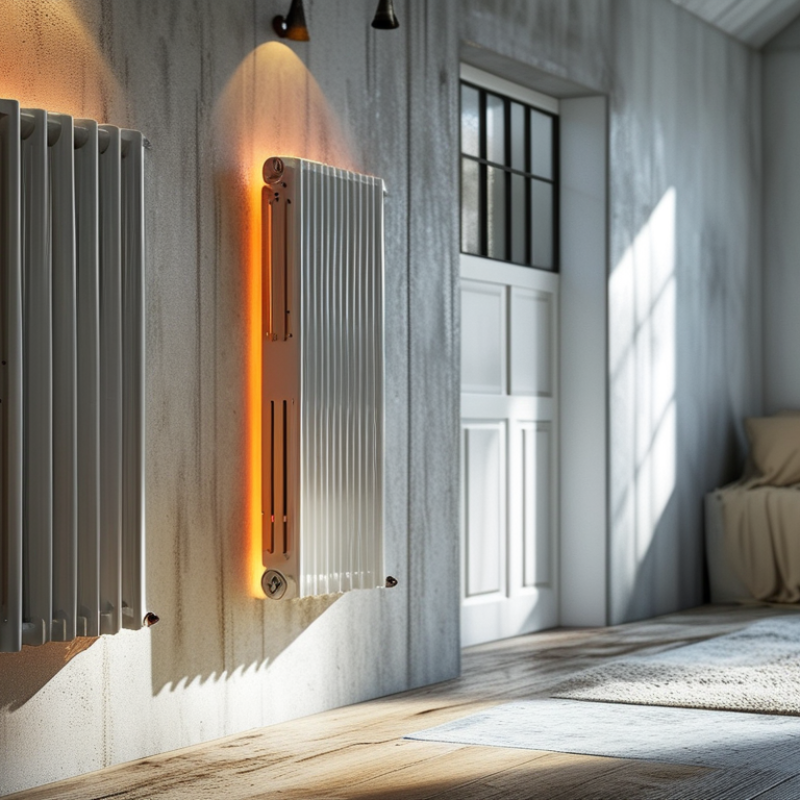
Infrared Heating Fundamentals: 3–15 μm Waves, Efficiency, and Heat Transfer
Top 10 Wall Mounted Infrared Heaters for Global Buyers
Infrared Heating Fundamentals: 3–15 μm Waves, Efficiency, and Heat Transfer
Wall mounted infrared heaters commonly emit long-wave radiation between 3 and 15 μm. These invisible waves travel across the room and warm people, floors, walls, and furniture directly. Air warms later, through contact with these heated surfaces. The effect feels like sunlight on your hands, even when the room air remains slightly cool.
Electrical resistance panels convert nearly all incoming electricity into heat at the panel. Real efficiency depends on insulation, thermostat accuracy, mounting height, and room layout. A poorly insulated room still loses heat quickly. That detail is easy to overlook. In practical use, a panel aimed toward a desk or seating area can feel more effective than one blocked by curtains or tall furniture. However, a simple watt-per-square-meter rule is only a starting point, not a guarantee.
Tips: Keep the front surface clear, and mount the heater where its radiation reaches occupied areas. Check the room’s insulation before choosing wattage. Use a reliable thermostat with temperature sensing near the living zone. Reflective foil behind the panel may help in some wall constructions, but results vary. Measure comfort at shoulder height, not only beside the ceiling. Small mistakes happen, especially when heat-loss estimates ignore doors, windows, or cold exterior walls.
| Rank | Heater Configuration | Emitter Technology | Rated Power | Common Supply | Typical Heated Area* | Approx. Peak Wavelength | Heat Transfer Characteristics | Electrical Conversion Efficiency | Recommended Application |
|---|---|---|---|---|---|---|---|---|---|
| 1 | Long-Wave Ceramic Wall Panel | Embedded resistance element behind a ceramic or mineral face | 600–1,200 W | 220–240 V; 50 Hz | 8–18 m² | Approximately 5–10 μm | Gentle, evenly distributed radiant heat with low glare and high surface comfort | Approximately 100% at point of use | Bedrooms, offices, living rooms, and well-insulated indoor spaces |
| 2 | Carbon-Fiber Radiant Panel | Carbon-fiber heating element laminated into a flat panel | 500–1,000 W | 110–120 V or 220–240 V | 7–16 m² | Approximately 3–8 μm | Broad-area infrared emission, quiet operation, and low visible light output | Approximately 100% at point of use | Residential rooms, study areas, and low-noise commercial interiors |
| 3 | Quartz Tube Short-Wave Panel | Quartz tube containing a tungsten or resistance filament | 1,000–2,000 W | 220–240 V; 50/60 Hz | 10–24 m² | Approximately 1.5–3.0 μm | Fast radiant response with stronger directional heating and some visible red glow | Approximately 100% at point of use | Garages, workshops, high-ceiling rooms, and intermittently occupied areas |
| 4 | Halogen Infrared Wall Heater | Halogen lamp with reflective aluminum or coated-steel enclosure | 1,200–2,400 W | 220–240 V; 50/60 Hz | 12–28 m² | Approximately 1–2.5 μm | Very rapid heat-up, strong line-of-sight radiation, and noticeable visible light | Approximately 100% at point of use | Patios, balconies, workshops, and spot-heating zones |
| 5 | Ceramic Infrared Bathroom Panel | Sealed resistance element integrated behind a moisture-resistant ceramic surface | 400–900 W | 110–120 V or 220–240 V | 5–14 m² | Approximately 5–12 μm | Stable long-wave radiation with a low surface glare profile and even room comfort | Approximately 100% at point of use | Bathrooms and humid rooms when the enclosure has a suitable IP rating |
| 6 | Aluminum-Faced Infrared Wall Panel | Electric resistance mat bonded to an aluminum heat-spreading face | 500–1,200 W | 220–240 V; 50 Hz | 8–20 m² | Approximately 4–9 μm | Fast surface heat distribution, lightweight construction, and moderate radiant intensity | Approximately 100% at point of use | Apartments, classrooms, offices, and modular buildings |
| 7 | Stone or Glass Radiant Wall Panel | Resistance element behind a high-thermal-mass stone or tempered-glass face | 600–1,500 W | 220–240 V; 50 Hz | 10–22 m² | Approximately 5–12 μm | Stores heat after switch-off and releases it gradually through radiation and convection | Approximately 100% at point of use | Residential interiors where thermal stability and appearance are priorities |
| 8 | Outdoor Infrared Wall Bar | Quartz, carbon, or ceramic emitter inside a weather-resistant metal housing | 1,500–3,000 W | 220–240 V; 50/60 Hz | 10–25 m² in sheltered zones | Approximately 2–6 μm | Directional line-of-sight heating; wind and open-air conditions significantly reduce comfort range | Approximately 100% at point of use | Covered terraces, hospitality seating areas, balconies, and outdoor workstations |
| 9 | Low-Temperature Infrared Office Panel | Large-area resistive film or wire element behind a slim painted metal face | 300–800 W | 110–120 V or 220–240 V | 5–14 m² | Approximately 6–15 μm | Low-intensity, uniform radiation designed for continuous background heating | Approximately 100% at point of use | Workstations, meeting rooms, corridors, and energy-conscious offices |
| 10 | High-Output Industrial Radiant Panel | Heavy-duty tubular or ceramic resistance elements with a deep reflector | 2,000–4,000 W | 220–240 V or 380–415 V, depending on installation | 20–45 m² | Approximately 2–6 μm | High-intensity directional radiation suitable for large or partially open spaces | Approximately 100% at point of use | Warehouses, loading areas, factories, service bays, and high-ceiling facilities |
*Heated-area figures are indicative estimates for reasonably insulated spaces with approximately 2.4–2.7 m ceiling height. Actual performance depends on outdoor temperature, insulation, mounting height, air movement, room layout, control strategy, and the occupants’ distance from the radiant surface. Electric resistance heaters convert nearly all consumed electrical power into heat at the point of use; overall comfort and energy consumption depend mainly on heat loss, thermostat control, and how directly radiation reaches people and surfaces.
Related Posts
-
Top Benefits of Using Infrared Shop Heaters for Your Workspace Efficiency
-
Why Choose an Infrared Bar Heater for Your Heating Needs?
-
2025 Guide: How to Choose the Best Wall Mounted Heater for Your Home
-
Why Choose the Best Gazebo Heater for Your Outdoor Comfort?
-
How to Choose an Infrared Bar Heater for Efficient Heating?
-
How to Choose the Best Outdoor Propane Heater for Your Needs