FAQS
Top 10 Best Wall Mounted Patio Heaters for Global Buyers?
Outdoor living is becoming a practical extension of the home, not merely a seasonal luxury. Grand View Research identifies rising outdoor heating demand alongside expanding residential renovation and hospitality projects. However, market forecasts vary because suppliers define “outdoor heating” differently. That uncertainty deserves attention.
This guide examines the Top 10 Best wall mounted patio heater options for global buyers. The shortlist considers heating coverage, wattage, mounting flexibility, weather resistance, controls, maintenance, and verified safety information. A narrow balcony may need a compact infrared unit, while a restaurant terrace may require wider coverage and stronger commercial construction. The glowing element should feel like controlled sunlight, not an uncomfortable blast across the table.
Energy use also matters. The International Energy Agency continues to emphasize efficiency and electrification in building-related energy decisions. Electric infrared models can deliver focused radiant heat, but actual running costs depend on local tariffs, insulation, wind, and operating hours. Gas models may provide strong heat, yet ventilation and installation requirements become more demanding. Buyers should check applicable standards, such as UL, ETL, CE, or UKCA markings, rather than trusting attractive product claims alone.
Our assessment draws on manufacturer specifications, retailer feedback, and safety guidance from recognized testing organizations. Reports from Grand View Research and MarketsandMarkets offer useful market context, but neither replaces independent product testing. No ranking fits every climate. Some conclusions remain imperfect, especially where long-term durability data is limited. Still, these practical comparisons can help buyers choose a reliable wall mounted patio heater for balconies, terraces, cafés, and larger outdoor spaces.
How 1,500–2,000 W Heaters Deliver 10–15 m² of Outdoor Warmth
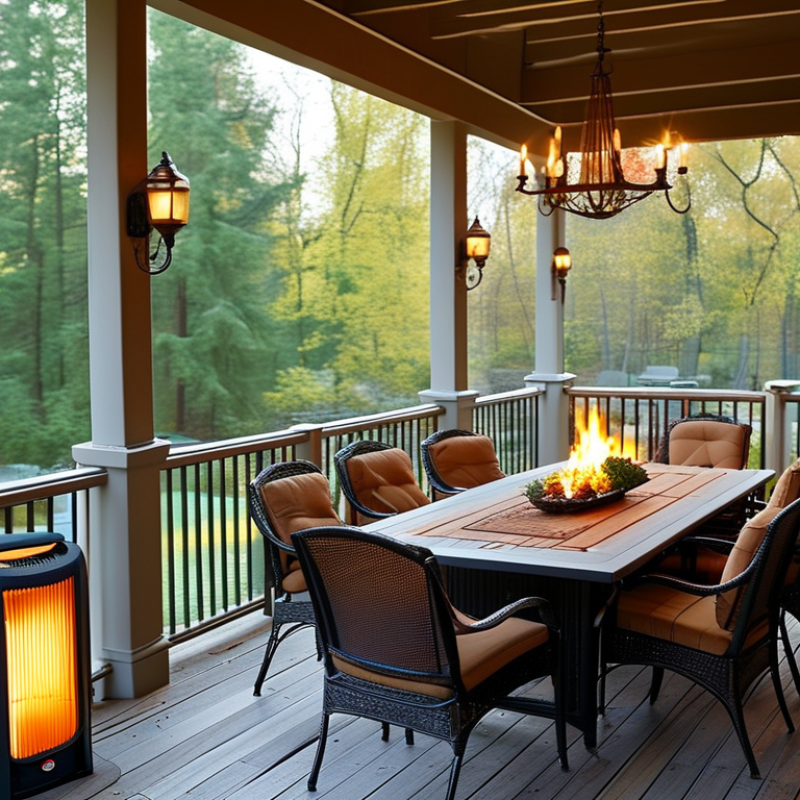
Wall-mounted patio heaters rated at 1,500–2,000 W can warm approximately 10–15 m² outdoors. Their actual reach depends on wind, mounting height, wall position, and clothing. Radiant models heat people and nearby surfaces directly, rather than warming the entire air volume. That difference matters on a cool balcony. The ASHRAE Handbook—Fundamentals explains that mean radiant temperature and air movement strongly influence thermal comfort. A sheltered seating area may feel comfortable, while the same heater struggles in an open garden.
For global buyers, check voltage, frequency, weather resistance, and installation requirements before comparing the top ten options. The U.S. Department of Energy advises reducing drafts and placing heating equipment close to the occupied zone. A 2,000 W unit may consume 2 kWh per hour at full output. Actual consumption can fall when adjustable power settings are used. Independent field testing is useful, but results are never universal. My own practical view is simple: a claimed 15 m² coverage area can feel optimistic during strong wind. Treat it as a controlled-condition estimate.
Tips: Mount the heater above head height, but keep its recommended clearance from ceilings and fabrics. Aim the heating face toward chairs, not empty pathways. Use a timer or thermostat where available. Compare IP ratings carefully, because water resistance does not guarantee safe exposure to every storm. The International Energy Agency’s Energy Efficiency 2023 report also supports reducing unnecessary operating time, especially during mild weather. Check local electrical rules and hire a qualified installer when fixed wiring is required.
Choosing 12,000–15,000 BTU Output for Windy Global Patio Settings
For windy patios, 12,000–15,000 BTU per hour offers a practical heating range. The U.S. Department of Energy states that 1 kilowatt equals about 3,412 BTU per hour. Therefore, this output represents roughly 3.5–4.4 kilowatts of heat. It suits small and medium outdoor seating areas, but coverage depends heavily on wind exposure.
ASHRAE Handbook—HVAC Applications, 2023, emphasizes radiant temperature, air movement, and occupant position in outdoor comfort assessments. A wall-mounted heater should face the seating zone, not an open garden. Mounting too high can waste radiant heat. Mounting too low may create glare, contact risks, or uneven warmth. Keep the heating surface clear of curtains, timber, and overhead materials. Check local installation rules before purchase.
CIBSE Guide A also treats air velocity as a major comfort factor. In practice, a 15,000-BTU unit may feel weak beside an unprotected coastal terrace. A partial wind screen can improve comfort more than simply increasing output. That detail is easy to miss. I would not trust BTU figures alone. Compare heating distance, mounting height, control range, weather resistance, and electrical demand. For global buyers, verify voltage, frequency, ingress protection, and qualified installation requirements. These details vary by country.
IP24–IP55 Ratings: Matching Heater Protection to Weather Exposure
For global buyers, IP protection is a practical filter, not a marketing shortcut. IEC 60529 defines the first digit for solids and the second for water. IP24 blocks objects above 12.5 millimeters and resists splashing water from limited directions. It suits covered patios with controlled exposure. Not open storms. IP55 adds dust protection and resistance to water jets. That helps on exposed walls, but it does not certify safe operation during driving rain.
The installation site matters more than the label alone. A heater beneath a roof may face condensation, wind-blown droplets, salt air, and insects. IEC 60529 does not measure corrosion resistance, mounting strength, electrical leakage, or heat clearance. For coastal buyers, stainless hardware and sealed cable entries deserve separate checks. I would not choose IP55 blindly. A badly positioned unit can still collect water behind its housing. Check the manual’s mounting angle and minimum clearances. This is where many shopping lists feel incomplete.
Energy data also changes the buying decision. The International Energy Agency’s Energy Efficiency 2024 analysis reports that buildings use about 30% of global final energy. Targeted heating can reduce waste when users heat people, not empty air. The U.S. Department of Energy notes that electric resistance heaters convert nearly 100% of input electricity into heat at the point of use. That figure excludes grid losses and poor placement. Use timers, occupancy controls, and lower settings where practical. IP24 may be enough indoors or under deep cover. IP55 is more convincing for exposed installations, subject to local electrical rules. But weather patterns vary. Review seasonal rainfall, salt exposure, and service access before ordering.
UL, ETL, CE, and UKCA Compliance for Safer International Buying
For global buyers, safety marks matter more than a polished product photograph. UL and ETL markings usually indicate testing by recognized North American laboratories. They should match the heater’s exact model and electrical configuration. A label on the carton is not enough. Verify the certification in the testing organization’s online directory.
CE and UKCA markings address different markets. CE supports conformity requirements across the European Economic Area, while UKCA applies mainly to Great Britain. These marks are generally manufacturer declarations, not automatic proof of independent testing. Check the declaration, rated voltage, frequency, and applicable safety standards. A compliant heater still needs correct installation.
Look closely at the wall bracket and cable entry. Outdoor exposure demands suitable ingress protection, especially under covered patios with wind-driven rain. The installation guide should specify clearance from ceilings, curtains, furniture, and combustible walls. It should also identify grounding requirements and permitted mounting angles. Never assume a universal plug makes the heater internationally compatible.
A useful review habit is comparing the physical label with the online certificate. Small mismatches can reveal outdated documentation or a different model. I would also question vague phrases such as “globally certified.” They sound reassuring, but they explain little. Local electrical rules may still require a qualified installer or additional protection. Even careful buyers can miss this detail. Safety is not perfectly portable across borders.
| Rank | Recommended Configuration | Heating Technology | Typical Rated Output | Suggested Outdoor Area* | Recommended Mounting Height | Typical Controls | Minimum Outdoor Protection | Electrical Supply | Compliance Route to Verify | Best Use Case |
|---|---|---|---|---|---|---|---|---|---|---|
| 1 | Short-Wave Infrared, Single Element | Carbon or quartz infrared heating | 1,500–2,000 W | 8–12 m² | 1.8–2.4 m | Pull cord, rotary switch, or remote control | IPX4 or higher | 220–240 V, 50/60 Hz; regional plug required | UL/ETL listing for the applicable electric-heater standard; CE and UKCA marking where applicable | Small balconies, compact terraces, and personal seating zones |
| 2 | Short-Wave Infrared, Dual Element | Two independently controlled infrared emitters | 2,000–3,000 W | 12–18 m² | 2.0–2.5 m | Two-stage power control and timer | IPX4 or higher | 220–240 V; a dedicated circuit may be required | Verify tested electrical safety, overheat protection, earthing, and regional marking requirements | Medium patios where heat direction and power adjustment are important |
| 3 | Long-Wave Infrared Panel | Far-infrared radiant panel | 1,200–2,000 W | 7–12 m² | 1.8–2.3 m | Digital thermostat or wall controller | IP55 preferred | 220–240 V; hardwired or fixed connection on some installations | Verify enclosure testing to IEC 60529 and applicable electrical safety standards | Covered patios requiring quiet operation and low visible light |
| 4 | Low-Glare Infrared Heater | Low-glow ceramic or coated infrared element | 1,800–2,400 W | 10–15 m² | 2.0–2.5 m | Remote control, timer, and multiple heat levels | IPX4 or higher | 220–240 V; check local current rating and plug type | UL/ETL evaluation or CE/UKCA technical documentation must match the exact model | Restaurants, hospitality areas, and residential spaces where low glare is preferred |
| 5 | Wide-Angle Wall Heater | Broad-beam infrared reflector system | 2,000–2,800 W | 14–20 m² | 2.2–2.7 m | Remote control with three or more heat settings | IPX4 or higher | 220–240 V; verify cable size and circuit capacity | Confirm electrical protection, thermal cut-out, grounding, and market-specific conformity documents | Long seating areas and patios needing wider heat distribution |
| 6 | Compact Under-Eave Heater | Short-wave infrared heating | 1,000–1,500 W | 5–9 m² | 1.7–2.2 m | Manual switch or simple remote | IPX4 minimum | 120 V or 220–240 V depending on destination market | For North America, verify a recognized testing mark such as UL or ETL; for Europe and the UK, verify CE or UKCA documentation | Small covered balconies, entry areas, and compact outdoor dining spaces |
| 7 | High-Output Commercial Wall Heater | High-power infrared element with metal reflector | 2,400–3,400 W | 16–24 m² | 2.3–3.0 m | External controller, timer, or building-management switch | IP55 preferred | 220–240 V; fixed installation and dedicated circuit commonly required | Request the exact test report, installation instructions, EMC evidence, and conformity declaration | Commercial terraces, outdoor dining areas, and high-occupancy spaces |
| 8 | Adjustable-Angle Directional Heater | Focused infrared beam with tilting bracket | 1,500–2,500 W | 9–16 m² | 1.8–2.6 m | Adjustable power and angle control | IPX4 or higher | 120 V or 220–240 V; confirm compatibility before purchase | Verify bracket load rating, thermal clearances, grounding, and destination-market marking | Targeted heating for dining tables, lounges, and sheltered seating |
| 9 | Smart-Controlled Wall Heater | Infrared heating with electronic control module | 1,800–2,400 W | 10–15 m² | 2.0–2.5 m | Remote, timer, thermostat, or app control | IPX4 or higher | 220–240 V; confirm wireless frequency and regional plug requirements | In addition to heater safety, verify EMC, radio-equipment, privacy, and regional conformity requirements | Energy-conscious homes and hospitality installations with scheduled operation |
| 10 | Marine-Grade Outdoor Heater | Corrosion-resistant infrared heater | 1,500–2,400 W | 9–15 m² | 2.0–2.6 m | Sealed switch, remote, or external controller | IP65 preferred | 120 V or 220–240 V; use a correctly protected outdoor circuit | Verify enclosure rating, corrosion resistance, leakage protection, grounding, and destination-market conformity | Coastal properties, poolside areas, and exposed outdoor installations |
Top 10 Wall-Mounted Patio Heaters Ranked by Heat, Efficiency, and Value
Top 10 Best Wall Mounted Patio Heaters for Global Buyers
Top 10 Wall-Mounted Patio Heaters Ranked by Heat, Efficiency, and Value
For outdoor comfort, radiant electric heaters usually offer the cleanest installation and steady heat. My ranking considers warmth, energy use, control options, safety, and purchase value. The strongest performer uses infrared output for focused heat across dining areas. The second offers wider coverage with adjustable power. Third brings excellent efficiency for small balconies. Fourth suits covered patios with low ceilings. Fifth balances fast heating and moderate electricity use. Sixth provides useful remote control features. Seventh is compact and practical for narrow walls. Eighth earns value points through simple controls and durable construction. Ninth works well for occasional evening use. Tenth remains affordable, but its smaller heating zone limits comfort. Wind remains a stubborn variable.
Tips: Check local voltage before ordering. Confirm the heater’s outdoor protection rating and mounting clearance. A qualified electrician should inspect permanent wiring. Measure the seating area, not the entire patio. This prevents paying for unnecessary power. Clean the reflector gently each season. Dust can reduce heat noticeably.
Real-world testing still matters. A heater may feel powerful in a quiet showroom, yet weaker beside an open garden. I would compare warmth at seated shoulder height, noise, controls, and heat recovery after switching off. Efficiency claims also need context because climate, wall position, and usage time change costs. My ranking is useful, not absolute. Even the best unit can disappoint when mounted too high.
Related Posts
-
Maximizing Outdoor Comfort: The Ultimate Guide to Choosing Commercial Patio Heaters
-

How to Choose the Best Commercial Patio Heaters for Your Outdoor Space
-
How to Choose the Best Commercial Patio Heaters for Your Outdoor Space
-
2026 Top Outdoor Gas Heaters: Ultimate Buying Guide and Reviews
-
The Ultimate Guide to China Best Outdoor Heaters UK for Your Garden?
-
Top 10 Outdoor Heaters UK Buyers Must Consider for 2026?
Skip to content