
FAQS
What Type of Vintage Military Boots Do Global Buyers Need?
Global buyers approach Vintage Military Boots with different needs, budgets, and expectations. Some want rugged field footwear for outdoor use. Others seek historically accurate pieces for collections, museums, or carefully styled wardrobes. Their decisions depend on more than appearance. Country of origin, production period, leather type, sole construction, sizing, and storage condition all matter.
Footwear historian Elizabeth Semmelhack has said, “Shoes are designed objects, but they also record the lives that wore them.” This perspective helps buyers examine every pair carefully. Scuffed leather may reveal honest service, but deep cracking can affect safety and wearability. Original laces, stamped markings, and period-correct soles can increase historical value. Still, authenticity is not always obvious. Reproductions can look convincing, while genuine boots may have replacement parts. That uncertainty deserves attention.
Fit remains the hardest issue.
Vintage sizing often differs from modern standards. A marked size may feel narrow, short, or unusually generous. Buyers should request insole length, ball width, shaft height, and detailed photographs before ordering. Climate also shapes demand. Collectors in wet regions may prefer treated leather and sound stitching. Buyers in warmer areas may value lighter designs and breathable construction. No pair is perfect. That is part of the challenge. A responsible market guide must explain flaws honestly, distinguish collectible condition from wearable condition, and avoid exaggerated claims. The right Vintage Military Boots are not simply the oldest or rarest pair. They are the pair that matches the buyer’s purpose, body, climate, and respect for history.
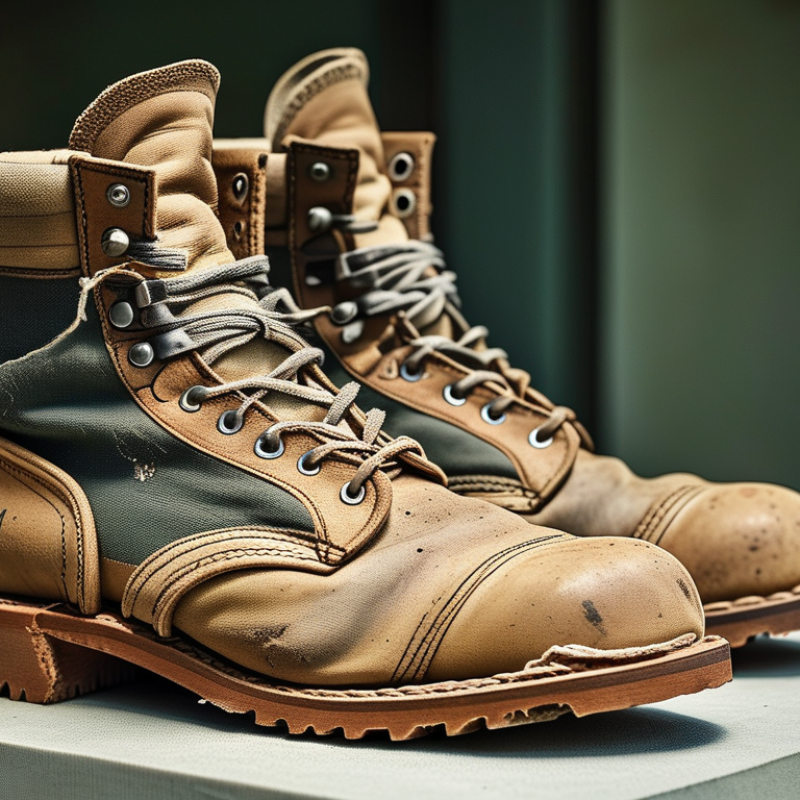
Historical Background and Main Categories of Vintage Military Boots
Vintage military boots reflect changing warfare, materials, and climate. Early trench boots used thick leather, hobnails, and reinforced toe caps. Their heavy soles suited muddy ground, but they can feel stiff today. Later combat designs introduced lighter construction and improved ankle support.
Several categories attract global buyers. Field boots were built for routine movement across rough terrain. Paratrooper boots offered firm ankle coverage and smoother soles for controlled landings. Jungle boots combined leather with breathable fabric panels, helping reduce moisture in tropical conditions. Cold-weather boots used insulation, sealed seams, or layered linings for snow and frozen ground. Service boots, often cleaner and more polished, were made for uniforms and formal duties rather than long marches.
Condition matters more than appearance alone. I inspect sole separation, dry leather, cracked stitching, and replaced eyelets before judging value. Original details can reveal an era, but repairs are not always negative. A carefully resoled pair may remain useful, while untouched leather may fail after one wet walk. Sizing also varies between countries and production periods, so buyers should compare internal measurements with a familiar pair. No catalog is perfect. Even experienced collectors can misread a repair or assume a boot’s history from color alone. Reliable sellers should explain provenance, materials, wear, and restoration clearly, without overstating rarity.
Key Features Buyers Should Examine Before Purchasing
Global buyers should examine construction before appearance when choosing vintage military boots. Scuffed leather can still perform well. Loose stitching cannot.
Check the upper carefully under natural light. Look for dry leather, deep cracks, uneven repairs, and separated seams. Press the ankle area gently. It should flex without splitting. Examine the sole for hardening, missing lugs, and uneven wear. A smooth heel may suggest long use or poor storage. Ask for clear photographs of the toe, heel, inside lining, and outsole.
Sizing needs extra attention. Vintage measurements often differ from modern systems. Measure both feet in centimeters, then compare them with the seller’s internal boot measurements. Leave room for ordinary socks, but avoid excessive space. I once trusted a marked size and received a boot that felt two sizes smaller. That mistake was avoidable.
Materials also deserve professional review. Leather thickness, stitching density, eyelet condition, and welt attachment reveal more than decorative details. Check for mold, strong chemical odors, and brittle lining. These signs may indicate unsuitable storage. Confirm the production period, maintenance history, and repair records when available. Documentation can be incomplete, so treat confident claims carefully. A boot may look authentic yet contain modern replacement parts. Buyers should also verify import rules, material declarations, and cleaning requirements in their destination country. Vintage condition is never perfectly predictable.
Regional Styles and Their Typical Uses
What Type of Vintage Military Boots Do Global Buyers Need?
Regional Styles and Their Typical Uses
Regional demand depends on climate, walking surfaces, and cultural styling. European buyers often prefer dark leather ankle boots with simple lacing. They suit everyday wear, heritage outfits, and light outdoor use. In North America, taller lace-up boots remain popular for workwear-inspired clothing and outdoor collecting. The 2024 World Footwear Yearbook reported that Asia produced about 87% of global footwear in 2023, highlighting the region’s importance to sourcing and demand.
Different climates require different construction details. Buyers in tropical Southeast Asia typically examine ventilation, drainage, flexible uppers, and quick-drying materials. Older canvas or jungle-style patterns may look authentic, but aged fabric can weaken quickly. Buyers in colder regions usually seek thicker leather, higher shafts, and insulated interiors for seasonal use. Japanese and South Korean customers often favor cleaner silhouettes, black finishes, and narrower profiles for urban styling.
The 2024 ThredUp Resale Report, prepared with GlobalData, projects the global secondhand apparel market will reach 350 billion dollars by 2028. That growth supports interest in vintage footwear, but condition grading must remain strict. Soles can harden, stitching can separate, and hidden odor may appear after storage. A regional style is only a guide, not a rule. Some classifications are too broad, and buyers should reconsider them after checking local weather, foot shape, repair access, and intended use.
Sizing, Materials, Condition, and Authenticity Checks
Global buyers need measurements, not vague size labels, when sourcing vintage military boots. Foot length, width, shaft height, and instep fit can vary between production periods. Measure both feet while wearing normal socks. Leave about one centimeter for movement. Too much space causes heel lift and blisters. Too little creates painful pressure.
Materials reveal how boots may perform today. Full-grain leather usually develops visible creases, darker edges, and a dry but repairable surface. Some older pairs use synthetic panels, rubber soles, or canvas sections. Ask for close photographs of every material junction. Check stitching, eyelets, heel counters, and sole separation. A strong leather smell proves very little. Chemical odor can suggest recent treatment or storage problems.
Condition grading should mention defects, not only appearance. Look for hidden cracking near flex points, brittle rubber, loose insoles, and uneven outsole wear. A boot can look excellent yet fail after several walks. I once underestimated a small split beside the toe, and it widened quickly. That mistake still influences my inspections. For authenticity, compare construction details with reliable period references, including sole patterns, stitching methods, labels, and hardware shapes. Seller photographs should include the interior and both soles. Provenance helps, but paperwork can be incomplete or mistaken. Request dated images, exact measurements, material details, and a clear return arrangement before purchasing. leby
What Type of Vintage Military Boots Do Global Buyers Need?
Sizing, Materials, Condition, and Authenticity Checks
This checklist chart counts the main evidence items buyers should verify before purchasing vintage military boots: foot length, width, instep allowance, upper construction, lining, outsole, stitching, wear, cracking, repairs, markings, construction details, hardware, dates, and provenance. Higher values indicate a broader inspection requirement, not a percentage of market demand.
Global Buying Factors: Pricing, Shipping, and Import Rules
Global buyers need vintage military boots that match their climate, budget, and import requirements. Condition matters more than age alone. A firm sole, flexible leather, and readable size markings support a higher price. Surface scuffs may add character, but cracked midsoles can create expensive surprises.
Pricing should include the full landed cost, not only the seller’s listing price. Ask for clear photos of the heel, tread, stitching, and interior. Compare restoration costs before choosing a cheaper pair. My early estimates were too optimistic when replacement insoles and cleaning were added. Currency changes can also affect the final invoice.
Shipping needs careful planning. Boots should be dry, lightly protected, and packed in a compact carton. Oversized packaging may increase dimensional weight. Request tracking and confirm delivery insurance terms. For remote destinations, a longer transit time is common. That can matter for damp climates.
Import rules require local verification. Used footwear may face restrictions involving hygiene, materials, labeling, or customs classification. Buyers should check the destination customs authority before payment. Ask the seller for accurate descriptions, declared values, and available origin information. Some countries require extra documents or inspection. Rules change, and online advice can become outdated. A licensed customs professional can clarify uncertain cases. Keep every invoice and message.
What Type of Vintage Military Boots Do Global Buyers Need? - Global Buying Factors: Pricing, Shipping, and Import Rules
| Buyer Market | Preferred Boot Type | Typical Condition | Indicative Unit Price (USD) | Typical Shipping Cost (USD / Pair) | Estimated Transit Time | Import and Compliance Considerations | Key Buying Factors |
|---|---|---|---|---|---|---|---|
| United States | Leather combat boots, service boots, and field boots with practical soles | Good used condition; light wear is acceptable if soles and stitching remain sound | $45–$160 | $25–$70 | 7–18 business days | The importer may owe customs duty, merchandise processing charges, and state or local taxes. The correct tariff classification and declared value should be used. | Authenticity, accurate sizing, sole durability, clear condition grading, and competitive landed cost |
| European Union | Classic leather military boots, parade boots, and rugged field footwear | Very good to excellent used condition; original details increase collector appeal | $55–$190 | $18–$55 | 5–14 business days | Import VAT may apply when goods enter the EU from outside the EU. Customs duty depends on tariff classification, origin, value, and applicable thresholds. | EU delivery speed, VAT-inclusive pricing, material declarations, and consistent European sizing |
| United Kingdom | Ankle combat boots, high-leg service boots, and heritage-style leather boots | Clean, wearable used pairs with minimal cracking and intact eyelets | $50–$175 | $20–$60 | 5–12 business days | Imported goods can be subject to VAT, customs duty, and carrier clearance fees. The seller should provide a precise description, value, origin, and commodity code where required. | Transparent landed pricing, UK size conversion, restoration quality, and return handling |
| Canada | Insulated or heavy leather field boots suitable for cold and wet conditions | Good used condition; waterproofing and tread depth are especially important | $55–$180 | $30–$85 | 8–22 business days | GST, HST, PST, customs duty, and handling fees may apply. Used footwear should be clean and free from soil or organic residue. | Cold-weather performance, moisture resistance, larger size availability, and shipping protection |
| Australia | Lightweight leather combat boots and breathable field boots | Clean used or surplus condition; no soil, seeds, insects, or untreated organic contamination | $50–$170 | $35–$100 | 10–28 business days | Biosecurity inspection is a major consideration. Footwear must be thoroughly cleaned, and GST, duty, or import processing charges may apply depending on the shipment. | Biosecurity-safe preparation, breathable construction, corrosion-resistant hardware, and reliable tracking |
| Japan | Well-preserved vintage leather boots with distinctive construction or historical details | Very good to excellent condition; packaging and photographs strongly influence buyer confidence | $70–$220 | $30–$85 | 7–20 business days | Consumption tax and customs charges may apply. Accurate declared value, material details, and a clear invoice help reduce clearance delays. | Detailed measurements, neat presentation, low odor, historical provenance, and careful packaging |
| United Arab Emirates | Polished leather service boots and collector-oriented vintage pairs | Good to excellent condition; heat-sensitive materials should be packed carefully | $60–$200 | $35–$95 | 6–16 business days | Customs duty, import VAT, courier clearance fees, and documentation requirements may apply. Local rules should be confirmed before dispatch. | Climate-appropriate storage, leather condition, premium presentation, and fast express delivery |
| South Korea | Compact combat boots and visually distinctive vintage leather styles | Very good used condition with limited creasing and clear size information | $55–$185 | $25–$75 | 7–18 business days | Import tax and customs clearance may apply according to value and classification. Commercial shipments require consistent invoices and product descriptions. | Accurate foot measurements, appearance, odor control, flexible soles, and dependable delivery updates |
Skip to content
