
FAQS

What Are China’s Top Outdoor Storage Cabinets?

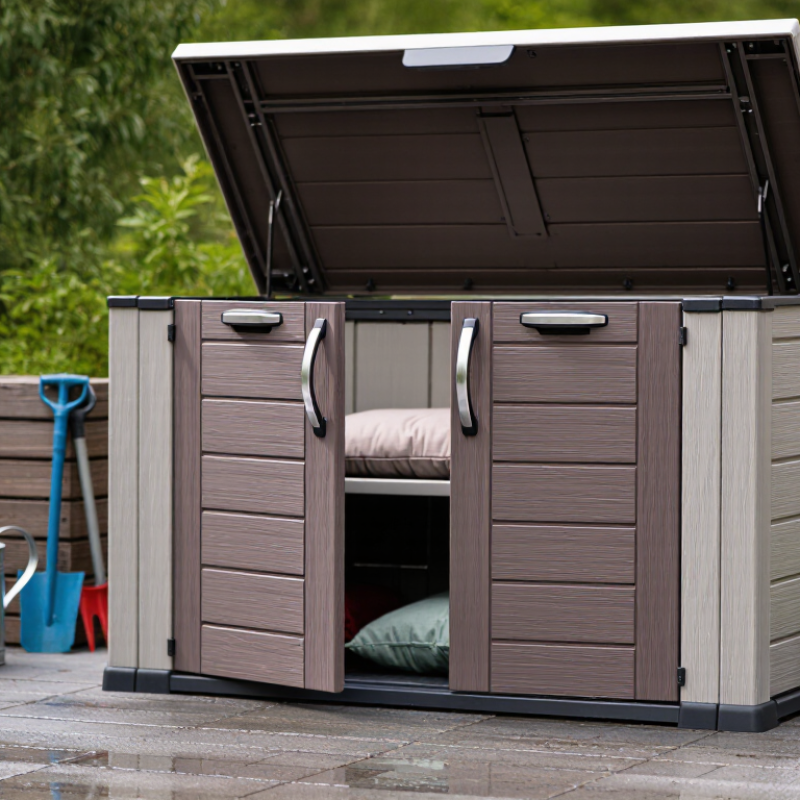
What makes a storage cabinet one of China’s top outdoor choices? The answer depends less on a sales label and more on how it handles rain, sunlight, daily use, and limited space. A dependable Outdoor Storage Cabinet should keep tools and cushions organized while fitting the actual patio, balcony, or garden. Measure the intended spot before comparing models. A cabinet that looks generous online may block a doorway in real life.

This guide considers practical features commonly found in Chinese-made outdoor storage products, including resin, metal, and treated wood construction. We look at weather resistance, drainage, ventilation, shelf strength, lock options, assembly, and ease of cleaning. Details matter. A sloped lid can help shed water, while raised feet may reduce contact with damp ground. Still, no material is maintenance-free, and product performance can vary by finish, climate, and installation.

The “top” option is not automatically the largest or most expensive. It is the one whose dimensions, capacity, and care requirements suit your space and routine. Check product specifications carefully, and treat broad claims such as “all-weather” as a starting point, not proof. Some comparisons also depend on long-term use, which a product page cannot fully show. The sections ahead help identify strong candidates, weigh trade-offs, and choose with realistic expectations. A little skepticism helps. So does measuring twice. The right cabinet should make outdoor storage simpler, not create another chore.
What Are China’s Top Outdoor Storage Cabinets?

Define China’s Top Outdoor Cabinet Types by Material, Capacity, and Use

Outdoor cabinets are best compared by material, usable volume, and exposure. Galvanized steel suits tools and heavier contents, but scratched coatings can invite rust. Resin cabinets resist moisture and need little upkeep, though thin panels may flex under load. Aluminum is light and corrosion-resistant; wood looks warmer but needs regular sealing. Small, but useful.

Capacity bands help narrow choices, but they are not a universal industry standard. Around 100–300 liters can hold cushions, hand tools, or a compact hose reel. A 300–600-liter cabinet may fit larger garden tools and several seasonal items. Above 600 liters, check the floor and shelf load ratings, not just the headline volume. A tall cabinet works in a narrow patio; a low, wide unit is easier to access beside a grill or potting bench.

Market context matters, but it should not be mistaken for cabinet-specific demand. Grand View Research valued the global outdoor furniture market at 50.73 billion dollars in 2023 and forecast 5.9% annual growth from 2024 to 2030. That report covers a broader category, not storage cabinets alone. In practice, measure the actual items first, including handles and hose bends. I would leave spare room; exact-fit storage often becomes frustrating.

Compare Steel Corrosion Resistance Using ISO 9227 Salt-Spray Testing

What Are China’s Top Outdoor Storage Cabinets?

Compare Steel Corrosion Resistance Using ISO 9227 Salt-Spray Testing

For outdoor cabinets, steel thickness alone does not reveal how well a unit resists corrosion. Check the coating system, welded seams, folded edges, and fastener holes. These areas can expose bare metal or trap moisture. ISO 9227:2022 describes controlled salt-spray tests, including neutral salt spray, commonly run with a 5% sodium chloride solution at 35°C.

Salt is relentless.

Ask suppliers for the complete test report, not just a “passed” claim. It should identify the test method, exposure duration, specimen preparation, coating condition, and rating criteria. ISO 9227 sets out test procedures; it does not define a universal pass time or prove a cabinet’s service life.

A cabinet tested for 240 hours cannot automatically be called twice as durable as one tested for 120 hours. Real weather, installation, and maintenance differ.

The NACE IMPACT study estimated global corrosion costs at about US$2.5 trillion, or 3.4% of global GDP, based on 2013 data. That figure covers many industries, not cabinets alone, but it shows why coating failures matter.

Compare equivalent samples and inspect cut edges, corners, and welds after testing. A glossy panel may look convincing. It is not the whole story. Reports without photographs or clear evaluation criteria deserve a second look.

Assess Water Protection with IEC 60529 IPX4 and IPX5 Ratings

For an outdoor storage cabinet, IP ratings offer a clearer measure of water protection than the word “weatherproof.” IEC 60529:2013, the International Electrotechnical Commission’s enclosure-protection standard, defines IPX4 as protection against splashing water from any direction. IPX5 covers water projected as jets. The “X” means no dust-protection level is specified; it does not mean the cabinet is dustproof.

The test details help explain the difference. Under IEC 60529, IPX4 uses a water flow of 10 litres per minute, while IPX5 uses 12.5 litres per minute through a 6.3 mm nozzle. So, a cabinet facing wind-driven rain may call for more protection than one tucked under a deep roof. That distinction is easy to miss. Check door seals, hinges, drainage, and cable openings too; water can enter through weak points even when the enclosure passed a test.

Still, a rating is not a promise of a dry interior forever. Installation, wear, and standing water can change real-world performance. A practical check: inspect seals after seasonal temperature swings, and look for damp corners after heavy rain. IPX5 is a stronger water-jet rating, not proof of protection against immersion or every outdoor condition.

Evaluate Plastic Cabinet UV Resistance with ASTM G154 Weathering Tests

What Are China’s Top Outdoor Storage Cabinets?
Evaluate Plastic Cabinet UV Resistance with ASTM G154 Weathering Tests

For outdoor cabinets, UV resistance is more than a color claim. Sunlight can fade plastic, weaken surfaces, and make lids or hinges brittle. ASTM G154 provides a controlled way to compare materials using fluorescent ultraviolet lamps and moisture cycles. A common Cycle 1 condition runs eight hours of UV exposure at 60°C, followed by four hours of condensation at 50°C. Check the selected test cycle and lamp type before comparing supplier results.

Look beyond photographs. Ask for exposure duration, test conditions, and before-and-after measurements, such as color change, surface cracking, and retained strength. ASTM D4329 also describes fluorescent UV exposure testing for plastics. Useful evidence shows how the tested resin and colorant performed, not merely that a sample entered a chamber. Small detail. A cabinet’s corners, lid, and fastener areas deserve inspection because thin sections may show damage sooner.

These chamber tests help screen products, but they cannot promise a specific outdoor service life. Real exposure varies with latitude, shade, temperature, and installation. ASTM G154 itself cautions against treating accelerated results as a direct conversion to years outdoors. That limitation is easy to overlook. I would compare test records with a physical sample left outside at the intended site, then recheck color, stiffness, and closure fit over time. A modest test plan is still better than choosing by appearance alone.

What Are China’s Top Outdoor Storage Cabinets? — Evaluating Plastic Cabinet UV Resistance with ASTM G154 Weathering Tests
Cabinet material or construction UV-resistance outlook What affects outdoor performance Useful ASTM G154 evaluation points Practical selection note
UV-stabilized, pigmented HDPE Generally a strong candidate; performance depends on the resin formulation and exposure conditions. UV stabilizers, pigment type and loading, wall thickness, surface finish, and molded-part quality can influence color and strength retention. Compare exposed and unexposed specimens for color change, surface cracking or chalking, and retained mechanical properties. Record the lamp type and exposure cycle. Ask for test results tied to the specific resin or finished product; “HDPE” alone does not establish a service-life rating.
UV-stabilized polypropylene (PP) Can be suitable for outdoor use when formulated for weathering; unprotected grades may deteriorate under UV exposure. Stabilizer package, pigment, part geometry, and heat and moisture exposure all matter. Use the same documented G154 exposure conditions for comparisons, then assess appearance and mechanical-property changes. Check that UV protection is specified for the actual cabinet material rather than inferred from the polymer name.
Unstabilized or lightly pigmented plastic Less predictable; prolonged sunlight can cause fading, surface degradation, or loss of toughness, depending on the polymer and formulation. Polymer type, additives, color, and exposure severity make performance vary substantially between products. Document baseline measurements and post-exposure changes. A visual inspection alone may not reveal loss of impact strength. Prefer product-specific weathering evidence over a general claim that the cabinet is “weather resistant.”
Plastic cabinet with a UV-protective coating Potentially improved surface protection, but coating performance and adhesion require evaluation. Coating chemistry, thickness, coverage of edges, abrasion, and substrate preparation can affect durability. Inspect for cracking, peeling, blistering, and color change after exposure; assess the coated finished part where possible. Ask whether the test was performed on the finished cabinet surface and whether it included relevant edges or molded features.
Opaque plastic cabinet kept in partial shade Shade can reduce direct solar exposure, but does not establish a material’s UV resistance. Orientation, reflected sunlight, local climate, and time outdoors influence actual exposure. Use laboratory results as comparative evidence under the stated test conditions, not as a direct prediction of years outdoors. Consider placement, ventilation, drainage, and protection from standing water as well as UV performance.
How to interpret ASTM G154 ASTM G154 is a practice for operating fluorescent UV and condensation apparatus to expose nonmetallic materials to controlled weathering conditions. It offers different lamp and exposure-cycle options; the practice does not set one universal cycle, duration, or pass/fail threshold for outdoor cabinets. Results are most useful when the lamp, cycle, total exposure, specimen preparation, and evaluation methods are reported and kept consistent.

Compare Shelf Loads and Storage Volume Using Manufacturer-Tested Ratings

What Are China’s Top Outdoor Storage Cabinets?

Compare shelf loads and usable volume, not appearance alone. Ask for the tested load per shelf, total cabinet capacity, and whether the rating applies to evenly spread weight. ISO 7170:2021 describes strength and durability tests for storage units; EN 16121:2023 covers strength, durability, and stability for non-domestic storage furniture. These standards help explain test methods, but they do not create one universal load rating. For a practical comparison, a stated 25 kg shelf limit equals about 55 lb. Check whether the manufacturer tested the assembled cabinet, including its shelves and fixings.

Measure internal width, depth, and height, then multiply them to estimate usable volume. A cabinet’s outside dimensions can hide thick walls, narrow shelves, or space lost to hinges. Compare volume alongside shelf ratings: bulky cushions need depth, while heavy pots need a clear load limit. Still, a neat number can mislead if the test setup is unclear. Request the test method, sample configuration, and rating conditions before comparing products.

Tips: Put the heaviest items on the lowest shelf. Keep weight evenly spread, and check whether the stated limit assumes wall anchoring. Record both usable volume and shelf load in the same table; that small step makes trade-offs easier to spot.

What Are China’s Top Outdoor Storage Cabinets?

Compare shelf loads and storage volume using manufacturer-tested ratings

No manufacturer test ratings or product specification sheets were provided, so verified values cannot be plotted without risking misleading comparisons. Add anonymized products’ published shelf-load and storage-volume ratings to compare them here.