

FAQS
Why Choose an MMA Welding Machine for Your Business?
Choosing the right welding power source can directly affect production speed, repair quality, and operating costs. A Mma Welding Machine offers a practical option for businesses handling construction steel, farm equipment, pipelines, and outdoor maintenance. Its electrode system needs no shielding gas, making it useful where wind, dust, or limited site access complicates gas-shielded welding.
Industry data supports continued investment in welding technology. Grand View Research’s Welding Equipment Market report forecasts a 5.3% compound annual growth rate from 2023 to 2030. MarketsandMarkets also identifies automation, energy efficiency, and portable equipment as major market drivers. These trends suggest that buyers increasingly value flexible machines, not only maximum amperage.
The real advantage appears beside the workpiece. A trained operator can carry a compact inverter machine upstairs, connect suitable electrodes, and repair a thick steel bracket without moving large gas cylinders. MMA equipment also supports many electrode types, including low-hydrogen options for demanding structural applications. However, the choice is not automatically right. That assumption deserves testing.
Businesses should compare duty cycle, arc stability, input power, thermal protection, service support, and electrode compatibility. A machine meeting IEC 60974-1 requirements provides a stronger technical reference point. AWS guidance can also help companies evaluate welding procedures and operator competence. Practical experience matters here: a low purchase price may become expensive if cables overheat, controls fail, or spare parts remain unavailable.
There is no perfect machine. A compact model may sacrifice continuous output, while a powerful unit may increase energy consumption and transport effort. The best decision matches the machine with actual job conditions, workforce skills, material thickness, and maintenance capacity. That careful fit makes MMA technology a credible business investment rather than a fashionable purchase.
What Is MMA Welding and How Does the Process Work?
Why Choose an MMA Welding Machine for Your Business?
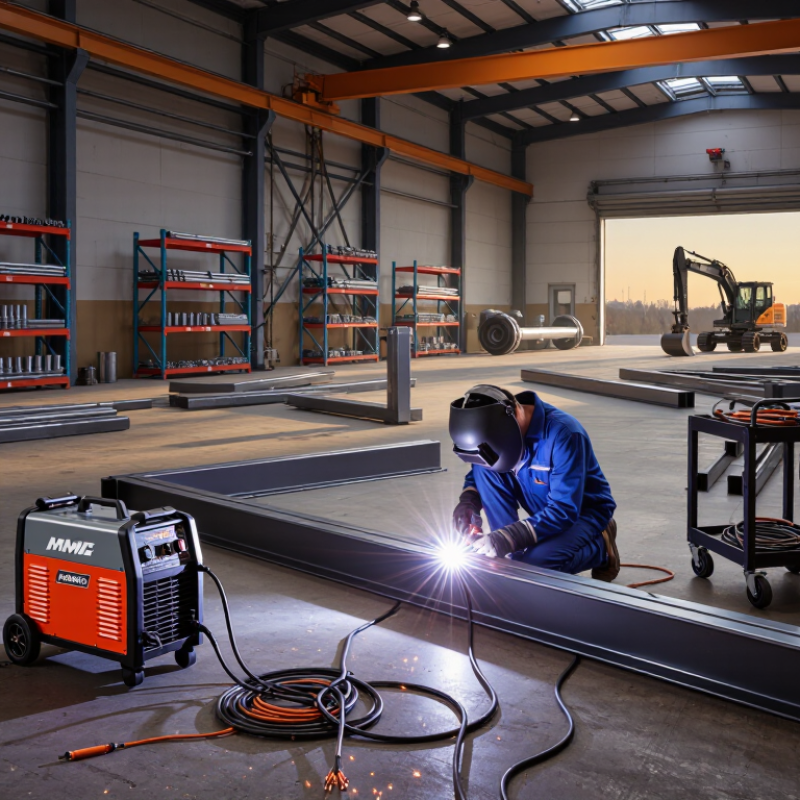
MMA welding, or manual metal arc welding, joins metal through heat from an electric arc. The welder connects an electrode holder and work clamp to the power source. When the electrode touches the workpiece, the circuit creates an intense arc. This arc melts the electrode and base metal together.
The electrode has a flux coating. As it burns, the coating forms shielding gas and protective slag. These materials help reduce contamination from surrounding air. After the weld cools, the operator removes the slag with a chipping hammer and wire brush. Different electrodes suit mild steel, stainless steel, or repair work. Current settings depend on electrode size, material thickness, and welding position. Incorrect settings may cause spatter, weak penetration, or an unstable arc. Small adjustments matter.
From practical workshop experience, clean metal often improves results more than higher current. I still recheck the ground connection before welding. A loose connection can create uneven heat. Operators should inspect cables, wear suitable protective clothing, and keep the work area dry. Ventilation also matters, especially when welding coated or painted surfaces.
Tips: Keep electrodes dry and store them properly. Practice a steady travel speed on scrap metal first. Listen to the arc; a consistent sound often indicates stable control. Do not rush slag removal. A hidden defect may remain underneath.
| Business or Process Dimension | MMA Welding Facts | Practical Business Relevance |
|---|---|---|
| What MMA means | Manual Metal Arc (MMA) welding is also known as shielded metal arc welding (SMAW) or stick welding. It uses a flux-coated consumable electrode to create the arc and deposit weld metal. | A widely understood process that can suit repair, fabrication, construction, and maintenance work. |
| How the process works | The operator strikes an arc between the electrode and the workpiece. The electrode melts to form the weld; its flux coating produces shielding gases and slag that help protect the molten weld pool. | No separate shielding-gas supply is normally needed, simplifying setup at many work locations. |
| Equipment and consumables | A typical setup includes a power source, electrode holder, work clamp, welding leads, and suitable coated electrodes. Electrode selection depends on the material, joint, position, and required weld properties. | The equipment setup is relatively simple; businesses should still plan for electrode storage, consumable selection, and routine equipment checks. |
| Portability and site work | MMA equipment can be used with a suitable power source, and the process does not rely on an external shielding-gas cylinder. Actual portability depends on the machine, power supply, cables, and site conditions. | Can be a practical option for field repairs and work in locations where moving gas cylinders or larger equipment is inconvenient. |
| Outdoor performance | Because shielding is provided by the electrode flux rather than an external gas stream, MMA is generally less vulnerable to wind disrupting shielding than gas-shielded processes. Strong wind can still affect weld quality and safety. | Useful for some outdoor jobs, subject to site risk assessment, weather, and the welding procedure. |
| Materials and positions | MMA is commonly used on carbon steel and can also be used on certain stainless steels and other alloys when the correct electrode and procedure are selected. Suitable positions depend on the electrode classification and operator technique. | Check material compatibility, electrode requirements, and applicable codes before quoting or carrying out work. |
| Productivity and cleanup | The electrode must be replaced when consumed, and slag generally needs to be removed between passes and after welding. These steps can reduce arc-on time compared with some continuous-wire processes. | Factor electrode changes, slag removal, and inspection into labor estimates and production planning. |
| Skill and quality control | Weld quality depends on factors such as electrode choice and condition, current settings, arc length, travel speed, joint preparation, and operator skill. | Training, suitable procedures, and inspection help ensure consistent results and reduce rework. |
| Machine selection | Choose a machine based on the required electrode sizes and current range, input power available, duty-cycle needs, work environment, and relevant safety requirements. Specifications vary by machine and operating conditions. | Match the machine to the actual workload rather than relying on maximum output alone; verify ratings in the product documentation. |