Why Choose Sound Activated Light for Wholesale?
Why Choose Sound Activated Light for Wholesale?
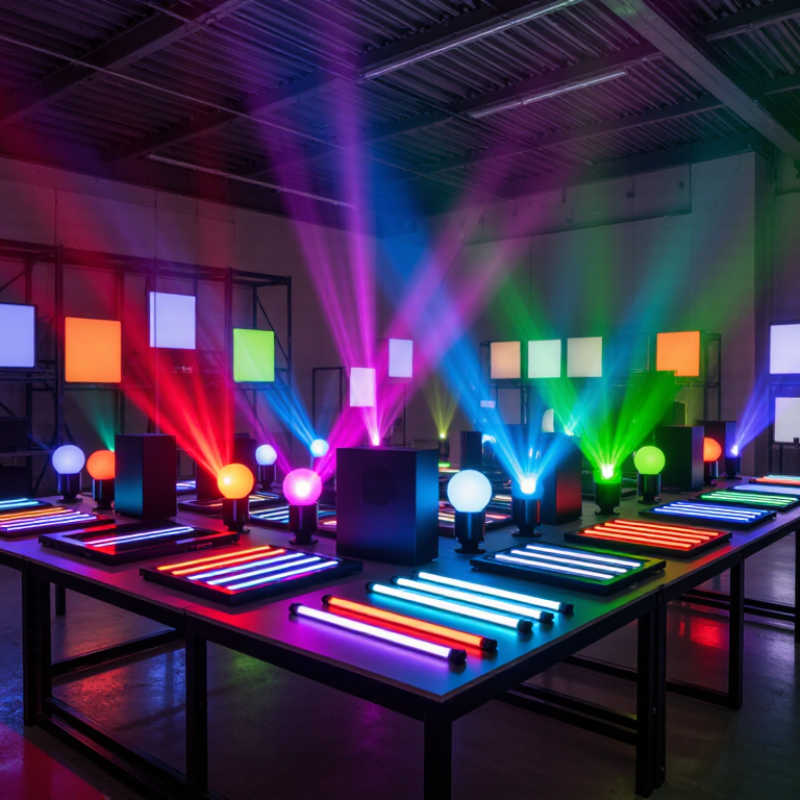
Wholesale buyers are seeking products that create visible energy without complicated controls. Sound Activated Light responds to music, voices, or rhythmic movement through an integrated microphone and control system. In a retail display, a warehouse sample room, or an event venue, each beat can produce changing colors, pulses, or brightness. The effect is immediate. Customers can see the product working before installation.
Lighting designer and architect Louis Kahn once said, “The sun never knew how great it was until it hit the side of a building.” His observation reflects an important principle: light becomes meaningful when it interacts with its surroundings. Sound Activated Light applies that idea to movement and sound. It can turn an ordinary space into a more memorable experience, especially when the fixture offers adjustable sensitivity, reliable LED performance, and stable color output.
Wholesale value depends on more than a dramatic demonstration. Buyers should examine microphone response, reaction delay, heat management, housing quality, power consumption, and control compatibility. DMX support may improve larger installations. Clear testing records and consistent batch quality also reduce replacement risks. Not every product performs equally.
That matters.
Some low-cost units react too sharply, while others miss quieter sounds. A supplier should test samples in realistic environments, including crowded rooms and low-volume settings. Packaging, spare parts, warranty support, and technical guidance deserve equal attention. The strongest wholesale choice balances visual impact with dependable operation, even when the product is not perfect. That balance builds repeat orders and protects a buyer’s reputation.
Sound-Activated Lighting Explained: Microphones, Sensors, DSPs, and LEDs
Sound-Activated Lighting Explained: Microphones, Sensors, DSPs, and LEDs
Sound-activated lighting turns ordinary audio into a visible response. A built-in microphone captures nearby sound waves. The sensor converts these waves into electrical signals. A digital signal processor, or DSP, filters noise and measures rhythm, volume, and timing. It then sends control data to LED drivers. The LEDs respond with pulses, fades, or color changes. The effect feels immediate because processing happens in milliseconds. In wholesale projects, this architecture matters more than a flashy demonstration. Buyers can compare microphone sensitivity, response range, heat control, and service life. Good specifications reduce installation surprises. Field testing remains essential. Room acoustics can change everything.
A microphone is not the same as a motion sensor. It listens for air pressure changes, while a motion sensor detects movement. Some systems combine both for stronger control. DSP settings determine whether a clap, voice, or bass beat triggers the light. Poor tuning may cause flicker near speakers or silence in busy rooms. LED quality also affects consistency. Stable current control supports even brightness and reduces premature failures. For wholesale orders, request sample units, wiring diagrams, trigger thresholds, and thermal test data. Ask how firmware updates are handled. This is often overlooked.
Tips: Test one unit in the actual room. Adjust sensitivity gradually. Keep microphones away from direct speaker output. Confirm the LED driver matches the planned voltage. Reserve a small quantity for replacement testing. I would not trust a specification sheet alone. Real spaces are less predictable than laboratories. A careful trial can reveal false triggers, weak bass response, or uneven color before a large shipment arrives.
Why Choose Sound Activated Light for Wholesale?
Sound-activated lighting uses a microphone to capture acoustic energy, sensors to detect signal levels, digital signal processing to apply filtering, and LEDs to create the visual response. The chart shows standardized A-weighting corrections across octave-band frequencies, which are commonly used in audio measurement and DSP design.
A-weighting approximates human hearing sensitivity. The strongest adjustment occurs at very low frequencies, while the 1 kHz reference is set to 0 dB. These corrections help sound-activated lighting systems reduce unwanted low-frequency triggering and produce more consistent LED responses.
IEC 60529 IP Ratings for Sound-Activated Lights in Wholesale Environments
Why Choose Sound Activated Light for Wholesale?
IEC 60529 IP ratings help wholesalers match sound-activated lights with real installation conditions. The first digit measures solid protection. IP6X means the housing is dust-tight. The second digit measures water protection. IP44 resists splashing water, while IP65 handles water jets. IP66 tolerates stronger jets, and IP67 supports temporary immersion up to one metre. These tests follow controlled laboratory conditions. They do not guarantee performance after poor installation or damaged seals.
The rating is not magic. A warehouse microphone may fail from dust, condensation, or blocked acoustic openings. A practical receiving check should inspect gaskets, cable entries, lenses, and ventilation paths. Ask for test reports that identify IEC 60529 methods, not only a printed IP code. That small detail can prevent costly batch returns. The U.S. Department of Energy reports that LED lighting uses at least 75% less energy and lasts up to 25 times longer than incandescent lighting. Sound activation can reduce unnecessary operating time further, especially in storage aisles and service corridors. However, savings depend on detection range, delay settings, and worker traffic. Higher IP protection can also increase housing cost and affect microphone sensitivity. That trade-off deserves testing. Source: IEC 60529; U.S. Department of Energy, Energy Saver.
Why Choose Sound Activated Light for Wholesale? - IEC 60529 IP Ratings for Sound-Activated Lights in Wholesale Environments
IP ratings are enclosure classifications under IEC 60529. The rating applies to the light enclosure, not automatically to the microphone, cable connection, power supply, or installation method. | IP Rating | Solid-Object Protection | Water Protection | Potential Wholesale Environment | Procurement Consideration |
| IP20 | Protected against solid objects larger than 12.5 mm; no stated dust protection. | No protection against water. | Dry indoor retail displays, offices, bedrooms, and event booths. | Suitable only where the product will remain dry and protected from dust buildup and splashes. |
| IP44 | Protected against solid objects larger than 1 mm. | Protected against splashing water from all directions. | Covered patios, sheltered pop-up installations, cafés, and light-duty commercial areas. | Verify that the sound sensor opening and connectors retain the same protection level. |
| IP54 | Dust-protected; limited ingress of dust is permitted without harmful effects. | Protected against water splashes from all directions. | Retail stockrooms, workshops, warehouses, and semi-outdoor wholesale displays. | A practical balance for dusty commercial locations that are not exposed to strong water jets. |
| IP65 | Dust-tight. | Protected against water jets from any direction. | Busy warehouses, loading-area displays, outdoor promotional structures, and industrial interiors. | Often appropriate for demanding wholesale applications, subject to connector, cable, and mounting requirements. |
| IP66 | Dust-tight. | Protected against powerful water jets. | Exposed outdoor displays and commercial areas requiring frequent heavy-duty cleaning. | Confirm that the acoustic sensor can operate correctly behind the sealed enclosure. |
| IP67 | Dust-tight. | Protected against temporary immersion in water under the IEC 60529 test conditions. | Outdoor event equipment, temporary installations, and locations where accidental immersion is possible. | Not automatically suitable for continuous underwater use; installation instructions and manufacturer limits remain essential. |
| IP68 | Dust-tight. | Protected against continuous immersion to conditions specified by the manufacturer; depth and duration are not universally fixed by the rating alone. | Specialized outdoor, wet-area, or installation-specific projects. | Request the exact immersion depth, test duration, operating temperature, and acoustic-sensor limitations before bulk purchase. |
Wholesale Evaluation Checklist
| Evaluation Dimension | What to Verify Before Ordering in Bulk | Why It Matters for Sound-Activated Lighting |
| Sound response | Detection range, frequency response, sensitivity adjustment, and false-trigger behavior. | A higher IP rating does not guarantee accurate response to music, speech, or ambient noise. |
| Enclosure coverage | Confirm the complete assembled product rating, including microphone aperture, switches, cable glands, connectors, and power supply. | The weakest component or unsealed connection can reduce real-world ingress protection. |
| Operating environment | Indoor or outdoor use, dust level, splash exposure, cleaning method, humidity, and temperature range. | Selecting the correct rating helps reduce moisture-related failures and unsuitable returns. |
| Electrical compatibility | Input voltage, frequency, power consumption, dimming method, plug configuration, and applicable safety documentation. | Bulk products must match the destination market and the intended installation system. |
| Testing and documentation | Request an IP test report or declaration identifying the tested model, test conditions, and product configuration. | A documented rating is more reliable for wholesale compliance reviews than an unsupported product claim. |
Wholesale Evaluation Metrics: LED Life, Lumens, Energy Savings, and ROI
Why Choose Sound Activated Light for Wholesale?
Wholesale Evaluation Metrics: LED Life, Lumens, Energy Savings, and ROI
Sound activated lighting can reduce unnecessary operating hours in corridors, storage areas, washrooms, and service rooms. However, wholesale decisions should begin with measurable performance, not novelty. LED life is a key metric. Review the rated lifespan, operating temperature, driver quality, and warranty terms. A light rated for 50,000 hours may perform differently in a hot, dusty ceiling space.
Lumens show brightness, but the number alone can mislead. Check the beam angle, glare control, color temperature, and usable light at floor level. Measure the real load. Compare wattage with the existing fixture, then estimate daily operating hours after sound activation. A lower-wattage LED with accurate detection can produce meaningful energy savings. Yet frequent false triggers may reduce those savings.
ROI should include purchase cost, installation, maintenance, replacements, and expected electricity reduction. For a warehouse, record baseline energy use for several weeks before changing fixtures. Then compare results under similar occupancy conditions. Not every room wins. Very quiet areas may need longer activation settings, while busy spaces may keep lights on continuously. Small pilot projects are safer than large assumptions. My own evaluation preference is simple: test ten units, inspect them after repeated use, and question any performance claim that lacks field data. Some calculations will be imperfect, especially when traffic changes by season. That uncertainty belongs in the purchasing plan.