
FAQS

Why Choose a Vehicle Wedge Barrier for Perimeter Security?

A secure perimeter begins with a realistic question: what must the entrance withstand?

A Vehicle Wedge Barrier offers a controlled, visible method for protecting sensitive driveways, loading areas, and facility entrances. Its rising steel plate can stop or slow unauthorized vehicles before they reach buildings, people, or critical equipment. It also creates a clear physical boundary without completely closing the access route.

Physical-security specialist William H. Cunningham is often associated with a practical principle: “Security begins with understanding the threat, not buying the product.” This idea matters when selecting a Vehicle Wedge Barrier. The correct system depends on vehicle weight, approach speed, road width, stopping distance, traffic frequency, and emergency-access requirements. A barrier placed without site analysis may look impressive but perform poorly.

Details matter.

Operators need dependable controls, visible warning signals, drainage planning, maintenance access, and safe integration with gates or bollards. The foundation must suit local ground conditions. Power loss should also have a documented, safe operating procedure. These points can seem ordinary, yet failures often begin with neglected details.

A wedge barrier is not a complete security strategy. It works best with trained personnel, surveillance, lighting, visitor procedures, and regular inspections. Some projects may need a shallow-mount design, while others require deeper structural support. There is no universal answer.

The uncomfortable truth is simple: stronger equipment cannot correct weak planning. Facility owners should review risks periodically, document lessons from real operations, and adjust the perimeter when traffic patterns change. A properly selected Vehicle Wedge Barrier can add meaningful delay and control, but only when its design matches the site.
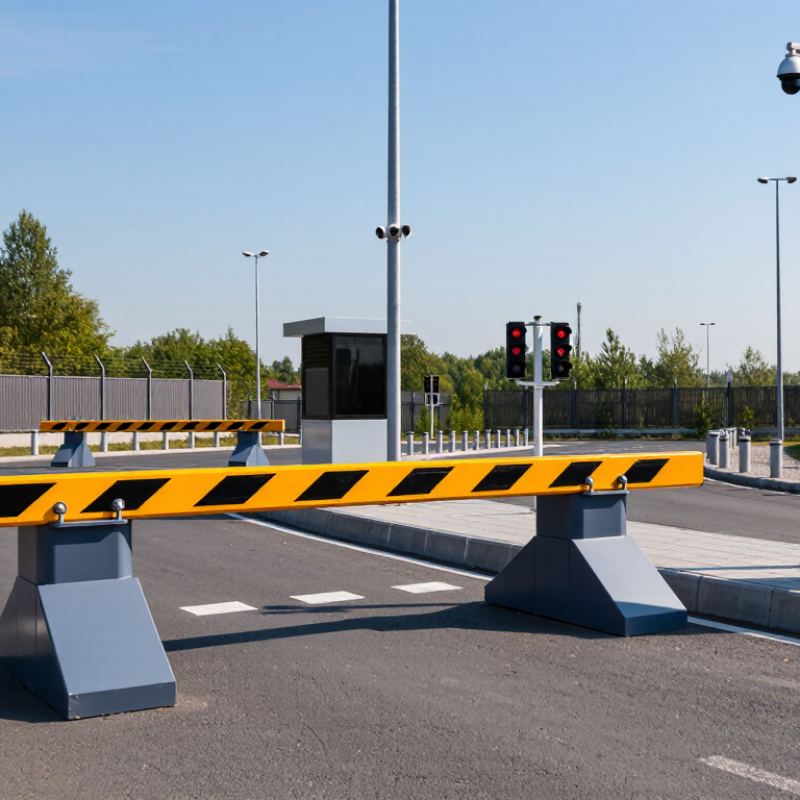
Why Choose a Vehicle Wedge Barrier for Perimeter Security?

Vehicle Wedge Barriers: Definition and Core Security Function

Why Choose a Vehicle Wedge Barrier for Perimeter Security?

Vehicle Wedge Barriers: Definition and Core Security Function

A vehicle wedge barrier is a rising steel platform installed across an access lane. It lifts quickly and blocks unauthorized vehicles at the perimeter. Its core function is simple: control vehicle movement before a vehicle reaches people, buildings, or sensitive equipment. Unlike ordinary gates, a wedge barrier can resist direct impact when properly engineered and installed. ASTM F2656/F2656M-23 evaluates vehicle barriers through impact speed, vehicle mass, and penetration distance. These measurements make security decisions more objective.

Professional guidance from the UK National Protective Security Authority treats hostile vehicle mitigation as a layered design task. The barrier should work with distance, traffic control, lighting, surveillance, and trained operators. A poorly positioned wedge can create congestion or dangerous turning points. That part is sometimes overlooked. Real site assessments should examine delivery schedules, emergency access, drainage, foundation depth, and maintenance records. Security performance depends on the complete installation, not the steel shape alone.

Tips: Choose a tested rating that matches the site’s largest credible vehicle threat. Confirm foundation drawings and stopping distances before purchase. Request independent test evidence, not only marketing claims. Operators should practice manual release procedures during power failures. I would also review the layout after installation; actual traffic behavior often differs from the original plan.

How Wedge Barriers Stop Unauthorized Vehicle Intrusion

A vehicle wedge barrier protects a perimeter by stopping unauthorized vehicles before they reach sensitive areas. Its rising steel wedge creates a physical block across the roadway. Unlike a simple gate, it absorbs impact and limits forward movement. Security teams can connect it to access controls, cameras, and staffed checkpoints. In practice, placement matters as much as barrier strength. A poorly positioned unit can leave turning space beside it. That gap matters.

When an unauthorized vehicle approaches, sensors or operators trigger the wedge mechanism. Hydraulic or electromechanical systems raise the barrier within a controlled response time. Rated designs can redirect or stop vehicles at defined approach speeds. They also help maintain a clear lane during normal access. Drainage, lighting, warning signals, and emergency lowering deserve equal attention. A barrier is not a complete security plan. It is one layer.

Tips: Measure vehicle paths during busy hours, not only from a drawing. Confirm foundation depth, drainage, backup power, and maintenance access before installation. Test alarms and manual release procedures regularly. Keep visible warning signs and safe pedestrian routes nearby. Review performance after severe weather or a near miss. Real sites are untidy. A design that looks perfect on paper may need adjustment after daily use.

Key Design Features for Effective Perimeter Protection

A vehicle wedge barrier can create a strong boundary at entrances, but its design determines real protection. The barrier should match the site’s threat assessment, traffic volume, and available foundation depth. A shallow foundation may simplify installation, yet it can limit structural performance. Site surveys should examine soil, drainage, turning paths, and nearby pedestrian routes. Small oversights become expensive later.

The wedge profile must rise evenly and lock firmly when deployed. Its frame, hinges, and lifting mechanism need corrosion-resistant protection, especially in wet or coastal locations. Impact performance should rely on documented testing against recognized vehicle-impact standards, not appearance alone. Clear warning lights, signs, and lane markings help drivers understand the system. The barrier also needs dependable sensors to detect vehicles, obstacles, and incomplete movement. These details reduce accidental contact and support controlled access.

Operational resilience matters as much as stopping power. Manual release, backup power, and emergency access procedures should remain available during outages. Drainage channels must prevent standing water around the mechanism. Scheduled inspections should check seals, fasteners, sensors, and movement speed. No barrier is maintenance-free. A common design assumption may prove wrong after heavy rain or frequent truck traffic. Reviewing performance data after installation allows engineers to adjust settings and improve reliability. Personnel also need practical training, not just a handover document. Effective perimeter protection is built through sound engineering, careful operation, and honest reassessment.

Comparing Wedge Barriers with Other Vehicle Security Systems

At a busy facility entrance, a vehicle wedge barrier changes the security conversation. Its steel plate rises from the pavement and blocks a vehicle across a broad lane. Unlike a simple gate, it does not depend on a narrow arm meeting a driver’s eye. This matters at loading docks, government compounds, and data centers where stopping force and lane control are critical. In my field experience, strong design begins with a site survey, not a product brochure. Traffic speed, vehicle weight, drainage, and emergency access shape the right specification.

Compared with fixed bollards, wedge barriers protect a wider opening with fewer gaps. Bollards can be easier to install and may suit pedestrian-heavy entrances. Retractable bollards offer a cleaner visual line, but their spacing requires careful layout. Rising arm barriers manage routine access efficiently, yet they are not designed to absorb a direct vehicle impact. Sliding gates provide privacy and access control, though their tracks need space and regular cleaning. A wedge system usually offers stronger lane-wide resistance, but it demands deeper civil work, drainage, sensors, and trained maintenance.

Performance depends on more than the barrier itself. Detection loops, warning lights, manual controls, and backup power must work together. Operators need clear procedures for faults and emergency passage. I would not specify a wedge barrier automatically. It may be excessive for a low-speed parking entrance. Poor drainage can also turn robust equipment into a recurring repair problem. Testing should include wet conditions, power loss, and realistic traffic patterns. Security improves when engineering judgment meets daily operational experience.

Why Choose a Vehicle Wedge Barrier for Perimeter Security? – Comparing Wedge Barriers with Other Vehicle Security Systems

Security System Primary Security Function Full-Lane Coverage Vehicle Impact Protection Typical Deployment Speed Pedestrian Access Best-Fit Applications Key Limitation
Vehicle Wedge Barrier Controls vehicle entry and creates a physical anti-ram obstacle across the roadway. Yes High when configured and independently tested to a recognized impact standard. Typically about 3–10 seconds, depending on the actuator and safety controls. Separate pedestrian gate required. Government facilities, data centers, logistics sites, airports, utilities, and high-security entrances. Requires civil works, drainage planning, warning systems, and regular safety testing.
Rising Bollards Restricts vehicle access at selected points while preserving a relatively open streetscape. Yes, with multiple bollards Medium to high; impact performance depends on bollard spacing, foundation, and tested configuration. Typically about 3–8 seconds. Good; pedestrian routes can be integrated between units. Urban entrances, commercial sites, public spaces, and locations needing controlled access with visual openness. Multiple units require coordinated control, foundations, and maintenance access.
Crash-Rated Sliding Gate Combines access control, perimeter separation, and vehicle screening. Yes Medium to high when the complete gate assembly is impact-tested. Typically about 10–30 seconds, depending on gate length and drive system. Separate pedestrian gate normally required. Perimeter entrances that require both visual screening and controlled vehicle access. Needs substantial side-run space and may be slower to open than a wedge barrier.
Crash Beam or Drop Arm Barrier Provides visible access control and discourages unauthorized vehicle entry. Yes Low to high, depending on whether the system has verified crash-rating certification. Typically about 2–6 seconds. Separate pedestrian route required. Parking facilities, controlled vehicle gates, and sites where frequent access and fast operation are priorities. Many standard arm barriers are access-control devices rather than anti-ram systems.
Fixed Bollards Creates a permanent physical boundary against vehicle approach. Yes, with correctly spaced units Medium to high for tested anti-ram designs; ordinary decorative bollards offer limited protection. Not applicable; permanently deployed. Good when installed with accessible gaps and compliant routes. Building fronts, pedestrian plazas, storefronts, and locations with no routine vehicle access requirement. Cannot permit authorized vehicles through the protected line without removable or retractable sections.
Road Blocker Uses a rising platform or plate to stop or restrict vehicle movement across a lane. Yes High when supplied as a tested anti-ram system. Typically about 3–10 seconds. Separate pedestrian route required. High-security checkpoints, restricted roads, military facilities, and sites needing a visually robust obstacle. Often has greater foundation depth, drainage requirements, and installation cost than lighter-duty systems.
Portable Vehicle Barrier Provides temporary or rapidly deployable vehicle restriction. Usually, with linked modules Low to high, depending on design and independent impact testing. Manual or rapid deployment; site-dependent. Can be arranged to preserve pedestrian passages. Events, temporary checkpoints, construction areas, and emergency security operations. May provide less convenience, appearance, and long-term integration than a permanently installed system.
Assessment note: Deployment times and protection levels are typical planning ranges, not universal specifications. Actual performance depends on the barrier dimensions, foundation, controls, vehicle mass, impact speed, installation conditions, and the complete system's test certification. Common impact-testing references include ASTM F2656 and IWA 14-1; certification should always be verified for the exact installed configuration.

Planning, Installing, and Maintaining a Wedge Barrier System

Why Choose a Vehicle Wedge Barrier for Perimeter Security?

Planning, Installing, and Maintaining a Wedge Barrier System

A vehicle wedge barrier can strengthen a controlled entrance, but protection starts with careful planning. Its value depends less on steel thickness than on correct site integration. Security teams should map vehicle approaches, pedestrian routes, drainage, and emergency access. Measure road width and turning space at the actual entrance. A drawing rarely captures everything. A second site walk may reveal blind spots, poor slopes, or blocked service paths. Consider traffic frequency, foundation depth, system ratings, and local conditions with a qualified engineer.

Installation should begin with a precise civil design and clear responsibilities. The pit needs stable reinforcement, reliable drainage, and protected power conduits. Water is a quiet enemy. Follow applicable safety standards and site rules throughout the work. Test the wedge through normal cycles before opening the perimeter. Observe trucks, rainwater, sensors, warning lights, and manual release procedures. Operators need practical training, not just a handover folder. Keep pedestrian separation clear during testing and maintenance.

Maintenance should follow documented intervals, traffic volume, and weather exposure. Inspect hinges, hydraulic components, sensors, fasteners, and surface damage. Record cycle counts and every unusual noise. A slow return or uneven rise deserves attention. Do not wait for a failed cycle. Qualified technicians should verify safety circuits and backup operation under controlled conditions. Grit, rain, and repeated heavy traffic will change performance. Review the schedule after the first season. It may need adjustment.