FAQS
Why Source Chinese Laid Scrims Mesh for Global Projects?
Global projects are demanding lighter reinforcement, stable dimensions, and predictable delivery. Laid scrims mesh supports these requirements in roofing membranes, insulation facings, flooring systems, and composite panels. Chinese Laid Scrims Mesh has gained attention because China combines large-scale textile production with established chemical, coating, and converting supply chains. The opportunity is substantial. Grand View Research valued the global technical textiles market at approximately USD 221 billion in 2023, with continued growth expected through 2030. Construction remains a major demand sector.
Scale matters.
The Oxford Economics report, Global Construction 2030, projects worldwide construction output to reach about USD 15.5 trillion by 2030. This expansion increases pressure on buyers to control material consistency across multiple sites. A qualified Chinese supplier may provide customized yarn counts, roll widths, coating compatibility, and delivery schedules. These details matter when a membrane must pass through high-speed lamination equipment without wrinkles or breaks. Production records, tensile testing, elongation data, and batch traceability should support every claim. ISO 9001 certification can strengthen confidence, but certification alone never proves product performance.
Cost remains relevant, but it should not lead the decision. A cheaper scrim can create hidden expenses through uneven tension, poor adhesion, or rejected rolls. That risk deserves attention. Buyers should compare technical data sheets, test methods, sample results, and export experience before approving a factory. Reports from MarketsandMarkets identify composites and reinforcement materials as growing industrial sectors, yet market forecasts are not guarantees. Real performance depends on resin, temperature, installation practice, and end-use design. For global projects, Chinese Laid Scrims Mesh can be a practical sourcing option when price, engineering control, documentation, and continuous quality improvement are evaluated together.
What Is Laid Scrims Mesh and Where Is It Used?
Why Source Chinese Laid Scrims Mesh for Global Projects?
What Is Laid Scrims Mesh and Where Is It Used?
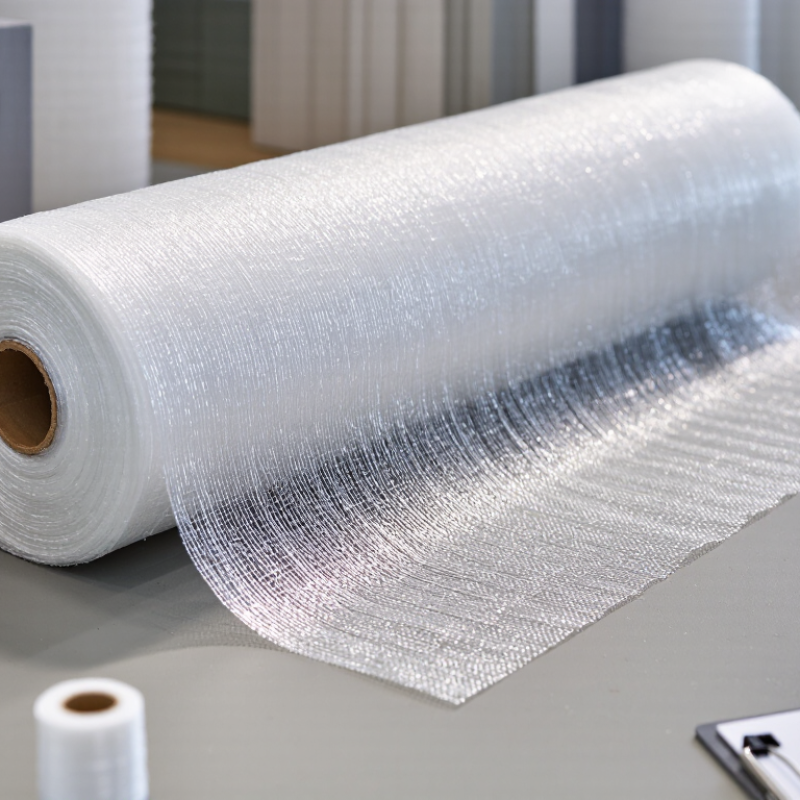
Laid scrims mesh is an open grid made from straight yarns. The yarns cross at right angles and receive an adhesive coating. Unlike woven mesh, the yarns are not interlaced. This structure keeps the material light, stable, and relatively easy to laminate.
It is commonly used inside roofing membranes, insulation facings, wall coverings, and flexible composite sheets. In a roofing membrane, the scrim helps control shrinkage during temperature changes. In insulation, it can improve handling and reduce tearing. Some manufacturers also place it inside floor coverings, banners, and industrial laminates. Mesh openings and yarn strength must match the final application.
Small details matter.
During material checks, I would review yarn type, weight, roll width, tensile strength, and coating uniformity. A sample may look acceptable but still separate during lamination. Heat exposure can reveal weak bonding. Humidity testing is also useful for overseas shipping conditions. Chinese production facilities often provide broad equipment capacity and flexible customization, which can support different project volumes. However, low price alone is not reliable evidence of quality. I would request batch samples, technical data, inspection records, and packaging photos before approval. No specification is perfect. Real project feedback may require changing the mesh weight or adhesive level after trial production.
Why Chinese Manufacturers Supply Laid Scrims for Global Projects
Chinese manufacturers supply laid scrims because they combine scale, technical flexibility, and established export infrastructure. UNIDO’s 2024 Industrial Development Report indicates that China contributes roughly one-third of global manufacturing value added. This industrial depth supports stable yarn sourcing, automated grid formation, and faster equipment replacement. Laid scrims can reinforce roofing membranes, insulation facings, flooring, and composite panels. Production lines can adjust mesh size, yarn density, roll width, and coating compatibility for different applications.
The market signal is also strong. Mordor Intelligence estimates the global nonwoven fabric market at approximately USD 53.7 billion in 2024, potentially reaching about USD 74 billion by 2029. Laid scrims are not identical to nonwovens, but both serve expanding construction and industrial applications. In practical procurement, Chinese suppliers often offer trial rolls before mass production. Buyers can test tensile strength, elongation, wet resistance, and coating adhesion. That process reduces costly surprises.
Consistency matters. A low quotation does not guarantee reliable performance. Some factories still under-document batch changes or provide incomplete test records. Buyers should request production samples, calibrated test results, and clear packaging details. A strong supplier can explain yarn type, grid geometry, tolerances, and storage conditions without vague claims. Container loading also matters; crushed rolls may create wrinkles before installation. The advantage is real, but verification remains necessary.
How Chinese Production Supports Quality and Customization
Why Source Chinese Laid Scrims Mesh for Global Projects?
How Chinese Production Supports Quality and Customization
Chinese manufacturing offers practical advantages for laid scrims mesh used in roofing, insulation, flooring, and composite materials. Production teams can adjust yarn type, mesh spacing, roll width, and coating according to project requirements. These changes often begin with a technical drawing, not a standard catalogue.
Quality depends on controlled details. Operators check yarn tension during laying and inspect bonding after coating. Samples can be measured for width, weight, tensile strength, and appearance. A clear inspection record helps buyers compare batches before shipment. Small details matter. Uneven spacing may affect lamination or installation.
Customization is useful when materials must fit unusual dimensions or production lines. Chinese factories often support trial rolls before larger orders. This reduces risk, although it does not remove it. Communication can still fail when technical terms are translated loosely. Written specifications, approved samples, and photographs should guide every revision.
A reliable supplier should explain tolerances, raw material options, testing methods, and lead times without vague promises. Buyers should also review packaging, moisture protection, and roll identification. These steps reflect practical sourcing experience, but improvement remains necessary. Even a well-managed production run can reveal weak edges or inconsistent coating. Open feedback helps correct those issues before they become costly.
What Factors Affect Sourcing, Pricing, and Delivery?
Sourcing Chinese laid scrims mesh for global projects involves more than comparing unit prices. Product specifications strongly affect cost. Buyers should confirm yarn type, mesh count, coating weight, tensile strength, roll width, and core size. A heavier coating may improve compatibility with insulation or membrane systems, but it also increases material consumption. Glass yarn, polymer coating, energy, labor, packaging, and exchange rates all influence quotations. Minimum order quantities matter too. A low price can hide expensive tooling or short roll lengths.
Delivery requires equal attention. UNCTAD’s Review of Maritime Transport reports that shipping carries over 80% of global merchandise trade by volume. Port congestion, vessel schedules, customs checks, and inland transport can therefore change project timing. The World Bank’s Logistics Performance Index 2023 also shows meaningful differences between countries in customs efficiency and international shipment reliability. These gaps are easy to underestimate. A factory may offer a 20-day production window, yet the full route may take much longer.
Tips: Request a detailed proforma invoice with Incoterms, packing dimensions, inspection standards, and production milestones. Ask for recent test data, not only a sample roll. Compare landed cost, not factory price. Keep a small schedule buffer. I would also challenge unusually fast promises; they may be possible, but they need evidence. Clear specifications reduce revisions, although they cannot remove every shipping risk. Cite: UNCTAD, Review of Maritime Transport 2024; World Bank, Logistics Performance Index 2023.
Why Source Chinese Laid Scrims Mesh for Global Projects? - What Factors Affect Sourcing, Pricing, and Delivery?
Practical sourcing reference for fiberglass, polyester, and composite laid scrim mesh used in construction, insulation, roofing, flooring, packaging, and industrial reinforcement.
| Data Dimension | Typical Industry Range or Standard | Why It Matters for Global Buyers | Effect on Pricing | Effect on Delivery | Recommended Verification |
|---|---|---|---|---|---|
| Common Raw Materials | Fiberglass, polyester, polypropylene, and hybrid composite yarns are widely used. Fiberglass offers high dimensional stability, while polyester and polypropylene provide flexibility and lower density. | Material selection determines tensile performance, chemical resistance, flexibility, and compatibility with coatings or adhesives. | Glass-based and specialty high-strength yarns generally cost more than standard polyester or polypropylene yarns. | Non-standard yarns may require additional procurement time, especially when a project needs a specific coating or yarn count. | Request the yarn type, linear density, coating chemistry, safety documentation, and certificate of analysis. |
| Mesh Opening | Approximately 2 × 2 mm to 25 × 25 mm | Mesh opening affects reinforcement distribution, coating penetration, handling, and bonding performance. | Smaller openings usually require more yarn per square metre and may increase material consumption. | Custom opening dimensions can add setup and sampling time. | Confirm opening size in both machine and cross-machine directions using a calibrated measurement method. |
| Areal Weight | Approximately 20–200 g/m² for many commercial applications | Higher areal weight normally provides more reinforcement but increases roll weight, volume, and material usage. | Material cost is commonly calculated partly by weight, so higher GSM generally raises the price per square metre. | Heavier rolls may reduce the number of rolls per container because of payload limits. | Specify the target GSM and acceptable tolerance, such as ±5% or the project standard. |
| Tensile Strength | Application-dependent; construction reinforcement products are commonly specified by separate machine-direction and cross-machine-direction values. | Strength must match the load, installation method, substrate, and applicable product standard. | Higher-strength yarns, tighter constructions, and heavier coatings increase production cost. | Additional strength testing and approval samples can extend the pre-production schedule. | Require test results in both directions, test method, specimen width, gauge length, and conditioning environment. |
| Coating and Bonding System | Common finishes include acrylic, PVC, EVA, styrene-butadiene, and other polymer coatings selected for the end use. | The coating influences alkali resistance, adhesion, flexibility, moisture resistance, and compatibility with mortar, bitumen, resin, or adhesive. | Specialty coatings and higher coating add-on levels increase consumption of polymer and processing energy. | Coating availability, curing requirements, and laboratory approval can affect production timing. | Check coating type, dry add-on percentage, curing conditions, compatibility data, and aging performance. |
| Roll Width | Common commercial widths include 1.0 m, 1.2 m, 1.5 m, and 2.0 m; custom widths are also possible. | Width affects cutting waste, installation efficiency, pallet configuration, and container utilization. | Custom widths may involve slitting, special winding, or additional packaging operations. | Standard widths are usually easier to schedule than uncommon widths requiring machine adjustment. | Confirm finished width, width tolerance, edge condition, winding direction, and core diameter. |
| Roll Length and Roll Diameter | Roll lengths commonly range from several hundred metres to more than 2,000 metres, depending on GSM, width, and handling requirements. | Longer rolls reduce joint frequency but may be unsuitable for manual installation or limited lifting equipment. | Longer rolls can reduce packaging and handling cost per square metre, subject to weight limits. | Large diameters may require stronger cores, special pallets, and more careful loading plans. | Define maximum roll weight, outer diameter, core size, label format, and pallet requirements. |
| Order Quantity and MOQ | Minimum order quantities vary by width, coating, yarn, color, and production line setup. Trial orders are usually smaller but have a higher unit cost. | Quantity influences production efficiency, raw-material purchasing, and the feasibility of custom specifications. | Larger repeat orders generally reduce setup cost per square metre, while small customized lots may carry surcharges. | Orders below normal production batches may wait for line scheduling or material consolidation. | Request a written quotation showing MOQ, sample policy, setup charges, repeat-order terms, and price validity. |
| Packaging and Container Utilization | Typical packaging uses moisture-resistant plastic film, cartons, woven bags, or pallets. Loading is constrained by both volume and gross weight. | Correct packaging protects the mesh from moisture, crushing, contamination, and telescoping during international transport. | Export-grade packaging, pallets, corner protection, and moisture-control materials add cost but reduce damage risk. | Special packaging may require additional preparation and may reduce the number of rolls per shipment. | Approve a packing list showing roll count, net weight, gross weight, dimensions, pallet count, and loading arrangement. |
| Production Lead Time | Common planning range: about 15–35 days after specification approval and deposit for standard products; custom products may take longer. | Lead time affects project mobilization, installation planning, and inventory requirements. | Expedited production may involve overtime, priority scheduling, or additional logistics charges. | Raw-material availability, sample approval, production queue, inspection, and packaging are major schedule variables. | Obtain a production schedule with dates for sample approval, manufacturing, inspection, packing, and dispatch. |
| International Transit Time | Ocean transit varies by origin, destination, route, transshipment, and season; door-to-door planning often requires several additional days for customs and inland delivery. | Transit time must be separated from factory lead time when calculating the project delivery date. | Air freight is faster but normally costs substantially more than ocean freight for bulky, low-value-per-kilogram products. | Port congestion, public holidays, weather, customs clearance, and documentation can create delays. | Compare total landed cost under the chosen Incoterm and request the carrier booking, transport documents, and estimated arrival window. |
| Quality Inspection and Testing | Typical checks include appearance, width, mesh opening, GSM, roll length, tensile strength, coating condition, and packaging integrity. | Pre-shipment verification reduces the risk of receiving material that fails installation or regulatory requirements. | Independent inspection, laboratory testing, and retained samples add direct cost but can reduce costly rework. | Testing and corrective actions can extend dispatch time if nonconformities are found. | Use an approved inspection plan with sampling levels, acceptance criteria, test methods, and nonconformance procedures. |
| Trade Terms and Landed Cost | Common quotation terms include EXW, FOB, CFR, CIF, and DAP. The included services and risk transfer differ under each term. | A low unit price may exclude export handling, freight, insurance, duties, customs fees, or inland delivery. | Freight rates, insurance, destination charges, duties, currency movements, and payment terms can materially change total cost. | Clear responsibility for documents, booking, customs, and final delivery reduces avoidable delays. | Compare offers using the same specification, quantity, Incoterm, destination, currency, and delivery scope. |
Note: The ranges above are general planning references for international procurement rather than a quotation or a product certification. Final performance, price, and delivery depend on the approved specification, order quantity, coating system, destination, season, inspection requirements, and applicable local standards.
How to Evaluate a Reliable Chinese Laid Scrims Supplier
Why Source Chinese Laid Scrims Mesh for Global Projects?
For global construction and packaging projects, Chinese laid scrims can offer flexible specifications and competitive production capacity. Yet price alone is a weak filter. A reliable supplier should explain yarn type, mesh size, coating, roll width, and tensile strength clearly. Ask for recent test reports, production photos, and samples from the same specification. I have found that a neat sample can hide uneven adhesive distribution. Inspect the edges, crossing points, and winding tension under good light. Small details matter.
Check whether the factory controls incoming yarn, coating weight, curing temperature, and final inspection. Request batch records and a documented sampling plan. The supplier should identify test methods, not simply promise high quality. Compare tensile results in both machine and cross directions. Confirm tolerance ranges before signing a purchase agreement. Communication also reveals competence. Can the technical team answer questions about lamination, storage humidity, and transport damage? A dependable partner reports limitations early. That honesty is useful, even when it delays a decision.
Tips: Begin with a small trial order. Measure width, mesh count, adhesion, roll length, and tensile strength after delivery. Photograph labels and packaging. Keep retained samples for comparison. Verify certificates independently when required. Do not treat one successful shipment as permanent proof; materials and processes can change. I would also review complaint response time, because even a strong inspection plan needs human follow-through.
How to Read the Chart
This practical weighting model prioritizes the factors most relevant to international laid scrims procurement: consistent product quality, compliance with technical requirements, production capacity, delivery reliability, export documentation, and total cost. Buyers can use these dimensions to compare suppliers objectively without relying only on price.
Skip to content