

FAQS
7 Tips for Choosing an Electric Porch Heater
A porch can feel inviting in autumn, yet lose its comfort when a cool breeze settles in. An electric porch heater can extend the time you spend outdoors, but the right choice depends on more than its appearance. Consider the porch’s size, exposure to wind, available mounting space, and how you plan to use the area. A compact seating nook has different needs from a long, open deck.
Heat should reach people, not just the empty air above them. Look at the heater’s coverage guidance and installation height, then picture where chairs and tables will sit. Looks matter, too. A bulky unit can dominate a small porch, while a discreet design may blend in. But warmth is only one part of comfort. Check the product’s outdoor-use rating, required clearances, and electrical needs, and follow the manufacturer’s installation instructions. If those details are unclear, pause and ask a qualified professional rather than guessing.
Think about controls, operating costs, and maintenance as well. A timer or adjustable setting can make everyday use easier, while the heater’s power demand may affect your energy bill. Portable models offer flexibility, but they still need a stable location and appropriate protection from the elements. Small details count. This guide shares seven practical tips for comparing heater types, sizing, placement, safety features, and long-term value. Not every porch has a perfect solution; wind, layout, and personal comfort can change what works. A little careful planning can help you choose a heater that feels useful, not merely attractive.
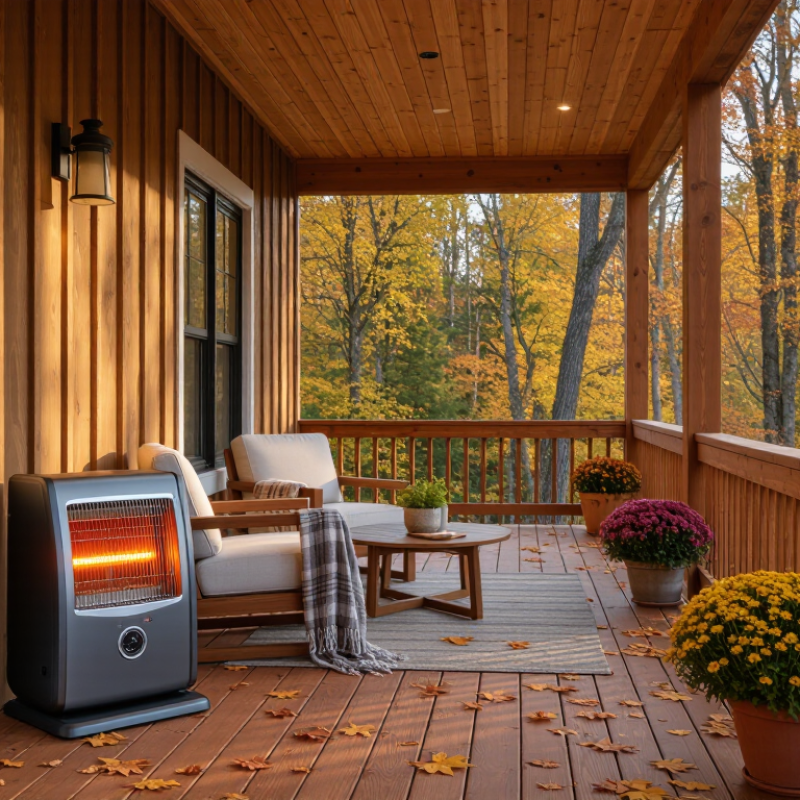
Assess Porch Exposure, Coverage Area, and Wind Before Choosing a Heater
A porch’s exposure matters as much as its size. Notice where cold air enters: open sides, gaps beneath railings, and the direction your porch faces. Morning shade can leave floors and chairs chilly, even on a mild day. Small details count. Sit where you usually relax and note which areas feel coldest during the hours you plan to use the heater.
Estimate the area you want to warm, not just the porch’s total square footage. A compact seating nook may need a different heater position than a long dining space. Radiant heat warms people and nearby surfaces directly, so placement and line of sight matter. Measure the distance from a possible mounting spot to your chair, then check the heater’s stated coverage and required clearances. I still find this easy to misjudge: a heater can feel strong beside one chair and barely reach the far end.
Wind can carry warmth away and make an exposed porch feel colder than its thermometer reading suggests. Check the usual wind direction, especially around open corners. A sheltered wall or partial screen may improve comfort, but never block required airflow or place a heater near materials the instructions identify as unsafe. On gusty evenings, comfort may vary. Choose equipment rated for the location, follow its installation guidance, and consider testing the seating area before settling on a permanent position.
7 Tips for Choosing an Electric Porch Heater - Assess Porch Exposure, Coverage Area, and Wind Before Choosing a Heater
| Tip | What to Assess | Why It Matters | Practical Guidance |
|---|---|---|---|
| 1 | Porch exposure | Open-sided or uncovered porches lose warmth more quickly than sheltered spaces, so the same heater may feel less effective outdoors. | Note whether the porch is enclosed, partly sheltered, or fully exposed. Choose a heater intended for the conditions where it will be used. |
| 2 | Heating coverage area | Heater coverage depends on its output, installation height, layout, and surrounding conditions; published coverage is a guide, not a guarantee of uniform warmth. | Measure the area you want to warm and compare it with the heater’s stated coverage. For a long or irregular porch, consider how heat will reach each seating area. |
| 3 | Wind and drafts | Moving air carries heat away and can make an exposed porch feel colder, reducing the comfort provided by a heater. | Check the usual wind direction and identify drafty openings. Where possible, use a sheltered seating position and select equipment rated for its intended outdoor location. |
| 4 | Heating direction and seating layout | Many electric radiant heaters warm people and nearby surfaces directly rather than heating all the air in a large outdoor space. | Plan where people will sit, then position the heater so its heating area is directed toward those spots. Follow the installation instructions for aiming and mounting. |
| 5 | Available electrical supply | Heaters draw electrical power, and the required voltage, current, and circuit capacity vary by model. An unsuitable supply can create an overload risk. | Check the heater’s electrical specifications against the porch outlet and circuit. Have a qualified electrician assess wiring or installation needs when in doubt. |
| 6 | Outdoor suitability and safe clearance | Outdoor equipment must be suitable for exposure to moisture and the conditions at its installation site. Heaters also need clearance from people and combustible materials. | Review the product’s outdoor-use rating, mounting requirements, and minimum clearances. Keep the unit away from curtains, furniture, and other materials specified in the instructions. |
| 7 | Controls, runtime, and operating cost | Adjustable heat settings and timers can help match heating to use. Electricity use depends on the heater’s wattage and how long it operates. | Look for controls that suit your routine. To estimate energy use, divide watts by 1,000 and multiply by operating hours; multiply the result in kilowatt-hours by your electricity rate. |
Related Posts
-
Top 10 Best Wall Mounted Patio Heaters for Global Buyers?
-

How to Choose Commercial Outdoor Heaters for Your Business
-
How to Choose the Best Electric Porch Heater for Your Outdoor Space?
-
Top 10 Gas Patio Heater Options for Your Outdoor Space?
-

Why Choose a Wall Mounted Patio Heater for Your Outdoor Space?
-

Top Commercial Electric Heaters at the 139th Canton Fair?