Top Outdoor Propane Heater Manufacturers in China
Choosing an outdoor propane heater manufacturer in China takes more than comparing prices or polished product photos. Buyers need to assess heating performance, construction, safety features, and the supplier’s ability to deliver consistently. A catalog may show a stainless-steel burner and a broad reflector, but it rarely explains how those parts hold up after repeated outdoor use.
This guide introduces manufacturers and the factors that help distinguish them. It considers product range, customization options, production experience, quality-control practices, and export support. Practical details matter: check ignition reliability, flame stability, base design, hose and regulator specifications, and resistance to weather exposure. Ask whether the supplier can provide clear product documentation and relevant test reports for the intended market. Those materials support a more informed review, though they do not replace independent verification.
No catalog tells the whole story. A supplier’s response to technical questions can be revealing, especially when details are uncertain or need clarification. Request recent product specifications, sample photos, and written confirmation of key requirements before making a decision. Also compare warranty terms, lead times, and how defects or replacement parts are handled. These points may seem small.
The manufacturers featured here serve different buyer needs, from standard patio models to customized designs for hospitality or retail projects. Use the overview as a starting point, not a final endorsement. A dependable partnership rests on evidence, clear communication, and a product suited to its actual operating conditions.
Defining China’s Outdoor Propane Heater Market and Main Product Categories
China’s outdoor propane heater market covers equipment designed to provide localized warmth in open-air settings. It includes products made for domestic sales and export, with differences in capacity, finish, portability, and fuel connection. A typical unit combines a burner, control valve, reflector, and protective structure. Details matter: a loose reflector or awkward cylinder access can affect everyday use. “Outdoor heater” is a broad label, not one uniform product class.
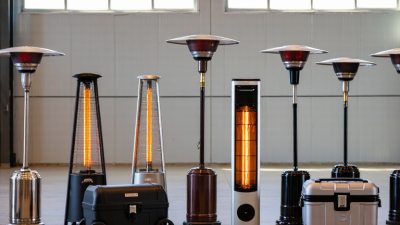
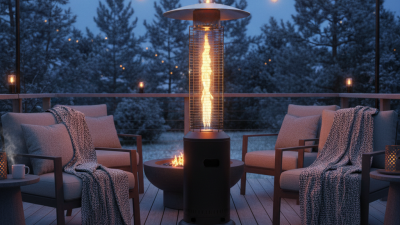
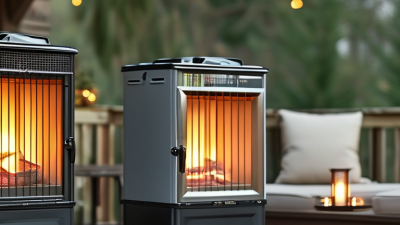
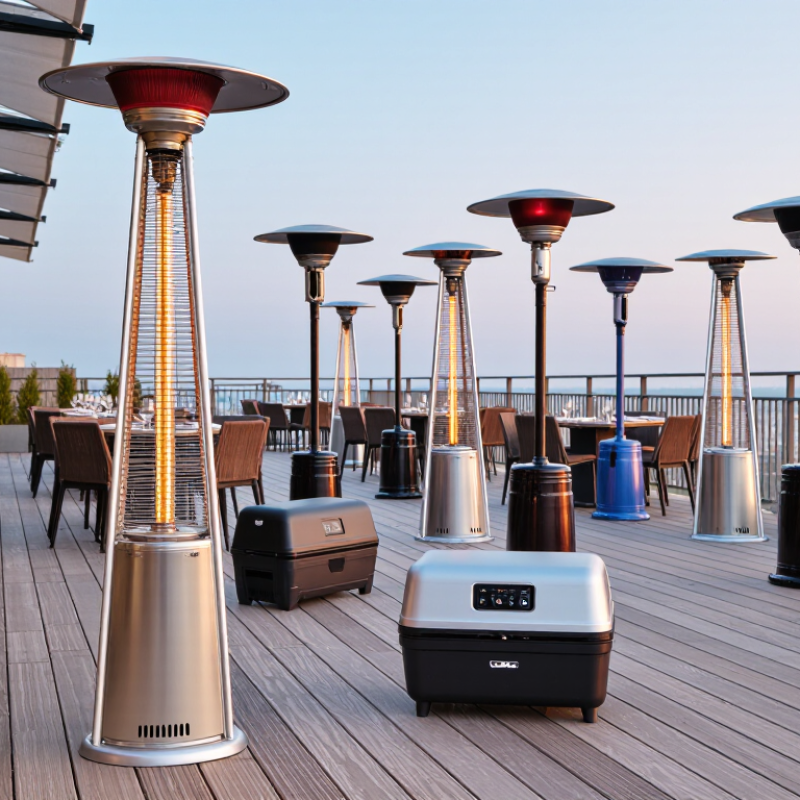
Main categories include freestanding patio heaters, compact tabletop heaters, and flame-tower designs. Freestanding models suit larger patios and dining areas; tabletop units fit smaller seating zones. Flame-tower models make the burner visible, but their tall form may need careful placement in windy spaces. Some products use enclosed cabinets for the propane cylinder, while others prioritize lighter frames and easier movement. The boundaries overlap, so compare fuel capacity, heat output, footprint, and service access rather than relying on appearance alone.
Tips: Check how the cylinder is secured, how controls feel with gloves on, and whether the base stays stable on your actual surface. Ask for clear test data and spare-part details. Small point: inspect the hose path. A polished photo cannot show every weakness.
Freestanding Patio Heaters: Common 40,000–50,000 BTU/h Output Ratings
Freestanding patio heaters rated at 40,000–50,000 BTU/h are commonly designed for focused outdoor warmth. That range can suit a dining table or a small seating area, but it will not heat an entire open patio evenly. At dusk, guests near the burner may feel comfortable while someone several steps away still needs a coat. Placement matters.
For manufacturers in China, a clear rating should be supported by consistent burner testing and practical product details. Buyers should check whether the figure describes fuel input or delivered heat, since those values are not always interchangeable. Ask for the stated test conditions, fuel consumption, and recommended operating distance.
Small details count. Wind, ceiling height, and nearby walls can change how warmth spreads. A 50,000 BTU/h model is not automatically the better choice; that assumption is easy to make, and sometimes wrong.
On a sheltered balcony, a lower-output heater may feel more balanced, while an exposed patio can lose heat quickly. Compare the rating with the intended layout, not just the largest number on a specification sheet.
Propane Fuel Benchmarks: Approximately 91,500 BTU per U.S. Gallon
For buyers comparing outdoor propane heaters from manufacturers in China, fuel benchmarks help make specifications more meaningful. The U.S. Department of Energy’s Alternative Fuels Data Center lists propane at approximately 91,500 BTU per U.S. gallon. This is the fuel’s energy content, not the heat a person will feel outdoors. A heater rated at 40,000 BTU per hour would use roughly 0.44 gallons per hour at that input rate.
It is easy to overread this number. Wind, burner settings, and operating conditions affect comfort and actual run time. A large BTU rating may warm a nearby seating area, yet it can also consume fuel faster. Compare each unit’s stated input rating with its tank capacity, and treat estimated hours as approximate.
Tips: Check the heater’s rated BTU input before estimating fuel use. A useful baseline. Ask suppliers how they test output and runtime, then compare the answers under similar conditions. Keep in mind that an outdoor heater cannot direct every BTU toward people; some heat drifts away, especially on a breezy patio.
Top Outdoor Propane Heater Manufacturers in China
Propane fuel benchmark: approximately 91,500 BTU per U.S. gallon
Estimated fuel energy content scales with propane volume. These figures represent the approximate heat energy in the fuel, not the usable heat delivered by a heater; actual output depends on appliance efficiency and operating conditions.
Comparing Chinese Manufacturers by Capacity, Materials, and OEM Services
Comparing Chinese outdoor propane heater manufacturers requires more than checking advertised monthly output. Ask how many units one production line completes per shift, then compare that figure with recent order schedules. A large stated capacity means little if welding, coating, or final inspection becomes a bottleneck. Request sample records and a clear production timeline. Details matter.
Materials affect weight, corrosion resistance, and service life. Check whether the reflector, burner, fasteners, and outer housing use the materials specified in the quotation. Stainless steel can resist corrosion, but grade and thickness still matter; a thin component may deform under repeated heating. Ask how surface finishes are tested and inspect welds around joints. Photos help, but a physical sample is more reliable.
OEM services range from logo printing to engineering changes. Confirm whether the factory can work from your drawings, adjust packaging, and provide replacement parts. Clarify minimum order quantities, sample fees, revision rounds, and who approves artwork before production. Keep specifications in writing. One practical test is to order a sample with the intended finish and packaging. It may expose problems that a polished catalog image hides. Even strong suppliers can miss details, so allow time for review rather than assuming every custom request is routine.
Safety Compliance: ANSI Z83.26/CSA 2.37 for Outdoor Patio Heaters
For Chinese manufacturers of outdoor propane heaters, ANSI Z83.26/CSA 2.37 is an important reference for safety evaluation. It addresses requirements for outdoor gas appliances, including design and performance checks. Buyers should confirm that the exact heater model—not just a similar product—has been assessed against the applicable edition. Small details matter.
A credible compliance file should connect test results to the production unit. Review the certification scope, test documentation, rating plate, fuel specifications, and installation instructions. Inspect practical features too: stable burner operation, secure hose connections, clearances from nearby surfaces, and resistance to tipping. A test report is useful, but it is not the whole story. Factory changes to valves, burners, or materials may affect the original assessment.
Compliance does not replace careful installation or operation. Patio heaters need open-air placement, adequate clearance, and regular checks for damaged hoses or loose fittings. Wind can disturb a flame, even when a heater passed laboratory tests. Manufacturers should explain limits plainly, rather than relying on broad safety claims. This part deserves reflection: paperwork can confirm a test, but consistent production and clear user guidance help make that result meaningful in everyday use.