

FAQS
China Best Gas Heaters for Wholesale Buyers?
China Best Gas Heaters for Wholesale Buyers? This question requires more than comparing factory prices. Wholesale buyers need dependable heating performance, consistent production, and clear safety documentation. A low quotation can look attractive. It may hide higher inspection, replacement, or shipping costs.
China offers many gas heaters for patios, workshops, restaurants, warehouses, and outdoor events. Product choices include portable cabinet heaters, wall-mounted units, and commercial infrared models. Each design suits different spaces, fuel types, ventilation conditions, and customer expectations. Details matter. Burner quality matters too.
A reliable supplier should explain heat output, gas consumption, ignition systems, operating limits, and maintenance requirements. Ask for evidence. Request product specifications, quality-control records, packaging photographs, and applicable test reports. Certifications should match the destination market, not merely appear in a sales brochure. Buyers should also confirm spare-part availability, warranty terms, minimum order quantities, and lead times before signing an agreement.
Practical evaluation is essential. A sample may perform well, while mass production varies. Independent inspection can check dimensions, labeling, surface finish, ignition reliability, and carton protection. One overlooked valve or poorly secured connector can create serious service problems. That point deserves attention.
This guide examines how wholesale buyers can compare Chinese gas heater manufacturers with greater confidence. It considers supplier capability, product design, safety communication, pricing transparency, and after-sales support. No sourcing process is perfect. A polished catalog is not proof of dependable performance. Careful questions, documented checks, and realistic testing create a stronger purchasing decision.
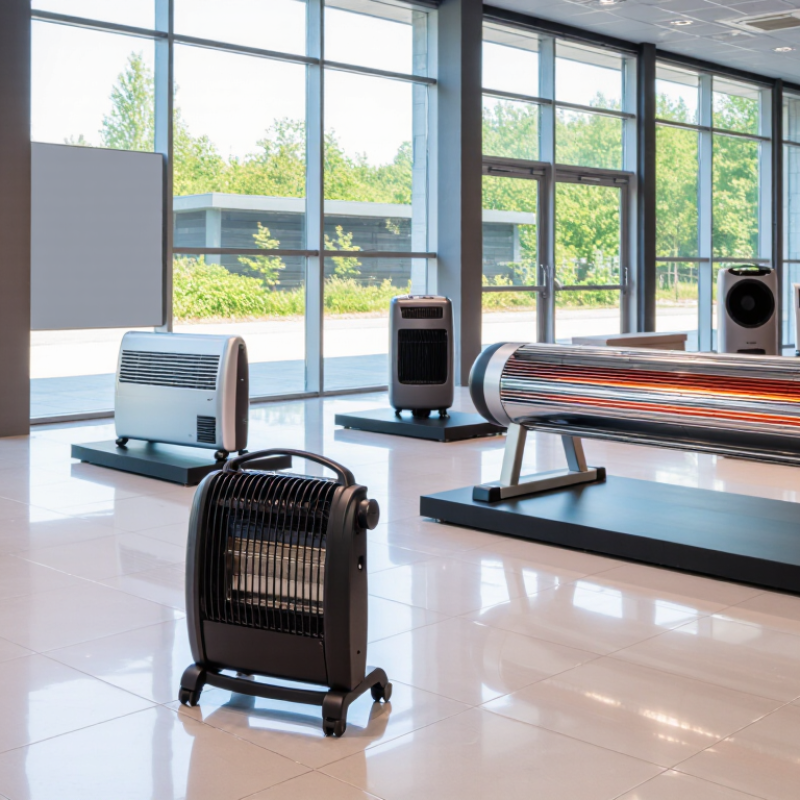
Types of Gas Heaters Available for Wholesale Purchase
Wholesale buyers can choose from several gas heater types, each suited to different spaces and customer needs. Portable LPG radiant heaters deliver direct warmth and work well in workshops, garages, and temporary sites. Their ceramic panels heat quickly, but nearby objects need proper clearance. Convection heaters warm room air gradually. They are quieter and more comfortable for bedrooms, offices, and retail areas.
Cabinet heaters combine portability with a concealed gas cylinder. They suit homes and small commercial rooms where floor space matters. Wall-mounted flued heaters offer stable indoor heating and remove combustion gases through an approved vent. They usually require professional installation. Outdoor patio heaters use focused radiant heat for restaurants, terraces, and event areas. Weather exposure can affect ignition parts and surface finishes.
For wholesale purchasing, check gas compatibility, inlet pressure, heat output, ventilation needs, and local certification requirements. Flame-failure protection and tip-over shutoff should be standard considerations. Packaging also matters; damaged control knobs can create costly returns. Experienced buyers often request sample testing before placing a large order. It is easy to compare prices and overlook spare parts, manuals, and installation support. That mistake can weaken long-term reliability. A practical product range may include portable radiant models, cabinet heaters, and flued wall units, depending on the target market. No single type fits every region. Local fuel availability and building rules can change the better choice.
China Best Gas Heaters for Wholesale Buyers? - Types of Gas Heaters Available for Wholesale Purchase
| Gas Heater Type | Typical Fuel | Typical Heat Output | Typical Coverage | Installation Requirement | Main Wholesale Applications | Key Purchasing Considerations |
|---|---|---|---|---|---|---|
| Portable LPG Radiant Heater | Liquefied petroleum gas, usually propane or butane | Approximately 1.5–4.2 kW | About 15–40 m², depending on insulation and climate | Portable use; adequate ventilation and approved gas connection required | Homes, workshops, temporary heating, emergency heating | Tip-over protection, oxygen-depletion safety device, hose and regulator compatibility, cylinder compartment design |
| Portable LPG Cabinet Heater | Propane or butane | Approximately 2.0–4.2 kW | About 20–45 m² | Freestanding; requires room ventilation and compliant gas accessories | Residential distributors, rental properties, small retail spaces | Cylinder size, wheel quality, cabinet stability, ignition system, safety certification for the destination market |
| Catalytic LPG Heater | Propane or butane | Approximately 1.5–4.2 kW | About 15–40 m² | Freestanding indoor use with required ventilation | Residential heating, off-grid locations, supplemental heating | Catalytic panel durability, low-emission design, flame monitoring, spare-part availability |
| Flueless Blue-Flame Heater | Natural gas or LPG, depending on configuration | Approximately 2.0–5.0 kW | About 20–50 m² | Wall-mounted or freestanding; permanent ventilation may be required | Apartments, small offices, supplemental room heating | Local rules for flueless appliances, room-volume limits, oxygen-depletion sensor and carbon-monoxide safety requirements |
| Vented Wall-Mounted Gas Heater | Natural gas or LPG | Approximately 3–10 kW | About 30–100 m² | Fixed wall installation with approved flue or balanced-flue system | Homes, apartments, offices and hospitality areas | Flue kit availability, gas pressure range, thermostat control, wall bracket strength and installation instructions |
| Outdoor LPG Patio Heater | Propane or LPG | Approximately 5–14 kW | Roughly 12–30 m² of comfort area outdoors | Outdoor use only; stable base and safe clearance from combustible materials required | Restaurants, hotels, cafés, terraces and event venues | Wind resistance, anti-tilt switch, reflector size, corrosion protection, wheel system and seasonal packaging |
| Gas Fire Pit Table | Propane or natural gas | Approximately 8–16 kW | Localized outdoor heating for seating areas | Outdoor installation with gas shut-off access and required clearances | Hospitality, residential patios, resorts and outdoor entertainment areas | Tabletop materials, burner and glass media quality, weather resistance, ignition reliability and protective cover options |
| Gas Infrared Tube Heater | Natural gas or LPG | Approximately 10–50 kW | About 50–300 m², depending on mounting height and layout | Ceiling or high-wall mounting with flue and professional gas installation | Warehouses, workshops, factories, sports halls and loading areas | Emitter tube length, zoning controls, ceiling height, flue routing, maintenance access and commercial certification |
| Commercial Gas Unit Heater | Natural gas or LPG | Approximately 15–150 kW | Approximately 150–2,000 m², subject to building design | Fixed installation with flue, combustion air and electrical controls | Factories, distribution centers, workshops, retail buildings and agricultural facilities | Heating load calculation, airflow volume, modulation range, control compatibility, service access and spare parts |
| Gas Condensing Warm-Air Heater | Natural gas or LPG | Approximately 20–100 kW | About 200–1,500 m², depending on insulation and air distribution | Fixed installation with condensate drainage, flue system and professional commissioning | Large commercial buildings, warehouses and industrial facilities | Seasonal efficiency, condensate management, low-emission burner, control integration and local energy regulations |
Related Posts
-
What Is the Best Type of Gas Heater?
-
What is a Gas Heater and How Does It Work?
-
How to Choose Commercial Outdoor Heaters for Your Business
-
Best Outdoor Wall Heater Options for Your Space in China?
-
Top 10 Best Wall Mounted Patio Heaters for Global Buyers?
-
Best Gas Patio Heater Reviews and Buying Guide 2026?