

FAQS
China Top Radiant Tube Heater Manufacturers?
China’s leading radiant tube heater manufacturers are gaining attention for practical industrial heating solutions. Their systems appear in warehouses, workshops, agricultural buildings, sports halls, and aircraft maintenance spaces. Unlike conventional warm-air heating, a radiant tube heater transfers infrared energy toward floors, equipment, and occupied zones. This can reduce heat loss in tall buildings, where warm air often rises unused.
The real challenge is choosing reliable equipment, not simply finding the lowest price. Buyers should examine tube materials, burner design, combustion control, thermal efficiency, zoning options, installation support, and after-sales service. Factory testing also matters. Look for documented performance data, traceable components, and clear safety instructions. A polished catalog is not enough.
Building-science educator Robert Bean often explains the principle this way: “Radiant comfort depends on the temperatures of surrounding surfaces, not air temperature alone.” That point deserves attention. A heater may deliver strong output, yet poor placement can create cold corners, glare, or uneven floor temperatures. Site height, insulation, ventilation, fuel type, and operating schedules must be reviewed together.
This guide compares China-based manufacturers through an E-E-A-T-focused lens. It considers engineering experience, product evidence, certification practices, project support, and customer feedback. Some public information remains incomplete. That weakness should be acknowledged, not hidden. No ranking is perfect. Still, careful comparison can help facility owners identify a radiant tube heater supplier that balances performance, durability, compliance, and long-term operating value.
What Are Radiant Tube Heaters and How Do They Work?
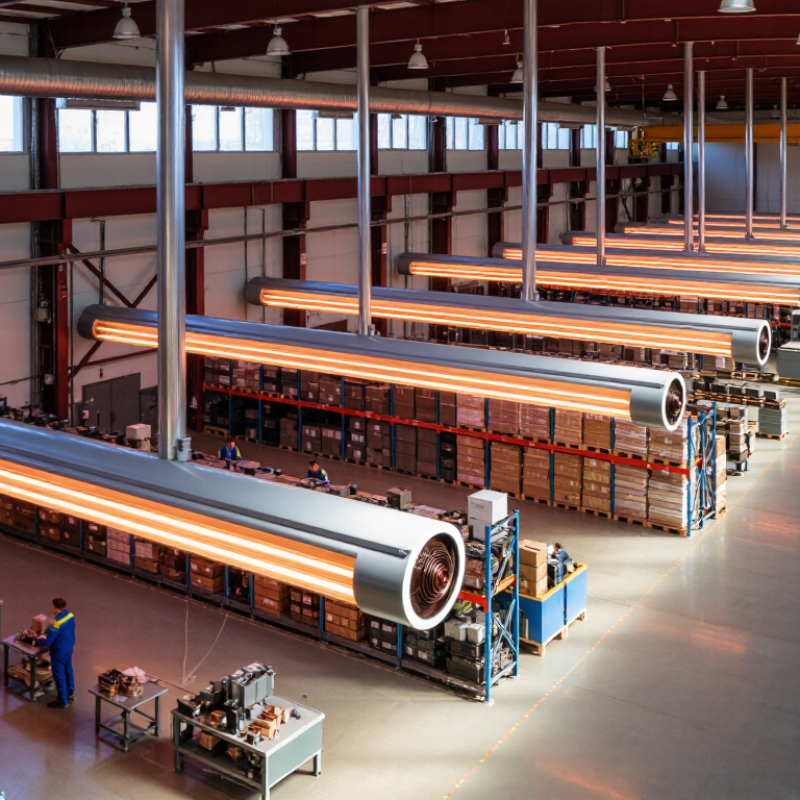
Radiant tube heaters warm people and surfaces instead of heating air first. A gas burner heats a long metal tube inside a workspace. The hot tube emits infrared energy downward through a reflector. Floors, machinery, and workers absorb that energy, then release gentle heat into the surrounding air.
This process differs from forced-air heating. Warm air may rise toward a high ceiling, while infrared energy travels directly across open areas. The U.S. Department of Energy identifies radiant heating as a practical method for improving comfort in large, high-ceiling buildings. The ASHRAE Handbook also stresses proper emitter placement, ventilation, combustion control, and surface-temperature management. Small design errors can still create cold corners.
The International Energy Agency reported in Buildings 2023 that building operations use about 30% of global final energy. Heating remains a major part of that demand in colder regions. Radiant tubes can reduce unnecessary heating of unused upper air, but performance depends on insulation, zoning, ceiling height, and operating schedules. This is where estimates become less certain. A poorly adjusted burner wastes fuel, and a dirty reflector weakens heat distribution. Operators should inspect tubes, burners, exhaust paths, and controls regularly. Measuring floor temperature and occupant comfort often reveals problems that fuel consumption alone cannot show.
| Data Dimension | Typical Technical Data | How It Works | Selection or Design Considerations |
|---|---|---|---|
| Basic Definition | A suspended, fuel-fired infrared heating system that uses a heated tube as the radiant emitter. | The burner heats the inside of a metal tube. The hot tube radiates infrared energy toward floors, equipment, and occupants. | Suitable where localized or zone heating is preferred over heating the entire air volume. |
| Primary Heat Transfer | Radiation is the main useful heat-transfer method; convection also occurs as surrounding air is warmed. | Infrared energy travels directly from the hot tube and reflector to exposed surfaces without requiring air movement. | Reflector geometry, mounting height, tube temperature, and surface coverage strongly affect comfort and uniformity. |
| Common Fuel Options | Natural gas or propane are the most common fuels. Electric radiant tube systems are also available. | Gas models release combustion heat inside the tube; electric models use resistance heating elements. | Fuel availability, gas pressure, electrical capacity, emissions requirements, and operating cost should be evaluated together. |
| Typical Heat-Input Range | Commercial and industrial gas units commonly cover approximately 20–150 kW per heater, depending on the design. | The burner input determines the rate at which the tube is heated and the amount of radiant output available. | The exact range varies by model; heating-load calculations are required instead of selecting by floor area alone. |
| Emitter Tube Temperature | The tube normally operates at several hundred degrees Celsius; many designs operate roughly within 300–600°C. | Higher tube temperature generally increases radiant intensity, while also increasing material and clearance requirements. | Actual temperature depends on burner input, tube length, airflow, control strategy, and construction materials. |
| Tube Construction | Heat-resistant steel or stainless steel tubing is commonly used for the combustion and radiant sections. | The tube contains hot combustion gases and transfers heat through its wall to the surrounding space. | Material grade, wall thickness, weld quality, corrosion resistance, and thermal expansion allowance affect service life. |
| Reflector Material | Aluminum-coated or stainless-steel reflectors are commonly used above the tube. | The reflector directs a larger proportion of infrared energy downward and limits unwanted heat transfer to the roof. | Reflector width, shape, surface finish, and cleanliness influence the effective heating pattern. |
| Combustion Exhaust | Gas-fired units require a flue, direct vent, or approved exhaust arrangement, depending on the appliance design. | Combustion products are separated from the occupied space and discharged through the approved venting system. | Vent routing, combustion air, terminal clearances, and local code compliance must be verified by qualified personnel. |
| Control Method | On/off, staged, modulating, and zone-based controls are commonly used. | A thermostat or building-control signal adjusts burner operation according to the required zone temperature. | Modulation and zoning can improve comfort and reduce unnecessary operation in intermittently occupied areas. |
| Installation Height | Common mounting heights vary by heat input, reflector design, occupancy, and applicable safety requirements. | The heater must be high enough to protect people and materials while remaining close enough to deliver the required radiant intensity. | Follow the certified installation manual for minimum clearances, suspension points, and combustible-material distances. |
| Suitable Applications | Warehouses, workshops, factories, aircraft hangars, agricultural buildings, loading areas, and large open spaces. | The system heats occupied or work zones directly, even where high ceilings or frequent door opening make warm-air heating less effective. | Evaluate dust, moisture, corrosive atmospheres, flammable materials, ventilation, and process-specific hazards before installation. |
| Main Advantages | Fast perceived warmth, effective zone heating, low air movement, and reduced dependence on heated air circulation. | Radiant energy reaches surfaces and people directly, so comfort can be achieved without warming every cubic metre of air equally. | Often beneficial in tall buildings, intermittently occupied areas, and spaces with large or frequently opened doors. |
| Key Limitations | Uneven comfort may occur if the layout is poorly designed; equipment also needs overhead space and regular inspection. | Objects blocked from the radiant path may receive less heat, while excessive output can create hot spots near the emitter. | A professional heat-load, coverage, clearance, ventilation, and control assessment is recommended. |
| Maintenance Requirements | Periodic inspection of burners, ignition components, venting, reflectors, tube surfaces, controls, and safety devices is required. | Dust or deposits on the reflector and tube can reduce heat transfer and alter the intended radiation pattern. | Maintenance intervals depend on fuel quality, operating hours, building conditions, and the manufacturer’s service instructions. |
| Compliance and Safety | Applicable gas, electrical, mechanical, ventilation, fire-safety, and emissions requirements vary by country and installation type. | Safety controls monitor conditions such as flame failure, abnormal pressure, overheating, and unsafe combustion operation. | Use certified equipment, qualified installers, approved fuel connections, correct clearances, and documented commissioning procedures. |
Related Posts
-
Top 5 Tips for Choosing the Best Radiant Tube Heater?
-

Why You Should Consider a Deck Heater for Your Outdoor Space?
-
2025 Guide to Choosing the Best Industrial Infrared Heaters for Your Needs
-
What Are the Best Types of Warehouse Heaters in 2026?
-

How to Choose the Best Room Heaters for Your Needs?
-
2026 Top Outdoor Gas Heaters: Ultimate Buying Guide and Reviews